Close

Author Archive for: jentwistle

by

Trampoline Safety

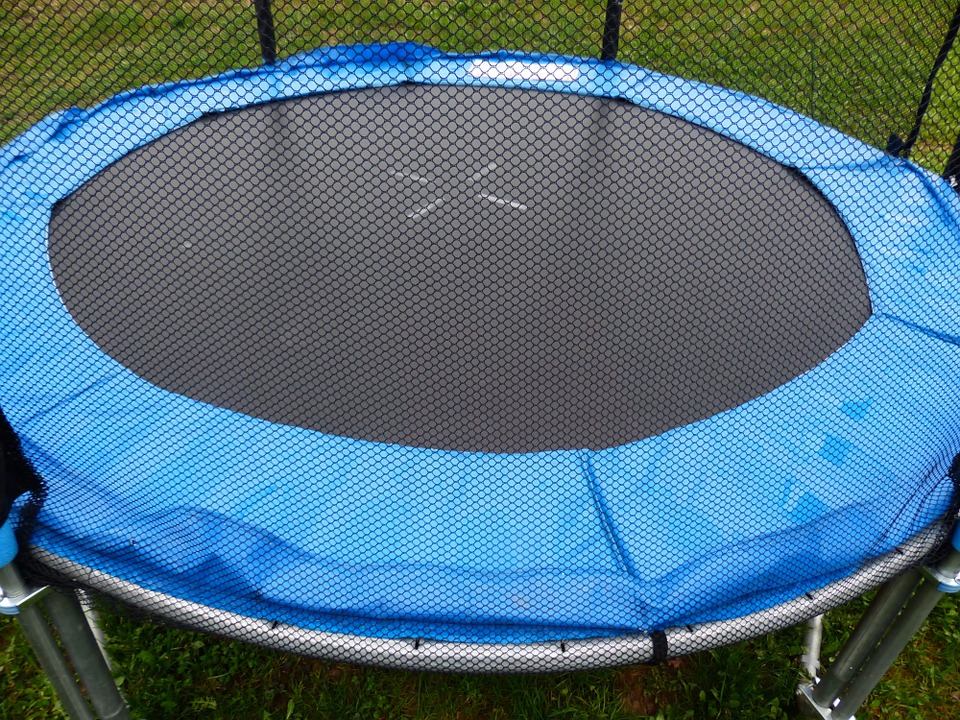
Bouncing on a trampoline can be fun, provide great exercise and a way to burn off that never ending energy kids seem to have, but there are major dangers involved.  In fact, as cited in the following article from Oatley Vigmond, a Consumer Product Safety Review report found that there were nearly 110,000 American trampoline related injuries suffered in the year 2006 alone.  So how do you prevent these injuries?  The American Academy of Pediatrics suggests simply not to own, or allow your children to bounce on at home trampolines.  Read more in the following from Shane Henry of Oatley Vigmond and tell us what you think.

Oatley Vigmond:  Trampolines:  How Bouncing Can Become Dangerous 

by

Eating Local – Ontario Guide

Summer has officially begun and fresh fruits and vegetables are a plenty.  Why not join the “eat local” food movement!  A great way to spend a summer day is to visit a local farm or farmers market and take in some of the healthy fresh items the season has to offer.  Check out the following links to help you find local farms and farmer’s markets in Ontario’s.

Find a Local Farmer’s Market

Find a Local Farm

by

The Power of Self-Advocacy

Julie Entwistle, MBA, BHSc (OT), BSc (Health / Gerontology)

Occupational therapists play an important role in helping people of all ages to function independently, to engage in meaningful activity, and to experience joy in life regardless of disability.  In this role, we are often in a position of advocate as we aim to help people achieve their most promising outcomes.  But even better than an OT swinging for the fences to help a client, are those clients that can metaphorically pick up the bat and hit it out of the park themselves.

Recently I read an article highlighting the power of self-advocacy.  The article spoke of a boy named Peter who has cerebral palsy.  Peter, as a result of reduced fine and gross motor control, was struggling to use the standard Play Station Controller.  He took it upon himself to email Sony’s support team to ask for help.  To his surprise, not only did he receive a response, but Sony’s team built and sent him a modified controller to use.  That is self-advocacy at work, and kudos to Sony for working with Peter to accommodate his needs.  (See the article here.)

Self-Advocacy

This story provides a great example of the power of self-advocacy. Self-advocacy refers to an individual’s ability to effectively communicate, convey or assert their own interests, desires, needs and rights. It’s the ability to speak up on your own behalf to ask for what you need.

Self advocacy skills can be broken down into 3 steps:

1.     Understanding your individual strengths and weaknesses,

2.     Knowing what supports or resources are available in order to succeed

3.     Communicating these needs to other people

Why is Self-Advocacy Important?

Self-advocacy is a vital part of being human and is a great skill to harness and utilize as it helps people to:

  •         Create solutions for challenges that they experience
  •         Develop independence and self-empowerment skills
  •         Ask for help and clarification
  •         Build self confidence
  •         Take risks and try new things
  •         Learn the benefits of effective communication
  •         Creates a sense of ownership, power and control over their situation and needs.

How Can OT’s help?

OT’s can assist in promoting self-advocacy in multiple ways.  First, OT’s recognize the importance of facilitating client independence and strive to help people to develop the confidence and skills to communicate their own needs and wants.  Often we can identify where people can be successful here, and where help might be needed.  We model appropriate advocacy behavior on behalf of our clients during interactions with other providers or stakeholders.  Or, when necessary, we advocate on a client’s behalf until they develop the skills to do this independently.

In the end, advocacy is becoming more and more important in the climate of restricted healthcare dollars.  So whether we are helping people access an important health service, to address a new problem, or sending an email to a major manufacturer about a video game console, assisting people to have a voice, or to develop a voice is a paramount part of great OT.

by

Inspired

This young man’s prom night was a night to remember for himself and his Grandfather who has been a part of every big event of his life.

by

Organization and Recovery From Brain Injury

Julie Entwistle, MBA, BHSc (OT), BSc (Health / Gerontology)

Last stop for Brain Injury Awareness Month – my favorite topic – organization!

photo 1

Yes, this is my drawer system to store pens, pencils, and markers. And if I find a pencil in the pen drawer look out! Perhaps being organized and knowing how to find what I need when I need it is one of the many ways I manage the demands of being a business owner and mother of four. But the reality is that we all have different levels of energy, tolerance and mental attention and these things can become depleted after a brain injury. So, if you were an energizer bunny with a DD battery before your injury, chances are your new batteries have been replaced with some AAA’s. This means that daily activities will take more time, more energy, and you will need to recharge sooner. So, considering this, do you really want to spend your valuable energy looking for stuff?

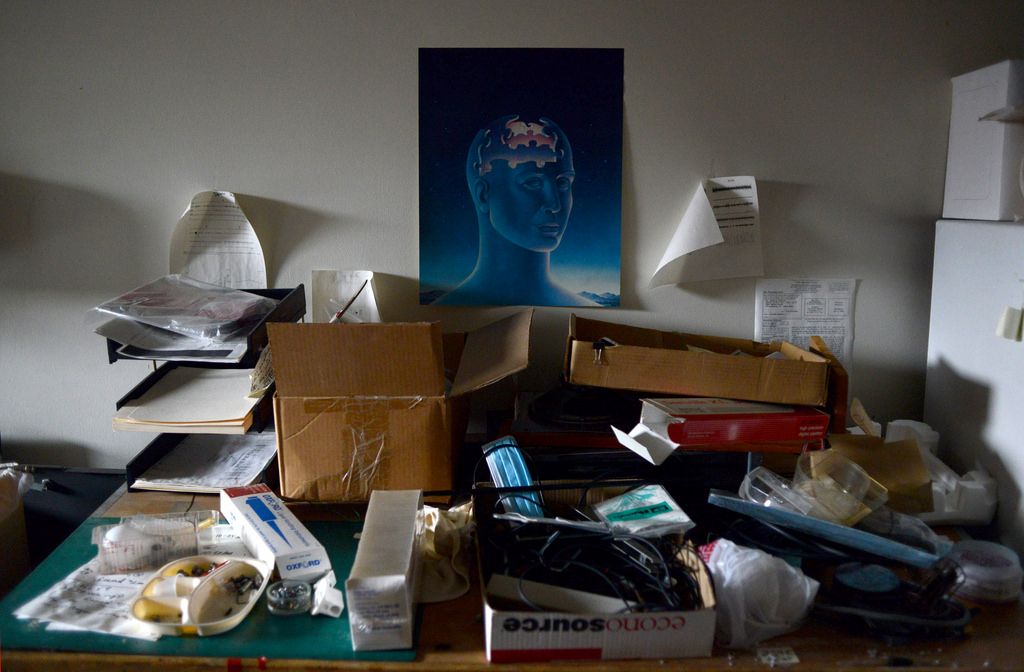
Consider that you have 10 units of brain capacity and energy when you wake in the morning. Every activity you have on your “to do” list takes one unit. Going for a walk, preparing supper, managing the laundry, responding to emails, attending an appointment, completing personal care, and having coffee with a friend all drain your battery. Some of these activities are necessary, some can be put off, and others are enjoyable. So what if you spend one unit of energy looking for your phone, keys, that bill that needs to be paid, your agenda, or those new runners you bought yesterday? What activity will come off your list when you have spent your energy to find something that with some organization would have taken you no time at all? Maybe you will call your friend to cancel, or order supper in again. Maybe the laundry will wait to tomorrow, or those emails will just keep accumulating. But this is unnecessary because you had the energy and cognitive ability to manage these things, it just became misdirected.

Often the focus of occupational therapy becomes helping people to organize their activities, their stuff or their time. Schedules and consistency are keys to helping people to understand the size of their battery and the amount of units each activity takes. This can be difficult when working with clients who did not need to be organized before an injury or illness, but the necessity of this following cannot be ignored. Even small steps to help people to be more organized can have a huge impact.

Helping clients with brain injury to become more organized can take many forms, depending on the client, the nature of their problems, and how they previously organized their stuff and their time. What I tend to witness is the time lost and sheer frustration that clients experience looking for cell phones, wallets and keys. Often, cell phones become used as a “second brain” assisting people to maintain a schedule and make appointments (calendar), remember things (task lists), have access to support systems (contacts, calls, text, email), and negotiate their environment (maps and GPS). If this gadget is so important, it is even more important that people know where it is. Having a catch tray by the front door, in their room, or a standard docking station can be helpful. Wallets and keys should also be left in a consistent location. I am sure we can all relate to that feeling of looking for our keys in their usual spot to find they are missing. But if you lack the ability to efficiently look for these, it could completely derail your day.

After the day to day items have a place, then we can work to simplify other spaces that are identified barriers to function. Perhaps the kitchen has become too cluttered to allow for efficient meal preparation, or the bills are piling up because these are lost in a stack of papers. In the world of insurance I find that clients become overwhelmed by paperwork and this results in missed appointments, non-response to time sensitive material, or failure to submit for expense reimbursement. Slowly, over time and with suggestions and tools (filing cabinets, labels, folders, a pen drawer!) clients become able to more efficiently spend their units of energy on things that are more important, or more fun and ideally, learn to transfer these strategies into other life areas independently – like work, school or parenting.

Originally posted June 30 2014

To read more of our articles on brain injury check out our section on Brain Health.

by

Inspired

“Here come bad news talking this and that
Yeah, give me all you got, don’t hold back
Yeah, well I should probably warn you I’ll be just fine
Yeah, no offense to you don’t waste your time”

Pharrell Williams, Happy