


If you live with Multiple Sclerosis (MS), dietary changes can often help. However, prior to making any changes, be sure to discuss your diet and nutritional requirements with your physician and a dietitian. The following from Eat Right Ontario provides you with some general tips on maintaining a healthy diet and lifestyle when living with MS.
“Certain things catch your eye, but pursue only those that capture the heart.”
Ancient Indian Proverb

Julie Entwistle, MBA, BHSc (OT), BSc (Health / Gerontology)
As a newer vegetarian, and someone who spends most days on the road, I am always looking for quick, but decent, lunch options. While in an ideal world I would prepare my lunches and snacks ahead of time (including hand sanitizer!), sometimes life takes over and I am rushing out the door unprepared. On some days that may result in me being undernourished and not eating again until dinner, on other days it does have me searching for healthy stuff en route. So here is my list of the healthiest but fast meal options that are under 300 calories but can be grabbed quickly, as listed by restaurant name:
SUBWAY
Veggie Delight (whole wheat bread without cheese or mayonnaise) 230 Calories
MCDONALDS
Side Garden Salad (no dressing) 40 calories
Chipotle Chicken Snack Wrap® with Grilled Chicken 230 calories
Grilled Chicken Snack Wrap® 230 calories
WENDY’S
Full Asian Cashew Chicken Salad (no dressing) 190 calories
Chicken Go Wrap Grilled 260 calories
PITA PIT
Garden Pita (no cheese or condiments, whole wheat pita) 227 calories
Tuna Pita (no cheese or condiments, whole wheat pita) 285 calories
Turkey Breast (no cheese or condiments, whole wheat pita) 286 calories
STARBUCKS
Perfect Oatmeal (plain) 140 calories
Spinach, Roasted Tomato, Feta and Egg White Wrap 280 calories (my personal favorite with the nutrition value quickly wasted by my latte add-on).
TIM HORTONS
Chicken Ranch or Salad Wrap Snacker 190 calories
Chipotle Chicken Wrap Snacker 200 calories
Chili 290 calories
Soups (no bun) 80 – 230 calories
HARVEYS
Warm Grilled Chicken Salad (no dressing) 150 calories
Warm Grilled Chicken BLT Salad (no dressing) 210 calories
Grilled Chicken Sandwich (no cheese or condiments) 280 calories
BURGER KING
Tendergrill Caesar Salad (no dressing) 250 calories
Hamburger (no cheese or condiments) 260 calories
Veggie Burger (no cheese or condiments) 270 calories
QUIZNOS
No under 300 calorie meals.
Of course, calories are not the only consideration when consuming a healthy lunch. However, this measure can provide an easy metric when looking for something fast while trying to avoid the unnecessary calories found in heavy carbs and bad-fat common to fast food meals. For drinks, stick to water as not only is this often free (tap water) with your meal, but it provides an opportunity to rehydrate which is also important.
I hope this list helps you to also pick healthier options when on the road.

Which weighs more, a pound of feathers or a pound of bricks?
Neither, they both weigh one pound.
Check out this wonderful video about compassion and some very special animals.

Julie Entwistle, MBA, BHSc (OT), BSc (Health / Gerontology)
In my previous post, What is Auditory Processing Disorder, I explained that auditory processing disorder (APD) is like a game of “Operator” where a message is misinterpreted when travelling between the ears and brain. This causes problems with communicating in noisy environments, following multi-step instructions, and wrongly hearing words, sounds and sentences. The good news is that APD can be improved organically and through modifications to the functional environment.
Personally, my daughter was diagnosed in Grade 3 (age 8). To understand her problems, I read several books on APD and copied some chapters for family. I disclosed fully to my daughter the results of her testing and explained that sometimes her ears and her brain are hearing different things. I wanted her to understand that at times, when things people say might seem funny, confusing or strange to her, she might have heard them wrong. She was encouraged to ask questions about her ADP, and to never be shy about asking people to repeat themselves if needed.
At school, the teacher started wearing an FM unit to help best deliver instructions and teachings to my daughter who wore corresponding headphones. The teacher and I put tennis balls on the classroom chairs to reduce noise. My daughter was relocated near the teacher’s desk and away from the busy hall. The door was closed (reducing background noise) during lectures. She was allowed to write tests in the quiet resource room. The teacher was provided a list of other classroom modifications to implement, including ways to breakdown instructions into smaller chunks to improve her retention and follow-through. I talked to the teacher about the fact that when my daughter was reading in class (when she was supposed to do other things) to tune out classroom noise and / or because she missed the directions.
In sports, we noticed an issue with her playing basketball. The sound of the balls bouncing on the floor made it difficult for her to hear her coach and the background noise in the gym during practice was a struggle for her. At Karate, she would look around to see what the other kids were doing as she would miss instructions. All of her coaches and Sensei’s were advised of her APD and started speaking more directly to her, asked her to repeat instructions, and tried to reduce background noise when possible.
We also made changes at home. We took extra time to reduce background noise (difficult in a family with four kids), would reduce the number of instructions we gave her at one time, had her repeat these back to us, and developed a “roger that” mantra that she would say to indicate she got her instructions. Our audiologist recommended Fast Forward, an online game designed to help improve APD. While research does not conclusively confirm that this is helpful for APD, we decided to give it a try and she found it very helpful. Ultimately, and for reasons other than just her APD, we moved her to a small school with very low class sizes and she is now thriving. We still notice her APD at times, but she is very aware of this and is mature enough to understand that if something sounds wrong (i.e. turtle twins) she should politely ask for clarification.
“If life seems jolly rotten, there’s something you’ve forgotten. And that’s to laugh and smile and dance and sing…”
Monty Python, Always look on the Bright Side of Life
Julie Entwistle, MBA, BHSc (OT), BSc (Health / Gerontology)
In recognition of Speech and Hearing Month, I wanted to tell the story of my personal experience as a mom of a child diagnosed with auditory processing disorder (APD).
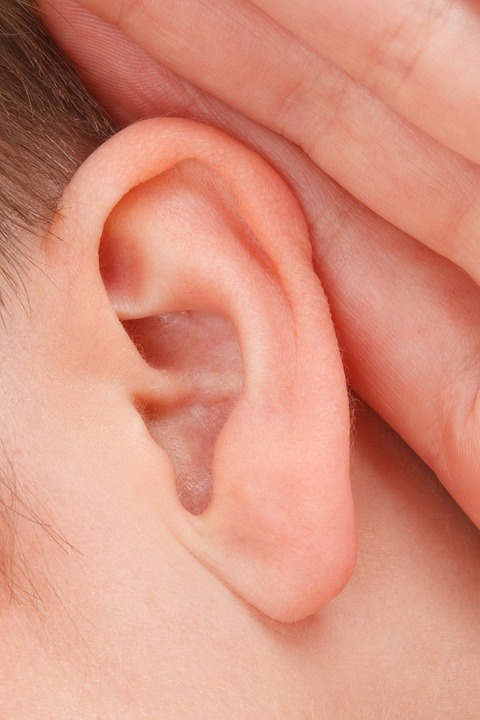
APD is best explained using the example of the game “Operator”. If the first person is the ears, and the last the brain, everyone in between is the channel by which the message travels. And remember what happens? By the time the message reaches the “brain” it has been altered. So, really APD is just that – when a message or sound changes as it travels from the ears to the brain resulting in the brain getting the wrong message.
Signs of APD can include difficulty with: communicating in noisy environments, following multi-step instructions, and wrongly hearing words, sounds and sentences. As an overlap exists between the signs of APD and other disorders, and this may coexist with other problems, it can be difficult to diagnose.
Being a clinician, I recognized early that my daughter struggled with “hearing”. Yet at 18 months her hearing test was “fine”. When she was three I remember telling her that her “ears and brain were not talking”. In school she would become easily distracted, would struggle with multi-step instructions, and did much better in classes that were smaller, less chaotic, or when she sat closer to the teacher. At home the presence of her APD was apparent when my instruction “change your shirt” would be met with the response “I am not wearing shorts”. Or, when the instructions “brush your hair, grab your lunch and put your coat on” might result in one, maybe two, but rarely three of those instructions being followed. But my favorite remains when my daughter told her sisters they were “turtle twins” as she had misheard the word “fraternal”.
The diagnosis of APD is made by an audiologist when the child is at least 7 or 8 years old. However, psycho-educational tests can also be helpful to rule out other or comorbid problems. In adults, APD also exists, and can be the result of many factors, including acquired brain injury. Also, some research suggests that men start to struggle with APD after age 35 and women after menopause.
My next blog will focus on ways we managed our daughter’s APD at home, in sports and school, and these same strategies could also be used by others who have, treat, or know someone with APD.