
“Don’t spend time beating on a wall, hoping to transform it into a door.”
Coco Chanel
“Auto” Mobiles: Cars that Drive Themselves
Julie Entwistle, MBA, BHSc (OT), BSc (Health / Gerontology)
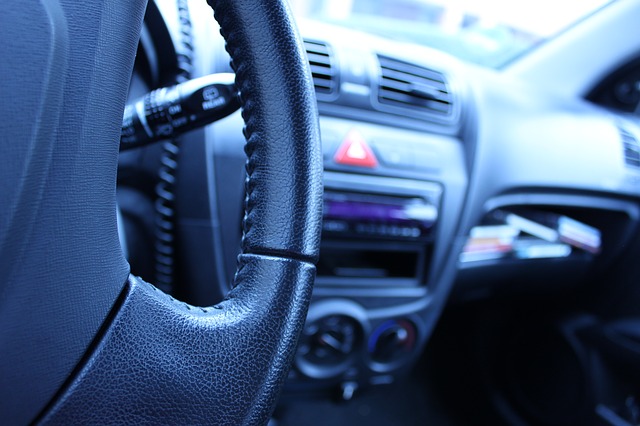
It was years ago that I saw a picture of a new prototype Mercedes. No steering wheel, no gas, brake or clutch – just a joystick that did it all. My instant thought was of how many of my clients would be able to drive a car like that – it would just take one working upper limb. No more bulky hand controls, complicated steering apparatus, or wires and cords connecting it all.
More recently I read an article on “cars that drive themselves”. Amazing. Imagine that. Assuming the technology works, these would eliminate accidents, injuries, and the human problems of driving distracted, tired, while texting, eating, putting on mascara, being under the influence, or even getting lost. It would be like having a driver or a limo every day. No more tragedies of injury and death at the hands of neglect or mistake. This has huge potential to help make transportation time both safer and more productive.
What struck me, however, was that the article I read was written from the perspectives of Ontario insurance companies and body shops. They were expressing concern that “cars that drive themselves” will result in fewer accidents which will lower insurance rates (less insurance profit) and will reduce auto-body repairs. Sorry, what? REDUCING accidents is a problem? I don’t see any health care professionals writing articles or blogs on how devastating it would be to have a reduction in clients who were severely or catastrophically injured in a car accident. Clearly a health professional would look like a schmuck if they voiced that opinion, as do these deep-pocket and greedy insurers and the body shops they are in bed with.
It just goes to reinforce the problem in Ontario. Insurance companies cry fraud, losses and keep suffocating benefits without reducing rates. The government adds restrictions and fees for billing insurance companies and starts to “license” providers. They blame lawyers, providers, tow-truck drivers, and claimants without looking in house at how they are running their “business”. Then they show up with an opinion that expresses concern over lost revenue if people stop getting hurt. Wow. Disappointing.
I have said it before and will say it again – I would be happy to be out of work if it meant people would stop getting injured in car accidents. If insurers truly cared about the people they insured they should be all for it. But then again the incidence of car accidents and resulting injuries have been decreasing for years and our rates have not. Enough said.
Laughter Therapy

Weekly Mind Bender
6 drinking glasses stand in a row, with the first 3 full of juice and the next 3 empty. By moving only 1 glass you must arrange them so empty and full glasses alternate. How can you do this?
Pour the 2nd glass into the 5th glass.
Inspired
Check out the story of two young sisters dedicated to making change by creating awareness about concussions in Canada.

Trouble Sleeping?
Do you have trouble sleeping at night? You’re not alone! There are many factors that can lead to sleep difficulties including: stress, work, family, lifestyle, diet and medical conditions. Sleep is vital to our mental and physical health, and lack of sleep negatively affects productivity and function. Check out our OT-V video “Improving Sleep” for OT recommended tips to achieve a better sleep.
Inspired
“Standing on a hill in my mountain of dreams, telling myself it’s not as hard, hard, hard as it seems.”
Led Zeppelin, Going To California

“Desk-ercise:” Keeping Active at Work
In a recent blog post, we introduced fitness programs at work and the role employers can play in promoting healthy, active lifestyles. As a follow up to this, we are offering some simple, fun and no to low cost ideas for employers and employees to try in an effort to increase daily physical activity during the work day.
· Take the stairs: Even completing one flight of stairs is a great way to add some cardiovascular exercise into your day and stair climbing is also a great activity to promote strength in the lower limbs. Instead of taking the elevator, opt for the stairs any chance you get. For those that are ambitious, in addition to taking the stairs when you need to, walk or jog a few flights throughout your day or on your break. Even if you take one flight then hop back on the elevator you have done something positive to get your blood flowing.
· Walk and Talk Meetings: The concept is simple, but another easy and effective way to add movement to your day. Instead of sitting down for the duration of a meeting, allow employees to walk around the floor or building (outdoors is also a great option, weather permitting).
· Regular Stretch Breaks: Sedentary lifestyles and long periods of static postures have been shown to have serious consequences for our health. Provide employees with diagrams and education on how to complete simple stretches from their desk or work station to help promote position changes, blood flow and flexibility. A good rule of thumb is to complete the stretches once every hour, or any time you begin to feel stiff. Can you have a bell ring, have an email sent, or a message pop up to encourage employees to do a “7th inning stretch”?
· At-Desk Cardio: You don’t have to pay for cardio. This can be as simple as jogging in place in front of your desk, lifting your knees high and walking on the spot, or doing jumping jacks. This can be broken up into 15-30 second intervals completed multiple times over the course of your day and can also be a fun way to relieve stress.
· Wall-Sits for Strength: Find space along a wall or the wall of your cubicle and stand about a foot to a foot and a half away with your back facing the wall. Then lean against it and slide down until your knees are at about 90-degree angles. Hold this position as long as you can (a good rule of thumb is 20 to 60 seconds). Remember to keep your core contracted to help engage your abdominals and support your lower back.
· Park Farther Away: It seems like common sense yet we have become a society of efficiency and effectiveness, and a prime parking spot that reduces the distance we have to walk is the preferred pick for most people. However, by parking further away, this is an easy way to increase the amount of steps you take in a day and increase your amount of overall body movement. Every step counts!
· “Glutes” at your Desk: The “glutes” are a group of muscles in our buttocks region and are one of the strongest muscle groups in our body. You can discretely strengthen and tone your glutes simply through squeezing your glutes as hard as you can and holding for 10 seconds. Then fully relax and rest for 30 seconds. Repeat this exercise up to 10 times.
· Walk it Out: Whether it be on your break, on your lunch, or a pre-determined “activity” break, fit light to brisk walks into your day. Whether it be laps around the office, outside in the parking lot, or around the block, walking helps to improve heart and lung fitness, build stronger bones, and maintain balance. Try walking with a co-worker or offer pre-established routes with information about distance and time so people can select different options to fit their schedules and needs.
· Add Resistance Training to your “Desk-ercise”: Keep light hand weights in your desk drawer and complete different resistance exercises, such as bicep curls and shoulder presses, a few times per day (if you can’t keep weights in your desk, try using a water bottle). For some great tips on how to safely do these exercises, check out: http://greatist.com/fitness/deskercise-33-ways-exercise-work.
· Bring out your Inner Jordan: Put up a basketball net behind the building, or in a non-traffic area on your property, supply a couple basketballs and encourage staff to go out and shoot hoops on breaks. Or, for an indoor version hang a net on the back of your office door.
· Be a Kid Again: Keep a stash of easy and fun equipment in the staff room that all staff can use like skipping ropes, Hula hoops and Frisbees. Can your lunch room accommodate a ping-pong table, indoor shuffle board, air-hockey? Encourage staff play like kids inside or outside so that people can make use of these at any time over the course of the day.
· Free Fitness Classes at Work: Organize “activity trial” days with different forms of exercise and physical activity and help from an instructor for staff to try. Many community groups or local fitness organizations are willing to do a promo or trial class for free in hopes of marketing and promoting their business. However, this can also be a fun and healthy way for staff to bond, manage stress and try new things, all while being active. If possible, offer information to help connect staff who enjoyed a particular class or activity to the corresponding organization or community group in hopes of also encouraging regular participation in physical activity outside of work. Consider yoga, Tai Chi, Martial Arts, Self-Defense, Dance, or even Zumba as some fun options.
For more ways to keep healthy at work, check out our Healthy Workplace page.
Resources
http://www.ualberta.ca/~active/workplace/beforestart/benefits-bottom-line.html
http://greatist.com/fitness/deskercise-33-ways-exercise-work
Inspired

care of designurge.com
Healthy is a Lifestyle, Not Just a Behavior
Julie Entwistle, MBA, BHSc (OT), BSc (Health / Gerontology)
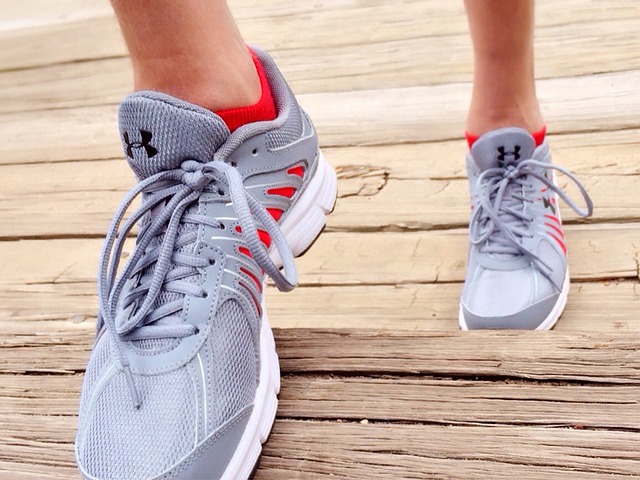
In my work as an occupational therapist I am often asked to help people learn to manage or improve their behavior. Things they want to stop or start doing, and how to get there, become the topic of our treatment sessions. But my response in these situations is often the same and my approach is to encourage people to make “lifestyle” and not just “behavior” changes when it comes to improving function or health. After all, if behavior (be·hav·ior) is: “the way in which one acts or conducts oneself, especially toward others” and a lifestyle (life·style) is: “the way in which a person or group lives”, then there is a difference between acting and living. My job is to coach the latter.
The difference in linguistics might seem small, but I would argue it is huge when actually implementing change. I was reminded of this the other day when taking my daughter to the doctor. Our doctor’s office is on the second floor. She entered the building and moved towards the elevator. I said “sorry Abs, we take the stairs”. She made a disapproving face and I said “we would take the elevator if we needed to, but we don’t and the stairs align with our healthy lifestyle…race ya…”
I wanted her to know that our decisions need to align with our lifestyle and that deciding to take the stairs is not just a behavioral choice (“how should I act given my choices”)? It is a way of living that will create the life we want as a family.
I still maintain that the best course I took in University was “Behavior Modification”. Our project was to modify one of our own behaviors over the four months of the course. As a dog owner, I chose the behavior of “dog walking” with the goal of making this a more regular routine. Over the next four months I mapped out routes, increased walking distances and times, monitored my progress, and made a list of great dog walking locations in my community. By the end of the four months I had adjusted my behavior from walking 20-30 minutes to two hours per day, spread over the morning and evening. This is a routine I maintained for years – adjusting it as needed to accommodate my life changes along the way. But my point is that in hindsight, the course did not allow me to modify my “behavior,” because in the end, I modified my “lifestyle” as this ultimately became the way I lived.
When taking that course I was told that it took four months to modify a behavior. I have since heard that it takes three weeks to develop a new routine. Perhaps the difference between these is that three weeks is a consistent period to make behavior change, but four months is needed for lifestyle adaptation.
Working with my clients I explain that lifestyle change is a commitment and like many things, requires daily practice. We need time to reach the goals together, and change cannot and will not happen overnight because if it did, it would not be sustainable.
Spring is here, the sun is out, days are longer…a perfect time to ask yourself what lifestyle you want to have and to develop a plan to take you in that direction. Don’t over think it. Go big. If “healthy” is on your mind, commit to a full out lifestyle change and make your daily decisions align with that. Take the stairs, adjust your schedule, cut out the sugar, run the marathon, train for the Paralympics, but ultimately commit to a lifestyle and dedicate your energy towards living that way.