“The road opens up in front of my eyes, the only limitation is my mind.”
The Alarm, The Road

“The road opens up in front of my eyes, the only limitation is my mind.”
The Alarm, The Road
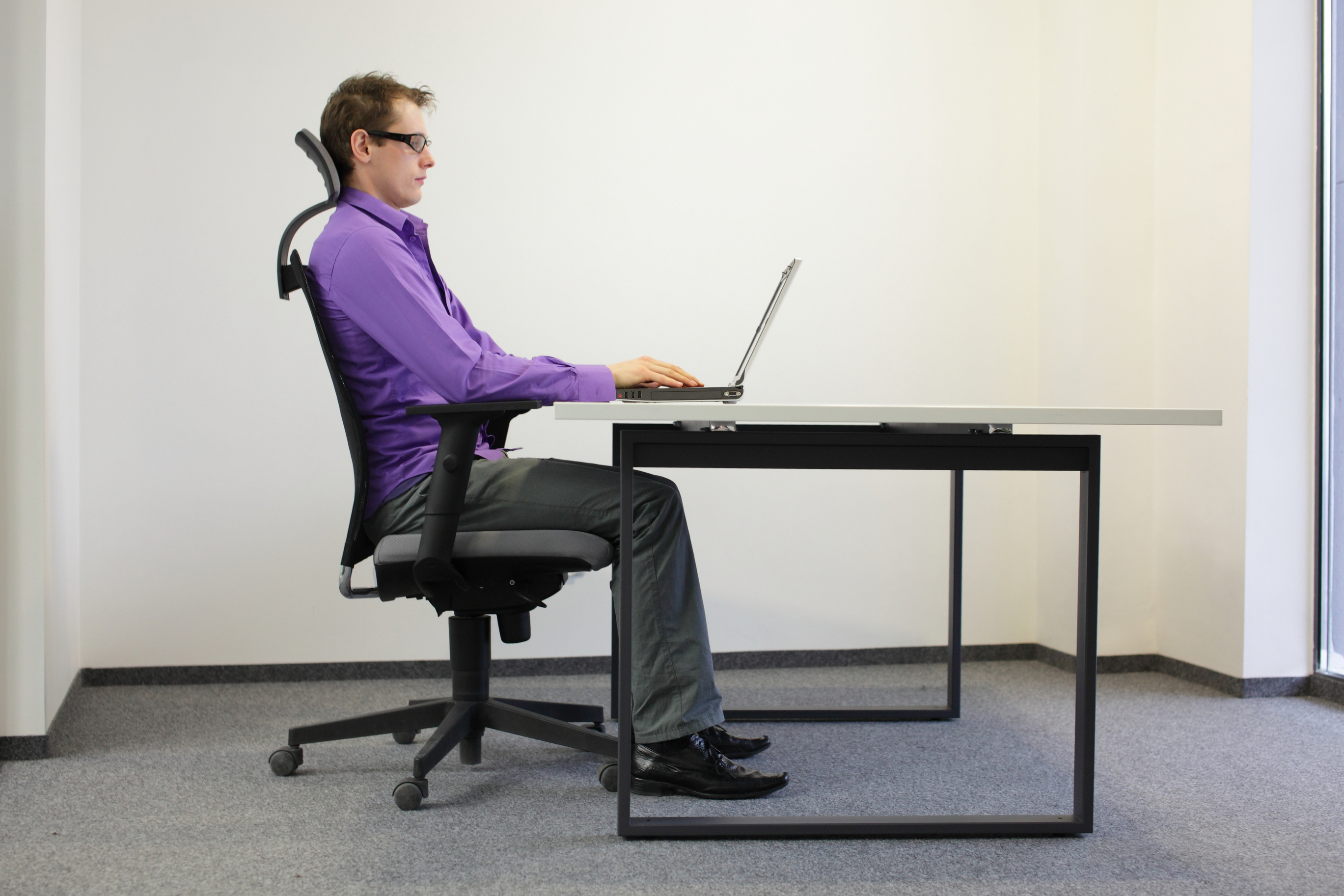
I’m sure you’ve heard the term, “ergonomics” before, but do you know what it means and more importantly, how it could benefit your organization?
Ergonomics is a catch-all phrase for the process of ensuring the body is in an appropriate position when completing daily tasks. Sitting, standing, bending, lifting – all these movements require the proper ergonomic position of the legs, spine, and arms to promote comfort and productivity, and to reduce the risk of physical injury. Proper ergonomics is often most important at work, as this is where you spend the majority of your time.
Everyone deserves to be comfortable at work – from the front line staff to the CEO. When people are comfortable they are happier, more productive, feel valued and supported, and are less likely to leave work due to physical injury from poor office ergonomics.
Check out our informative video for information on how an Occupational Therapist can help in your office by keeping people at work, enhancing productivity, reducing costs, and promoting employee morale and satisfaction.

Eating well is a crucial part of your overall health. Proper nutrition fuels the body, helps ward off illness and disease, and helps you to maintain a healthy weight. When feeding an entire family, during busy and stressful times, it can be difficult to maintain a healthy and nutritious diet as sometimes convenience takes precedent. The following from Global News discusses great tips to get your family on the path to eating well and how to keep you there in the long run.
Global News: Healthy eating– Top tips to keep your family on the right path
“It’s not whether you get knocked down, it’s whether you get up.”
Vince Lombardi

Julie Entwistle, MBA, BHSc (OT), BSc (Health / Gerontology)
Have you ever been in that uncomfortable place of wondering what to say to someone with a disability? That cognitive and emotional process of wanting to offer support, but not wanting to offend? Or worrying about offending by offering support? Or worrying about offending by not offering support? It can be a conundrum.
I recently left a client meeting and one of the other providers was a wheelchair user. As we ventured to the parking lot we stopped at her car. As we were finishing our conversation she proceeded to engage in the process of transferring into her vehicle. Not wanting to provide help without her request or permission, and not really knowing if she needed it in the first place, I simply said “I know you do this all the time but if you need a hand please let me know”. I figured it was the best way for me to acknowledge that I could help if she needed or wanted it, but that I didn’t want to assume she could not be independent.
I have had many clients tell me about situations in the community where people have made comments, or engaged in actions that are blatantly disrespectful. I had one client enter Walmart in his wheelchair and the “Greeter” put a sticker on him saying “I am special”. He was livid. Or, at a recent course we watched a video of a client with quadriplegia trying a community outing for the first time since his injury. As he struggled to manage his wallet and bank card the cashier was visibly annoyed. Granted she was young, but clearly had no patience for this man that was struggling and her actions were clearly not going to make him feel any better. On top of being compassionless, she didn’t offer him any assistance either.
Ontario has made some great strides in the domain of customer service. Not only are commercial buildings to be accessible to people with mobility impairments, but now employers are responsible for training their staff on how to appropriately and effectively provide service to people of all abilities. This is a great step in the direction of helping all people know how to manage service situations that require compassion, patience and understanding. We have previously blogged about the Accessibility Legislature in Ontario and you can find that information here: “Accessibility In Ontario.”
So, have you ever wondered how to navigate those waters? Have you ever used the words “confined to a wheelchair” or “wheelchair bound”? Do you understand the difference between handicap and disability? Do you know how use of words like “cripple, invalid and retard” have changed over time to now be generally unacceptable ways to reference someone with a disability? For people in wheelchairs, the wheelchair actually allows them freedom of movement. It returns to them a level of function they lost when their legs stopped working. For many of them, the ability to be independently mobile is not “confining” and does not make them “bound”. It is now proper practice to put the “person” before the “disability” and to describe their situation as you would their hair color. For example, “Julie has brown hair” has the same application as “Julie uses a wheelchair”. How could I be offended by such a statement of fact? I recently came across the following resource called “Watch Your Language” and find this is an excellent tool to help people that may not have regular contact or training speaking to or about people with disabilities to understand the nuances of language surrounding this topic.
But I think the most important thing to remember here is that not all disability is visible. It is never good practice to speak negatively, disrespectfully or rudely about anyone. Doing so just reflects poorly on you. Remember that everyone has a story and the one you might make in your head about that person or their situation may not be accurate. As Stephen Covey always said “talk about people like they are present”. In the current movie Cinderella, I love the advice she gets from her dying mother: “have courage and be kind”. Words to live by.
Check out the “50 Happiest Animals In the Entire World.” Sure to make you smile!
Austin Riley, at the age of 16, has just finished his “Racing with Autism” tour during which he travelled 23 000 km across North America to race, share his story, and create awareness for Autism. See more about Austin and his inspirational tour here.
The “baby boomer” population is aging. It is estimated by Statistics Canada that by 2031, all boomers will have reached age 65, and the proportion of seniors could reach 23% of our population. Government and businesses are planning ahead to accommodate for the increase to the 65+ population in many ways. Overseas a new trend in senior’s health has erupted and it could soon be coming to a community near you. The following article from The Huffington Post discusses the creation of “senior’s playgrounds” which are said to be beneficial to the elderly by providing physical activity and increased social interaction. Check out the article to learn more about these playgrounds and look for one soon at a park near you.
The Huffington Post: Playgrounds For Seniors Improve Fitness, Reduce Isolation
“The greatest thing you ever can do now is trade a smile with someone who’s blue now.”
Led Zeppelin, Friends