“You’ve got to follow that dream, wherever that dream may lead.”
Elvis Presley, Follow That Dream

“You’ve got to follow that dream, wherever that dream may lead.”
Elvis Presley, Follow That Dream

Julie Entwistle, MBA, BHSc (OT), BSc (Health / Gerontology)
“There is no health without mental health.” –World Health Organization
This quote from the World Health Organization really drives home the importance of a holistic health approach. When it comes to health and safety in the workplace, we are often quick to think of work-related musculoskeletal disorders and other physical injuries, but just as with health in general, we also need to make mental health in the workplace a priority. Psychological health in relation to work is comprised of the ability to think, feel, and behave in a manner that allows employees to perform effectively in work environments, as well as in their personal lives and society at large. As an employer, here are some starting points to consider to help you promote mental wellness in your work environment.
Learn to recognize potential or existing problems: Stress is often thought to be a typical part of any job. However, excessive stress can lead to mental health problems. Take a critical look at your work environment. Do your employees face high demands? Excessive pressure? Do they have low control or say in how things are done? These can create unhealthy work conditions that lead to increased levels of work-related stress, which can lead to increased risk for mental illness.
Talk about mental health: People who experience mental health issues often face stigma, shame and misunderstanding. Often times, employees who are experiencing mental health challenges are fearful to approach their employer and thus keep their issues private. Whether you are already aware of employees dealing with mental illness or not, voicing your support for mental wellness at work helps to foster a trusting and open environment. This can make all employees feel more comfortable to discuss problems, or ask for help. Try posting a sign in the staff room or regularly mention that you support mental wellness. Leading by example sets a strong standard and helps develop a healthy work culture of acceptance.
Know your responsibilities: Do you know the signs and symptoms of common mental health issues such as depression or anxiety? Do you understand how these conditions impact an employee’s performance on the job? Are you aware of your legal responsibilities to your employees dealing with mental illness such as accommodations? Do you know what resources are available to you and your employees to support mental health at work? You need to be aware of all these factors to be able to promote and support mental wellness.
An ounce of prevention: Implementing preventative measures in relation to mental wellbeing at work can be achieved in a variety of ways and when done well, these can have a significant impact on improving productivity, reducing absenteeism, presenteeism, and employee turnover and associated costs. Look at creating a workplace wellness program that addresses all aspects of your employees’ well-being, especially mental health. Show your employees that you value their health and make this a standard component of your business decisions. Mental wellness also needs to be reflected in workplace policies and procedures and show that employee wellbeing is a core value of your organization.
Occupational therapists’ knowledge and skill set allows them to help employers and organizations with each of the four areas listed above and more. From providing education and training programs, assessing problem areas, supporting communication and developing policies, occupational therapists can provide essential information and assistance to enable you to support mental wellness at work.
Check out more of our healthy workplace posts here.
Although it’s chilly outside, there’s no need to drop the daily smoothie. Although the traditional smoothie ingredients might not be in season, now is a great time to try a new and tasty recipe filled with nutritional benefits. Check out these great winter smoothie recipes and tips from Alive Magazine.
“Start by doing what’s necessary; then do what’s possible; and suddenly you are doing the impossible.”
Francis of Assisi
Julie Entwistle, MBA, BHSc (OT), BSc (Health / Gerontology)
Over the holidays we were prepping for a family ski trip. Our children are not yet skiers, and were asking us questions about our upcoming adventure. My oldest daughter asked my husband “Daddy, have you ever fallen when you ski”? His response was “Of course…that is why I am a good skier – if you are not falling you are not learning anything”. So true.
His comment got me thinking about fear, risk and how people learn. We need to fall to know how to get back up. We need to fail to know how to succeed. We need to make bad decisions to know how to do it right the next time. We need to lose money to know how to keep it.
Humans seem especially good at falling, failing and learning as children, teens and young adults – provided the people in their environment provide them with these valuable opportunities. As adults we tend to fall and fail in our early careers, social and personal lives while we learn how to behave as an adult and to manage our growing responsibilities like work, families, homes, etc. Then we seem to reach an age where we become teachers, leading the younger generations to grow as we have. We still need to gain knowledge during this time, but ultimately we might be revered as wise for all we already know. But then do we stop learning? Or stop having the will to learn? Do we reach a point of “knowing it all”?
I will use another example to explain why I ask these important questions. I have a close friend whose elderly grandparents are struggling to manage in their home. They both have health issues and struggle to mobilize, access their upper level, get into the community, and cannot care for their home as they need to. Family is providing a significant amount of support while living in a state of constant worry. Really, the couple are one fall or new health problem away from losing their home and being institutionalized. My friend mentioned to the daughter of this couple that an Occupational Therapist could provide valuable insight into how they might be able to manage more safely and independently so they can stay at home. The daughter replied “Oh, they would never go for that”. How sad. This couple are unwilling to learn.
With a background in Gerontology (the study of aging), I understand fully the challenges most of us will face as we age. And as an Occupational Therapist (the study of human function) I also understand the difficulties of living with a physical, cognitive, emotional or behavioral disability – age related or not. But the big difference I see between my younger and older clients is their willingness to learn. My younger clients seem to want to learn what I know, they appreciate how I can help, and engage in the process of working with me to make things better. Yet my older clients are historically much less open to suggestions. It is more difficult to get them to consider alternative ways to manage, devices that might help, or to accept assistance to do activities that are now unsafe for them to do on their own. My funniest example of this was a 96 year old client that told me “scooters are for old people”.
I consider myself a life-long learner. I recently finished my MBA, am constantly reading books about business, health and wellness, I take great interest in the stories and experiences of other people, take courses, attend conferences. I just hope that when I reach that wonderful age of ultimate maturity I will continue to appreciate the value that other people can bring to my life and situation. And hopefully I will accept suggestions, input and ideas proactively. Because while falling is one way to learn – like when skiing – the older we are the harder it is to get back up again.

I have streets but no pavement. I have cities but no buildings. I have forests but no trees. I have rivers but no water. What am I?
A map.
My daughter suggested this wonderful and inspiring story showcasing the healing power of animals. Enjoy…
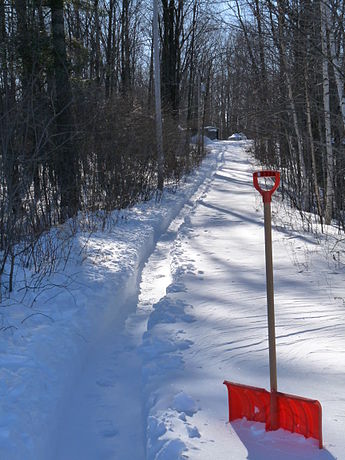
There are many wonderful things to enjoy in the winter, however, shovelling is not often one of them. Shovelling can be a daunting (and sometimes never ending) task that when done properly can provide an opportunity for fresh air and exercise, however, when done incorrectly can do a host of damage to your muscles, your back and even your heart. Follow these great tips from Sunnybrook health and ensure you shovel safely for the remainder of the winter.
Sunnybrook Your Health Matters: 5 Tips for Safer Snow Shovelling