Julie Entwistle, MBA, BHSc (OT), BSc (Health / Gerontology)
Brain injury awareness month continues…next stop – concussions!
If you ask a crowd of people if they have ever had a concussion, about 1/3 will raise their hand. Direct hits to the head, and closed head injuries, are not uncommon in children and young adults, decrease in frequency in adulthood, but increase again in seniors. My last blog on prevention discussed the statistics and outlined that the most common causes are falls, motor vehicle accidents and sports.
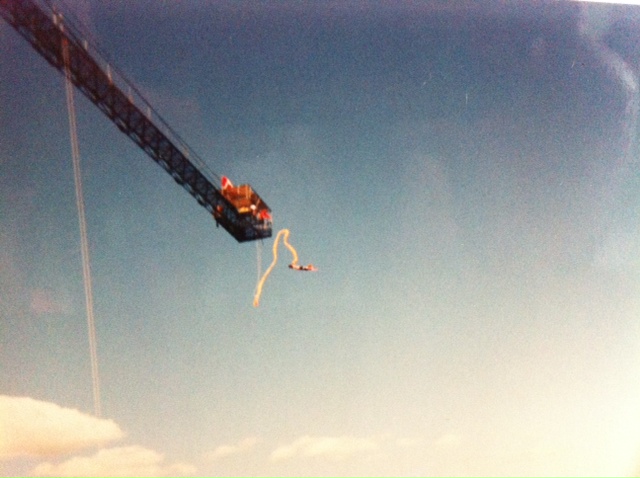
Personally, while I didn’t know it at the time, my own concussion experience comes from a high school graduation trip where I decided (against my mother’s advice) to try bungee jumping. I was jumping over water and the goal was that I would dip my hands in the water as the rope became taught – just before it would fling me back into the air. They told me to “tuck my chin and close my eyes” as I approached the water “just in case” I get submerged. So, I am flying through the air, have no concept of distance to the water (it comes up fast when you are free falling), and think “oh I better tuck my chin and close my eyes” but of course doing so not only reduces the thrill of the experience, but causes you to become further disoriented. So, eventually I think I have missed the water and open my eyes, lift my head up to look around and SPLAT – smack the water with my face. Awesome. For the next few days I was in a bit of a fog, had some bruising around my eyes, and a headache. Soon after I developed vertigo – a condition I have been living with ever since. At the time, the word “concussion” was not the buzz word it is today, but I hindsight I think my bungee-face episode qualified (oh, and for the record my mom was only half right – she said I my ovaries would end up around my ears and they didn’t – four kids proved her reproduction theory wrong, but I guess vertigo proved her caution right).
The good news is that over the last few years the media has exploded the discussion of concussions and these are now strongly on health care, sports, and motor vehicle accident radars. The bad news is that I think many people have become confused by the lingo, types, symptoms, and management.
With the help of fellow Occupational Therapist Jayne May who has special interest and training in concussion assessment and management, we will do our best to provide some clarity as follows:
Concussion – a traumatically induced physiological disruption of brain function, as manifested by one or more of the following:
• Any period of loss of consciousness for up to 30 minutes.
• Any loss of memory for events immediately before or after the accident for as much as 24 hours.
• Any alteration of mental state at the time of the event (e.g., feeling dazed, disoriented or confused).
• Focal neurological deficit(s) that may or may not be transient (e.g., poor balance, blurred vision, headache).
Post-concussion syndrome – diagnosed 4 weeks after a concussion when 3 or more of the following symptoms remain: fatigue, disordered sleep, headaches, vertigo or dizziness, irritability or aggression, anxiety, depression or affective instability, changes in personality, apathy or lack of spontaneity.
Chronic traumatic encephalopathy (CTE) – a progressive neurodegenerative disease that is a long-term consequence of single or repetitive closed head injuries for which there is no treatment and no definitive pre-mortem diagnosis. It has been closely tied to athletes who participate in contact sports like boxing, American football, soccer, professional wrestling and hockey. The exact mechanism for CTE has not been precisely defined however, research suggest it is due to an ongoing metabolic and immunologic cascade called immunoexcitiotoxicity.
Second-impact syndrome (SIS) – when the brain swells rapidly, and catastrophically, after someone suffers a second concussion before symptoms from an earlier one have subsided. This second blow may occur minutes, days or weeks after an initial concussion, and even the mildest grade of concussion can lead to SIS. The condition is often fatal, and almost all people not killed by this are severely disabled (1).
With medical definitions aside, it is important to look at the clinical signs, and the ways that these can be managed through occupational therapy. To highlight what we experience as therapists, our clients with concussions or PCS often say:
• I have frequent headaches.
• I have pain behind my eyes.
• I find shopping difficult.
• I feel foggy.
• I am sensitive to light.
• Loud noises that never bothered me before now make me irritable.
• I can’t focus long enough to enjoy a movie, conversation, or to read.
• I feel sick when I am a passenger in a car.
• My balance is terrible and I bump into walls and furniture all the time.
• It takes me hours to fall asleep. I may get 4 hours of sleep a night.
• I am always tired.
• I feel like I am floating.
• I keep losing things, forgetting events, and missing appointments.
• I feel worse after I exercise or exert myself.
• Technology (computers, TV) bothers my eyes and makes my headache worse.
As you can see, these types of complaints and symptoms dramatically impact on someone’s ability to work, drive, go to school, manage daily routines, or even participate in social or leisure activities.
So, as occupational therapists, what do we do to help our clients through this? The first step is always education. Rest, rest and rest are so important to give the brain the time it needs to recover. Our job is to help people achieve the balance of cognitive and physical rest, while still helping them to manage their important life roles. This involves pacing education, trial and error, and tracking of activities so people can strike the right balance now, while increasing demands slowly as symptoms improve. Often, we are responsible for setting return to work / school / sports / fun guidelines for clients and employers, teachers, and parents.
We are also integral at helping to address the specific concussion and PCS symptoms that clients find so troublesome. This includes how to manage head pain (ice, rest, facilitate medical consults), noise and light sensitivity (noise reducing headphones, ear buds in public, dark glasses or shades or blinds in the house), dizziness / floating (suspenders, weighted vest, tight underclothing), memory strategies (smartphones, calendars, planners, lists, drop spots), visual changes (bi-nasal occlusion, vision therapy), fatigue (timers, sleep strategies, scheduling changes), to name a few.
The role of occupational therapy in helping people to manage concussions or post-concussion syndrome is becoming more and more recognized by both the medical and rehabilitation communities. So, if you are struggling to recover from a concussion, or insure or represent a client that has these problems and is struggling to participate in important life roles, consider occupational therapy for helping them to return to work / home / school / fun!
(1) Wikipedia