Close

Author Archive for: jentwistle

by

How to Have a Safe Halloween

Tuesday is Halloween, a night when children dressed monsters, witches, superheroes and more hit the streets to Trick or Treat.  While Halloween can be a fun night for both kids and adults, there are many dangers associated with it.  Learn some valuable Halloween safety tips in the following from Safe Kids Worldwide to ensure your little ghosts and goblins have a fun and safe Halloween night!

Safe Kids Worldwide:  Halloween Safety Tips

by

Weekly Mind Bender

Solve the following:


puzzle care of http://www.thinkablepuzzles.com


1. Cry all the way to the bank
2. The stakes are high
3. That’s too bad
4. Eyes in the back of my head
5. Miniskirt
6. All in All

by

O-Tip of the Week: Ways to Prevent Sitting Disease

Our O-Tip of the week series we will be providing valuable “OT-Approved Life Hacks” to provide you with simple and helpful solutions for living. 

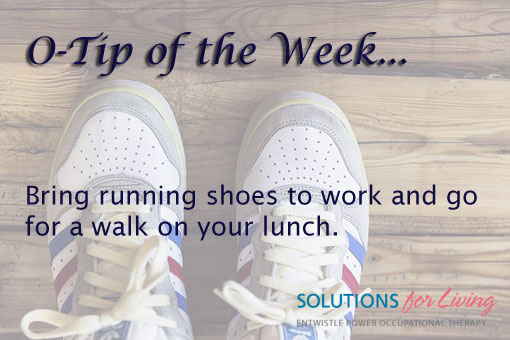
This week’s O-Tip of the Week focuses on ways to get you moving throughout the day in order to keep a healthy lifestyle and prevent sitting disease.

Bring a pair of running shoes with you to work and take a walk on your lunch and/or breaks.  Walking is great for cardiovascular and bone health and will help to prevent the negative effects of sitting all day.

Learn more ways to combat the negative effects of sitting disease in our post, Solutions to Stop Sitting Disease.

by

A MUST READ New Guideline for Insurance OTs in Ontario

Julie Entwistle, MBA, BHSc (OT), BSc (Health / Gerontology)

With all the legislative changes in the very contentious auto insurance industry, it can be hard to stay current.  Case law, reports, position papers, and of course the high-profile circulations of the Toronto Star.  But sometimes what goes unnoticed is the work of the Colleges or Professional Associations that spend time and resources trying to provide guidance and support to those of us working in this everchanging area of practice.

In the world of Occupational Therapy, one recent document has been posted by the College of Occupational Therapists of Ontario that thoroughly speaks to the challenges, college expectations and tug-of-war that OT’s experience in this difficult sector.  This circulation, entitled “Guideline for Working with Third Party Payers” is a must-read for OT’s in the insurance industry, and serves as a useful tool for anyone (clients, lawyers, insurers, other professionals) who retain, work with, or otherwise engage with an OT for assessment or treatment services.  The guideline (https://www.coto.org/news/new-guidelines-for-working-with-third-party-payers) covers all important aspects of practice in the world of third party work, and includes the following summarized sections:

Providing Ethical and Competent Client Care reviews the Ethical responsibilities of the OT to be transparent, fair and impartial.

Defining Your Role and Setting Expectations with Stakeholders addresses how important it is for OT’s to follow the Standards for OT Assessment and to understand the limits to their own competencies when accepting referrals.

Consent and Personal Health Information discusses how to manage difficult consent situations, for example if another person indicates they got “consent” for the OT, or if a client later withdraws consent during an assessment or treatment. Importantly, it also talks to an OT’s requirement to get new consent when presented with a request to review or comment on new information that was not received when initial consent was obtained.  The submission of reports in draft form to third parties is also covered.

Managing Records and Reports reminds OT’s of their responsibility with record keeping, privacy legislation, and of course the client’s right to access their records.

Managing Conflicts of Interest considers the challenges in this high-stakes industry that is fraught with important funding decisions, conflicting agendas, and relationships that can be formed with clients, insurers, lawyers and the like.  This section deals with these competing interests, conflicting standards and opinions, personal conflicts between oneself and third parties, companies or even other professionals.  Also covered in this section is referrals received from friends or family members, being requested to observe an independent medical exam, and treating clients that are related.  OT’s are reminded that practicing within a conflict of interest (perceived, real or implied) is considered professional misconduct.

Managing Professional Boundaries are addressed and this section highlights different types of potential boundary crossings with clients and referral sources / payers.  It speaks to monetary relationships and financial / gift incentives as a boundary crossing and one that can jeopardize client outcomes and breach professional boundaries.

Use of Title is discussed as a reminder to the different titles an OT may have in providing service, and how to be clear about their role at all times.

Independent Practice reviews the nature of being an “independent contractor or provider” and the resources available to set up, and run, an independent operation.

Lastly, the guideline covers the expectations for providing services to clients who Live Outside of Ontario and reminds OT’s that the client’s location, not theirs, is the jurisdictional boundary and practicing outside of Ontario is not permitted unless the OT has a license in that location as well.

Overall, this document is a useful tool and hard reminder to OT’s of their obligations and expectations as licensed professionals in Ontario.  It may also prove helpful for other stakeholders to review, such that they too understand the rules and boundaries on OT’s so that they can be mindful of these in their working relationships with us.

by

A Step in the Right Direction — Forward

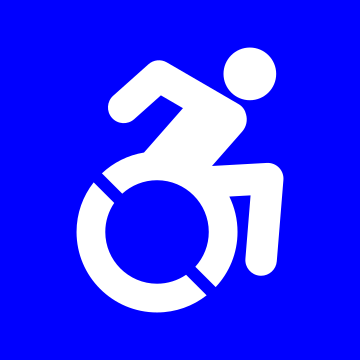
The Forward Movement, an advocacy group, is working hard to raise awareness and make change in Ontario.  The group is working to have Ontario officially adopt the Dynamic Symbol of Access to replace the currently used International Symbol of Access.  Why?  The dynamic symbol shows action and movement symbolizing differing abilities and can help to change the way society views disability.

It was all about the disability, and not about the person,” says Dylan Itzikowitz, co-founder of The Forward Movement, about the current symbol.

Learn more about The Forward Movement in the following article from CBC News.

CBC News:  Accessibility activists want to ditch iconic symbol highlighting the wheelchair, not the person

How can you support The Forward Movement?  Sign the petition, make a donation, follow The Forward Movement on social media, and/or become a Proud Partner like us.  Learn more about these great ways to get involved by visiting www.theforwardmovement.ca.

by

O-Tip of the Week: A Smart Solution for Printing Success

Our O-Tip of the week series we will be providing valuable “OT-Approved Life Hacks” to provide you with simple and helpful solutions for living. 

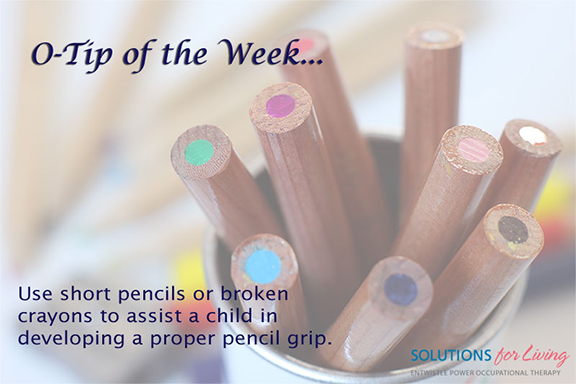
This week’s O-Tip of the Week focuses on ways to assist children who are struggling with printing and handwriting.

Using a small pencil or broken crayon is a great way to help kids learn how to properly hold a pencil.  Learn more about how Occupational Therapists help kids with printing and handwriting in our OT-V episode:  Solutions For Printing Success.

by

Occupational Therapy, Social Work, Both or Neither?

Guest Blogger: Carolyn Rocca, Occupational Therapist

When dealing with any form of injury, illness, or life changing event, clients may find themselves being referred to social work (SW) or occupational therapy (OT), or even both. As there can be overlap between the roles of these professionals, it can be helpful to take a closer look at what each profession specializes in, how they differ, and what they can offer you throughout your recovery.

What is similar about both of these health professions is that their role greatly varies depending on which context the professional is working in, making it challenging to define either simply.

Note: While a SW had input into the content of this blog, the objective here is not to fully explain the SW profession, but rather to try and clarify the similarities and differences between SW and OT.  For more information about Social Work, a few Ontario-based resources are listed as follows, and of course more information is available online or by connecting with a SW directly about the services they offer:

Ontario College of Social Workers and Social Service Workers (OCSWSSW) website:  http://www.ocswssw.org/

Ontario Association of Social Workers (OASW) website: https://www.oasw.org/

The Canadian Association of Social Workers (CASW) describes Social work as a profession that aims to help individuals, families, groups, and communities to enhance their individual and collective well-being, by assisting them in developing their skills and abilities to use their personal and community resources to resolve problems (2017). In most provinces across Canada, the minimum educational requirement to become a SW is a 4-year undergraduate bachelor degree in Social Work, while master’s and doctoral degrees are also available (CASW, 2017).

SWs are trained to provide services across many diverse settings including children’s aid agencies, family services agencies, school boards, general and psychiatric hospitals, correctional facilities, welfare administration agencies, federal and provincial departments, as well as private practice. Not surprisingly their roles vary greatly in each of these settings however, some skills and responsibilities are common across practice contexts.

SWs are unique in that they focus on relationships as the basis of their interventions and are experts in providing services not only to the client, but also to their families. In many settings, SWs often play the role of case manager by linking the healthcare team with the client and family, and connecting the client to relevant agencies, services, or programs based on their needs and community resources (i.e. financial assistance, legal aid, social programming, and housing, employment, and education supports, etc.). Certainly, a large difference between OT and SW is that the latter can provide assistance with parent-child relationships, marriage counselling, and mediation services to assist families in resolving disputes. Fundamentally, they are experts in connecting people to one another and to essential resources.

Whereas, the Canadian Association of Occupational Therapists (CAOT) describes OT as the art and science of enabling engagement in everyday living by empowering people to perform the occupations that foster health and well-being in order to participate to their potential in the daily occupations of life (Townsend & Polatajko, 2013, p. 380). Essentially, OTs focus on helping people manage and participate in the day-to-day tasks that are important to them, including their ability to care for themselves, or carry out their role as a spouse, parent, or employee. In most provinces, to become a registered OT, one must complete a 4-year undergraduate degree, and subsequently a 2-year Master’s degree in Occupational Therapy.

Although OTs can provide services in many of the above listed areas of practice, what they offer can be much boarder in scope. While both professions can provide case management services, individual or group-based interventions (i.e. support or psychoeducational groups), and counseling services to assist people in their recovery from an injury, illness, substance use disorder, or major life transition, OTs can also offer a breadth of rehabilitative services. These services can include prescribing and teaching the use of assistive devices and mobility equipment, and providing recommendations, strategies, and education to find solutions to clients’ day-to-day functional challenges and barriers.

Although there are several differences, OTs and SWs have many overlapping roles, meaning they must communicate and collaborate to ensure they are each offering unique services when both working as part of a client’s healthcare team. For example, consider an individual who has sustained physical injuries and secondary mental health challenges as a result of a motor vehicle accident. Throughout their recovery, an OT will be essential in prescribing and training the client in the use of a wheelchair, suggesting environmental modifications so that the client can navigate in their home, and providing recommendations and education about how the client can safely perform daily tasks like showering and meal preparation. Additionally, the OT would provide psychoeducation and coping strategies to support the client in managing with their mental health symptoms, change in daily routine, altered life roles etc. Meanwhile, a SW might focus on providing counselling services to the individual as well as their spouse or children, who would be adjusting to the change in family dynamic considering the accident and resulting challenges of their spouse / parent. Further, a SW would be helpful in terms of assisting the client in accessing disability support services, funding programs, and local peer support groups.

Overall, despite any shared roles, each profession offers unique strengths, skills, and expertise that the other cannot. Their individual areas of specialization make these professionals vital members of multidisciplinary healthcare teams, and together they offer many needed services throughout the rehabilitation process.


Resources and References

Canadian Association of Occupational Therapists (CAOT) website: http://www.caot.ca/default_home.asp?pageid=2412

Canadian Association of Social Workers (CASW) website: https://casw-acts.ca/en

Canadian Association of Social Workers (CASW). (2017). What is social work? Retrieved from https://casw-acts.ca/en/what-social-work

Ontario College of Social Workers and Social Services Workers (OCSWSSW) website: https://www.ocswssw.org/

Townsend, E. A., & Polatajko, H. J. (2013). Enabling occupation II: Advancing an occupational therapy vision for health, well-being, & justice through occupation. Ottawa, ON: CAOT Publications ACE.


by

Stand Up for Good Health

We’ve spoken a lot on our blog about the negative effects of our sedentary lifestyles and sitting disease.  Unfortunately, for many, our jobs require us to spend long hours at a desk, in front of a screen without much movement.  Making time for movement throughout the day is extremely important to help battle these negative effects.  Learn more about the benefits of building movement breaks into your day in the following from Participaction.

Participaction:  This is how standing up more often can change your entire workday