Close

Archive for category: Healthy Workplace

by

OT Helps Employees Return To Work

In 2011, Statistics Canada reported that 5.9% of full-time employees were absent from work due to illness or disability. The costs associated with workplace injuries are vast.  Studies have shown that the duration of work disability, as well as costs, are significantly reduced when the workplace has contact with a health care provider coordinating return to work interventions. In fact, well-designed return to work programs are now recognized as the best practice to reduce costs associated with worker’s compensation.

In the following video from our OT-V series we will discuss how occupational therapists can help to support the critical transition back to the workplace following an interruption of work duties due to physical or mental health issues.

Occupational therapy is a cost-effective strategy to accelerate the client’s recovery and rate of returning to work. With an effective return to work plan coordinated by an occupational therapist, injured or ill employees can recover quicker and return to work faster, significantly reducing employer costs associated with workplace injuries.

by

Improve Nutrition As A Team

Julie Entwistle, MBA, BHSc (OT), BSc (Health / Gerontology)

It is no secret that obesity is on the rise across North America.  In fact, a 2014 study shows that obesity now accounts for 8.6% of youth and 25% of the adult population.  (Després, Alméras, & Gauvin, 2014)   The leading causes of this “obesity epidemic” are sedentary lifestyles, lack of physical activity and poor nutritional choices.

With the stressful lives being led by our generation, taking time to prepare and bring healthy lunches and snacks to work is difficult.  Yet, without a healthy snack or lunch, the tendency is to purchase food that is not healthy, or to under-eat which, believe it or not, can also cause obesity as our body works to “hold onto” every calorie in fear of starvation.

Employers may ask “why do I care if my team is eating unhealthy”, but the answer is obvious:  a healthy workforce is a productive workforce and workplace absences for health-related problems (including obesity, heart disease, diabetes etc) are hugely disruptive.

Here are a few suggestions that can be implemented at the workplace to help improve the health of your staff and organization:

1.       Schedule Regular Healthy Pot-Luck Lunches — choose a day of the week and have each person bring in a healthy lunch item for a team-building activity.

2.       Bring A Colleague A Lunch — people are more likely to prepare healthy meals for others than for themselves, so capitalize on this and arrange for “bring a colleague a lunch week” and see the efforts people will go to in order to promote the health of a colleague.

3.       Recipe Of The Week — each week choose a member of the team to share make their favourite healthy meal or snack and bring it in to share with the team.  Have them send each member a recipe via email for them to make on their own.

4.       Education Opportunities — bring in a nutritionist, dietician or health coach to speak to the team about how to create healthy meals and snacks to help fuel their day at work.

5.       Brown Bag Week — encourage the team to have a “brown bag” week.  Eating out can lead to unhealthy choices and lack of portion control.  Bringing your own lunch can help to ensure you are getting the nutrients you need and fueling productivity the entire day.

6.       Russian Lunch Roulette — like secret Santa, have everyone bring a balanced lunch and randomly select who gets what lunch.  It always tastes better to consume something made by someone else, so people should enjoy the surprise lunch they end up with.  Of course, plan ahead for any allergies / food requests and ask people to put sauces / condiments on the side to be added only if desired.

In the end, lead by example.  Employers have the ability to create opportunities that can help their workforce to engage in healthy habits.  Use the strength of your organizational alliance to bring people together to help them achieve healthy goals.  Everyone will benefit, including the organization.

by

Increasing Physical Activity At Work

Julie Entwistle, MBA, BHSc (OT), BSc (Health / Gerontology)

While anti-smoking campaigns have been in effect for decades, more recent health promotion efforts are being directed at preventing obesity, heart disease and the detrimental effects of prolonged sitting, now called “sitting disease”.  As society experiences this paradigm shift away from sedentary activity, employers too need to be on board with solutions on ways to keep employees active when the job demands require continuous desk work.

If you are concerned about the effects of sitting disease and are looking for ways to increase health and wellness at work, the solution is actually simple.  Just start by getting moving!  If you are an employer and are not ready or able to invest in a comprehensive wellness program, or you are an employee and these are not offered where you work, start with some simple team-building challenges.  Consider the following:

1.       Stair climbing.   Try to challenge workplace to at 30 day “Climb It Challenge” where everyone takes the stairs.  Or if your office is too high up, no problem, take the elevator 5 floors below your level and walk the stairs from there.

2.       30 day squat challenge.  This is easy, requires no equipment and won’t leave your office team with the need to shower following.  Have those interested meet for 5-10 minutes a day and complete each day’s challenge.  This 30 day squat challenge has a daily plan you can follow.

3.       Bike or walk to work month.  This is easier to do in the warmer weather months, so try to challenge your team to walk or bike to work each day.  If you are in a remote location, or if employees commute, ask employees to park a couple of blocks away and walk or ride from there.

4.       Get your yoga on.  Each day with your team, take 10-15 minutes to run through some easy yoga poses to help boost posture and strength. Check out some of these beginner poses to try.

5.       Organize a walking lunch group.  Each day with your team take a 30 minute power walk at lunch or break time.  Walking is great for cardiovascular and bone health and will help to prevent the negative effects of sitting all day.

Working together with a team dedicated to improving health and wellness will help to keep individuals motivated and on track.  In the end, don’t forget to celebrate your success and keep the momentum going!

Check out more on staying healthy at the office on our Healthy Workplace page.

by

Reducing Injury and Illness In The Workplace

Having employees off from work due to injury and illness is costly to your organization and detrimental to the overall wellbeing of your team.  Stress, high demands, dangerous work environments and poor ergonomics in the workplace can lead to illness and injury.  Do employers realize that THEY (and their workplace environment) may be the leading cause of these leaves?  And more importantly that THEY are the ones who can work to prevent future illness or injury.

The following article discusses two of the main reasons an employee may be on long term disability leave, how the workplace environment may be the cause, and how occupational therapy can assist in the prevention of workplace injury and illness.

Roger Foisy:  How Employers Can Become a Cause of Long Term Disability Claims

by

What Is Ergonomics?

I’m sure you’ve heard the term, “ergonomics” before, but do you know what it means and more importantly, how it could benefit your organization?

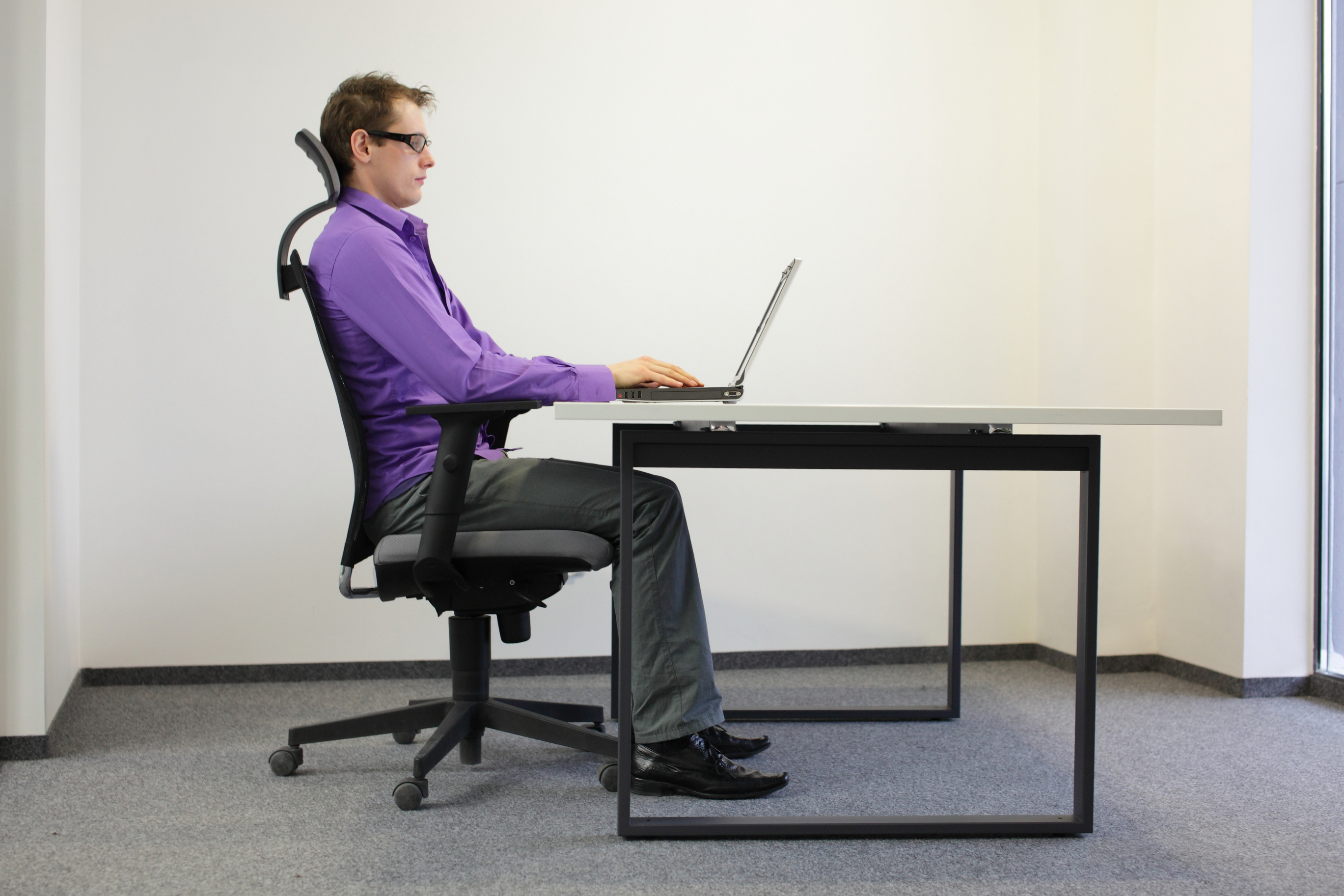
Ergonomics is a catch-all phrase for the process of ensuring the body is in an appropriate position when completing daily tasks. Sitting, standing, bending, lifting – all these movements require the proper ergonomic position of the legs, spine, and arms to promote comfort and productivity, and to reduce the risk of physical injury.  Proper ergonomics is often most important at work, as this is where you spend the majority of your time.

Everyone deserves to be comfortable at work – from the front line staff to the CEO. When people are comfortable they are happier, more productive, feel valued and supported, and are less likely to leave work due to physical injury from poor office ergonomics.

Check out our informative video for information on how an Occupational Therapist can help in your office by keeping people at work, enhancing productivity, reducing costs, and promoting employee morale and satisfaction.


by

Cognitive Challenges at Work– There’s an App For That!

CanAssist is an organization at the University of Victoria with the mission of creating a better quality of life for people with disabilities.  They have created helpful apps, available on numerous devices, including the “CanWork” app which works to promote independence and build confidence by helping people with cognitive challenges at work.  The app helps individuals manage shifts, prepare for work and complete work-related tasks successfully.  It has just received endorsement from the Canadian Association of Occupational Therapists and we encourage you to check out the “CanWork” app and many of the other helpful apps created by CanAssist.

CanAssist:  Apps For Download


by

Love Languages Applied to Work and Home

Julie Entwistle, MBA, BHSc (OT), BSc (Health / Gerontology)

I have a few online Goddesses I follow.  Women entrepreneurs who have built an empire educating other women on how to be successful.  Much like my own blog, they are comfortable sharing their stories of success and failure and want others to benefit from the knowledge they have.

In watching my online videos I will occasionally stumble upon a gem.  A piece of knowledge, a book to read, a way of thinking, or an exercise that truly moves me forward.  I recently had one of those experiences.

The video, by my career-crush and woman with the best hair in the world Marie Forleo (http://www.marieforleo.com/), was on ways to appreciate and be appreciated.  Be it your spouse, children, parents or colleagues at work, we all strive to be loved and appreciated by those that matter to us, and to demonstrate this in return.  Marie was suggesting that in work and life it is helpful to understand how people experience and interpret love and appreciation so the efforts you make towards them can truly have an impact.  While a bit unorthodox, her suggestion was to engage people in the test of their Love Language.  She mentioned that this really helped her and her team know how to work together and ultimately appreciate each other best.  So, I took the test.  And my husband took the test.  And my children.  And my team.  The results were fascinating and helpful.

In my own family, our languages are different.  Personally, I appreciate it most when people take things off my plate.  My mind is a web of things to do so one less thing to think about is hugely valuable and appreciated by me.  Be it “I grabbed the kitty litter, put that envelope in the mail, or will send that email” – it resonates and helps me feel loved.  And call me cold, but I don’t resonate with physical touch (recall MC Hammer “Can’t Touch This”).

My girls are all different.  While most of them ranked “quality time” as their # 1, some prefer “words of affirmation” and one “physical touch”.  Not surprising, my physical touch kid is the one that is always asking for hugs and snuggling up to me on the couch.  Of great interest to me was that the one whose highest score was “words of affirmation” is also the kid that has a really hard time with conversations about things she did wrong or ways she let us down.  That makes sense now as people with this love language “thrive on hearing kind and encouraging words” and can be “shattered by insults”.  While we would never intentionally insult her, indicating that her school work is sloppy will make her feel unloved.  Good to know.  After we took the test and talked about it as a family, I took all of our ratings and put these in a chart by the door where we come and go.  I wanted these to be in plain sight and a regular reminder that our Love Languages are different and this matters when we want or need to be loved and appreciated by one another.  In a chaotic family of 6, this understanding is essential.

So I then took this experience a step further.  I asked the very important women I work with to also take this test.  The results again were interesting.  While my business partner and I tend to use small gifts as a way to show them appreciation, none of them ranked this as important.  Most would rather have unsolicited compliments (“words of affirmation”) then a surprise Edible Arrangement.  Some also prefer “acts of service” or being given “quality time” to feel valued.  At work we can easily implement appreciation actions by offering to help them complete a burdensome task, providing unsolicited compliments, or making sure they have our undivided attention when they need it.

I consider the masterpiece that is myself to be always “under construction” and as such I am repeatedly interested in ways to be better, do better, and spread love.  Love does not need to be considered romantic and according to 5 Love Languages, can be cast over all we meet with through simple gestures, kind words, a pat on the back, a small token of appreciation, or by sparing some time from a packed schedule.  Take the test here and see how you interpret love and appreciation and share that knowledge with those around you.

by

Solutions for A Sore Neck

Sitting at a desk, staring at a screen, reading a book, working on a laptop or tablet, texting, daily commuting… these are all activities that can lead to pain and soreness in the neck and shoulders.

The Institute of Work and Health reported that neck pain related to work is one of the most common complaints of working aged adults and in 2006 it was reported that injuries to the upper extremity account for 30% of lost-time claims in Ontario.

The following handout provides you with some simple and cost effective solutions to reduce neck pain while at work.

NECK PAIN -- ergo doc one pager

by

Absenteeism and Presenteeism Are Costing Your Organization—It’s Time to Take Action!

Absenteeism and Presenteeism in the workplace are hurting the bottom line of individual organizations.  In fact, a 2013 study by The Conference Board of Canada shows that absenteeism alone is costing the Canadian economy $16.6 billion each year.  Despite this, a recent study done by Morneau Sheppell shows that while the majority of employers are concerned about absenteeism they do not give much thought to the issue of presenteeism, as it is harder to quantify.  Both may be hurting your bottom line.

So our question to you is:  what is your organization doing to combat this billion dollar problem?

See more on the study here:

Morneau Shepell releases study on the reasons and predictors of workplace absenteeism and presenteeism

For more on workplace health and wellness visit our Healthy Workplace page.


by

Survive the Sunday Night Blues

If the song is true and “everybody’s working for the weekend,” how will they feel when the weekend is over?  For most people weekends are a time to unwind and leave the office behind, so when it’s coming to an end it’s common to experience the Sunday night blues.  How can you get past this feeling?  The following from Business Insider shows proven ways to turn those Sunday night blues into enjoyable moments that will bring you success in the week ahead.

Business Insider: 11 Things Successful People Do On Sunday Night