
Close

Archive for category: Kids

by

7 Ways to Turn Back to School Blues into Back to School “Yahoos!”

Julie Entwistle, MBA, BHSc (OT), BSc (Health / Gerontology)

Last year, my September blog was called “Stress-tember”. For many, the September transition brings about new routines, adjustment chaos, and change that can be met with resistance, fatigue and stress. This year I wanted to take a different approach. I thought instead I would start the conversation early and give parents, teachers, and even kids some proactive strategies they can use to manage this transition as smoothly, productively, and as positively as possible.

1. Plan Ahead
The last few weeks of August will go quickly as we all try to cram in those last care-free moments of outdoor time, vacation, and a less chaotic schedule. But, don’t let September catch you off guard! It is best to look at your schedule now and find time when you will be able to fit in back-to-school related tasks. Start with a list of jobs that need to be done to get back-to-school ready. Personally, with four kids, my list includes: closet and drawer clean-out to compile a list of needed clothing items, shoe inventory, looking at our available school-supplies and backpacks to determine what needs to be replaced, and sitting down with each child to ask them about the lunch foods they will happily consume if these land in their lunchbox. With one child transitioning to an out-of-catchment high-school we need to understand her new schedule and arrange transportation including some city bus trials and carpooling. Once we know what needs to get done, we need to have structured schedule to do it. When can we shop for clothes, shoes, supplies, groceries? When the first week of school arrives, it is best to have the shopping done and even meals prepared, so that the stress, anxiety and chaos of the new routine is easier to manage.

2. Get a Family Calendar
Having a calendar placed in a common area (e.g. the kitchen or back hall) can help with organizing weekly plans. Using a different coloured marker for each family member can help you to easily identify who needs to be where and at what time. You can also encourage or assist your kids with keeping track of homework deadlines, school events like picture day, and other social outings. Once school begins, set aside a time each week for the family to go over the week ahead to ensure everyone is on board and prepared (i.e. “we need a birthday present for Tuesday, rubber boots for the trip on Thursday” etc.).

3. Establish Routines
Due to vacations, sleepovers, and the unstructured nature of no school, daily routines are often disrupted over the summer months. A consistent nightly routine for kids is critical to them getting a good sleep. Be consistent with when they are to start getting ready for bed, which nights will be for baths / showers, teeth brushing, and how they enjoy falling asleep (story time, hugs and kisses, that favorite stuffie, nightlight etc.). The importance is in the consistency of the routine as this is what cues your child that he/she is ready for sleep. Set up a routine that works for you and your family and start early. Having an established bedtime routine in place BEFORE school begins will help to make the transition go smoothly.

In addition to bedtime routines, it is important to re-establish what after-school time should also look like. We have our “after school routine” typed, laminated and posted in the back hall. This includes “shoes and back-packs away, lunch boxes emptied, dry snacks and water bottle packed for the next day, paperwork from school in the “in box”, have a healthy snack, do any homework, then play (no technology)! We review this with the kids before school starts, confirm the expectations, get their commitment, and make any changes.

4. Re-Adjust Sleep Schedules
Just as the overall bedtime routine is disrupted during the summer months, so is the timing of sleep. It is important to get back into a regular routine before school starts to avoid tired and cranky kids. A good way to ease into it is to adjust your child’s sleep/wake routine by ten minutes each night, so you can gradually get back to the regular routine by the time school begins. Having alarms in the kids’ bedrooms will help them to wake at an appropriate time so that they are not rushing, skipping breakfast or brushing their teeth in order to make a bus. And watch out for the snooze button! Letting your child delay waking will only become a bad habit harder to break as they get older. Put the alarm clock on the other side of the room if you have to – walking to turn it off will deter them from returning to bed.

5. Honour Your Child’s Anxiety
If your child is nervous or anxious about getting back to school, acknowledge this. Let them know that these feelings are normal. Ask them what you can do to make this easier. If your child is going to a new school or concerned about a new teacher, call the school and see if you are able to visit the school and/or classroom teacher before the school year begins. Or, see if there is a friend also in the same class they can meet with over the summer to ease their concerns. Often just being in the new environment, or being exposed to other kids transitioning prior to the school year beginning can ease fears and calm nerves.

6. Be Consistent
The most important aspect of making the transition back to school easier is consistency. With a familiar and consistent schedule in place, children are more prepared for what is to come which minimizes anxiety, reduces behavioural episodes, and provides kids with clear expectations and structure to their day. And when kids adjust more easily, so do parents!

7. Check your Expectations
Sometimes the worst part of any transition is not having reasonable expectations in the first place. Expect that your kids will need time adjusting, allow them to be tired, out of sorts and cranky, know that you too will need some extra time for yourself to unwind or get some extra rest. Don’t be reactive to the adjustment but rather just acknowledge this as one of the toughest times of the year and accept that in good time new routines will be established and the family will once again be in sync.

So, I hope the above tips will be helpful as you make this necessary transition back to “normal” – whatever that looks like for you. Personally, I will still find September stressful and hectic, but I expect nothing less in a household of six. Like with all things, some preparedness, patience and consistency will make it easier on all involved!

Originally posted August 2013
by

Mean Lady at the Bus Stop

Julie Entwistle, MBA, BHSc (OT), BSc (Health / Gerontology)

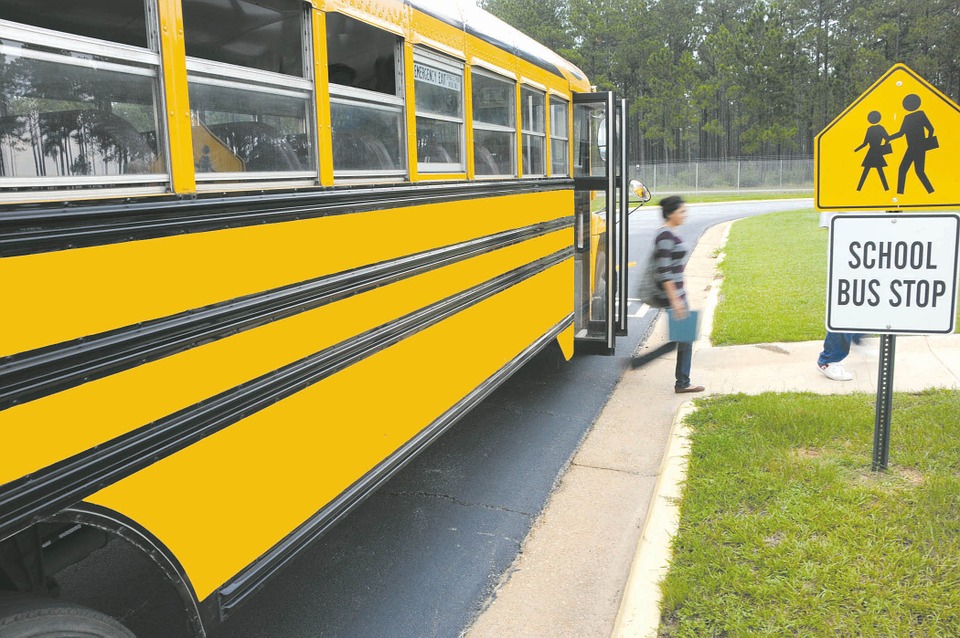
Yup, that is me.  That mom at the bus stop that, while waiting for my kids to board the bus, ends up supervising and “parenting” the other kids that are not behaving.  I remember a few years back I was waiting for the bus with my daughter.  There were several kids waiting with us, and a few parents.  Three boys were first in line, standing on the curb.  They were pushing, shoving and playing around as boys do, each time falling or running onto the road.  I told them to stop what they were doing, stand in line properly and patiently wait for the bus.  My neighbor called me a meanie.

I am happy to be a meanie when it comes to safety, especially with children.  Part of this is the curse of working in auto insurance.  I know if one of these boys gets hit by a passing car, this could be life threatening or at the least, life altering.  I also know the driver of that car will likely suffer life-long mental anguish knowing they inadvertently harmed a child – even if this was not their fault.  Also, my child, and the other children at the bus stop that would witness such an accident would never be the same.  They could have nightmares, flashbacks, and suffer from traffic anxiety, an aversion to riding the bus, or attending school.  Lastly, from a personal liability perspective, I can’t help thinking that if children are being unsafe, and get injured, and this is witnessed by a responsible adult who did not try to prevent it, that adult could be held partially responsible.  Either way, the outcome is bad for all involved.

Transportation by bus is one of the safest ways to get children to and from school.  According to transport Canada, only .3 percent of personal injury or death from collisions involved school buses.  Of the 142 deaths involving a school bus over the last 10 years, only 5 have involved passengers of the bus with the rest being drivers, pedestrians, cyclists or other motorists.  Therefore, children are more unsafe around buses than they are in buses.  In fact, riding the bus is safer than walking or getting a ride in a regular vehicle.  What becomes key then is helping children to understand pedestrian safety, the rules for getting on an off a bus, and waiting at the bus stop.

It is back to school time.  We all need to remember that children are both careless and carefree.  Children are not expected to understand and process the dangers of traffic until age 10 and beyond, and as such, as responsible adults and parents we need to help them understand all aspects of bus safety and, if needed, be “meanies” when monitoring their behavior – even if they don’t belong to us.

Previously posted August 26, 2013
by

How Much Sleep Do Kids Need?

News from the American Academy of Sleep Medicine shows that most parents aren’t aware of the amount of sleep their children require, yet sleep is one of the most important factors in proper physical health, growth and development.  With back to school around the corner, now is the right time to get kids back into a healthy bedtime routine.  The following from CBC provides the newly recommended guidelines to help you achieve this.

CBC:  Experts unveil new sleep guidelines for children

by

The Ultimate Guide to Backpack Safety

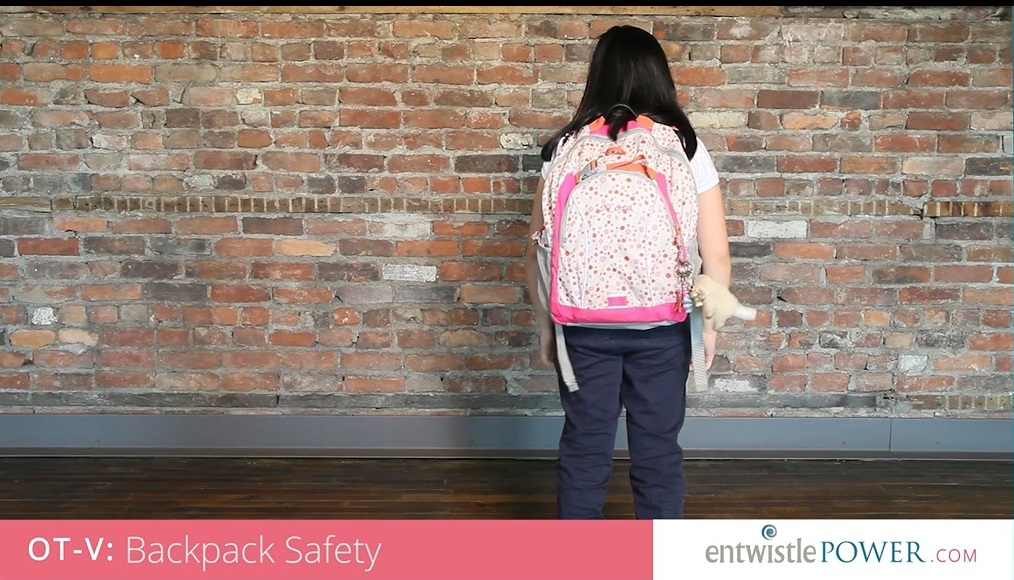
Backpacks are a staple for every student. They travel back and forth between home and school, lugging books and school supplies. They are put through the unavoidable daily abuse of being thrown on the ground, trampled on, stuffed into a cubby or locker, saving a spot in line, and become over-stretched and over-used with the necessities of school. They are a necessary part of your child’s education, yet how much thought do you really put into the backpack your child wears aside from maybe price or color?  Have you considered the health implications of an improperly worn, fitted, or poorly supportive backpack?

Take a look at our newest OT-V video, Backpack Safety Guidelines, to learn how to select and fit a proper backpack and tips on reducing the strain caused by daily use.


Learn more healthy solutions for living in our informative OT-V video series.

by

Pokémon Safety– To “GO”, or Not to “GO”

Julie Entwistle, MBA, BHSc (OT), BSc (Health / Gerontology)

While I am not a fan of technology (especially for kids), I do like technology that gets people moving.  Personally, I am the new owner of a FitBit Blaze and have found that my level of physical output has certainly increased since I can now track and monitor my heart rate, sleep and overall level of activity.  I have discovered that my ritual morning dog walk is over 7,500 steps and my preferred bike ride is 30km and keeps my heart rate at an average of 120 beats per minute.  That is all great feedback for someone that likes to keep upping the exercise ante.

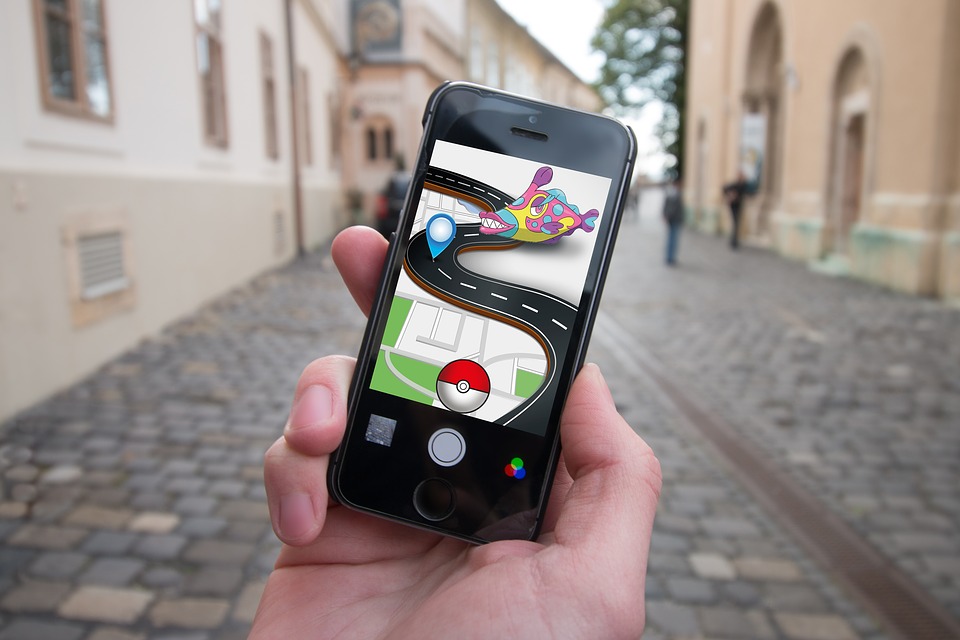
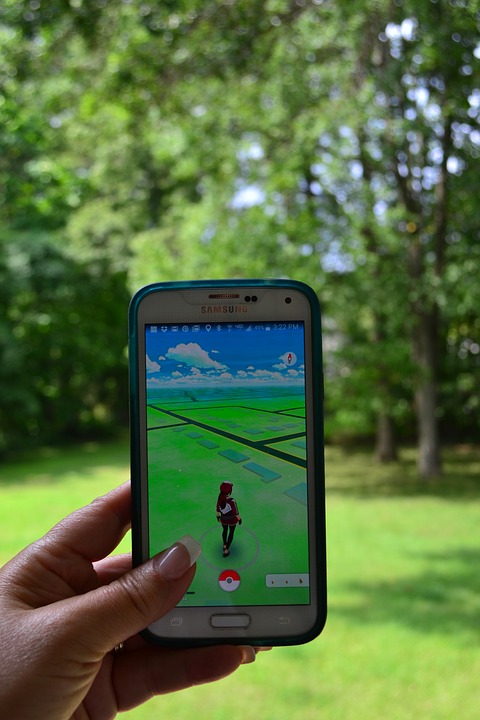
So, considering my love of all things that encourages mobility, I would like to embrace Pokémon GO, except for the host of challenges this has created since it started.  Tabloids have reported that Pokémon GO players have been walking into traffic, falling off cliffs, venturing illegally over the border, and trespassing, all in pursuit of Pikachu.  I also know that “text neck” is becoming increasingly problematic the more we are all looking down constantly at a screen and interacting with that instead of the world in front of us.  Toronto is looking to make “texting and walking” illegal due to the inherent risks this causes with people not paying attention, veering into others, and generally being oblivious to their surroundings.  If we need to make laws to stop people from looking down while walking, how can Pokémon GO be a “good thing”?

Yet other data has indicated that people playing walk 30% more than “most people” (not sure how they figure out how much “most people” walk, but regardless…) and in some cases the game can be used as a helpful parenting and family tool to get outside, connect, play a virtual game of “hide and seek” and learn about road safety, property boundaries, and how to respectfully interact with strangers who might also be playing.  I also hear that the game has a way of keeping you playing (like all addictive games) in that the more you walk, the more Pokémon you can locate.  This might be a good addiction (encourages exercise), provided of course, it is safe.  So, I am still unsure whether “to Go, or not to Go”.

As an occupational therapist that helps people who are injured by or in cars, or who break bones falling, I am concerned about the aftermath of obsessive and oblivious Pokémon play if this leads people into unsafe territory.  So, whether I decide to “Go”, or decide to let my children “Go”, I have created this list of safety suggestions to consider:

  1. Always be aware of your surroundings and play in groups.

  2. When watching your screen and walking, try to stop when looking down, see what you need to see, then look up and continue.  If you need to look down and walk, try to look out in front of you, not at your feet.  Look on the horizon like people do when driving.  That way you can reduce the risk of text neck and have a better visual of your path.

  3. Always pay attention to road and traffic signals.

  4. Drivers, be aware that kids may be playing and that kids are carefree, not careless, and that they may wander in front of a moving car if their game is leading them somewhere exciting.  Make eye contact with the player, or slow down the car if eye contact does not occur.

  5. Don’t trespass.  That upsets people and not everyone is going to be thrilled that you are standing on their lawn chasing a virtual gremlin.

  6. Watch for pets and signs that warn of animals that might not be friendly.  Dogs are not going to know what you are doing, and may see anyone on their property as a threat.

  7. Stick to daylight.  It is always safer to walk when others can see you, but if you must be out at night, wear light or reflective clothing and carry or wear a bright light.

  8. Bring water and perhaps a snack.  People can lose serious track of time when gaming is involved.

And remember, that even without a device, you can still “Go” or create outdoor games for you and your children.  All Pokémon GO essentially is, is a virtual Scavenger Hunt.  So, really there is little difference (minus the text neck) between finding Pikachu and friends, and looking for a feather, rock in the shape of an arrow, or an Oak tree.  Keep it simple and remember that you don’t need technology to go for a walk.

by

Pokémon GO – Yes or No?

It’s the newest and biggest craze in the digital world—Pokémon GO.  An app that lets you play a video game, but gets you off the couch and out of the house.  While there are health benefits to this new game, as discussed in the following from Forbes Magazine, there are dangers that must be taken into account.  We remind you that distracted driving is one of the biggest causes of automobile accidents and that pedestrian deaths are on the rise in our cities.  We encourage you to get out and reap the health benefits, but be cautious of your surroundings and NEVER play while driving.

Forbes:  Five Ways Pokémon GO Is Actually Good For You

by

How Confident Are You?

Self-Confidence is defined as “a feeling of trust in one’s abilities, qualities, and judgment.”  Many equate this confidence to how we look on the outside, but it is only once we move past our outer positives and negatives and look inward that true self-confidence can be achieved.  Take a look at the following from Best Health Magazine that provides great tips on improving your self-confidence and learn more in our previous post “Lessons of Confidence from and Overhand Serve.”

Best Health Magazine:  4 Habits That Will Help You Develop Killer Self-Confidence 

by

Swimming Pool Safety

Julie Entwistle, MBA, BHSc (OT), BSc (Health / Gerontology)

In celebration of summer, I wanted to repost our popular blog on pool safety. These helpful tips and tools are good things to review and consider…especially this time of year.

I was a fortunate child who grew up with an in-ground pool. As the only house on the street with a pool in our yard, the neighborhood kids would loiter around our home hoping for an invite. My mom developed a wonderful system using a Canada flag. If the flag on our fence was up – everyone was welcome for a swim. The only rule was that the kids needed to bring a parent. Mandatory. And despite the kids that would sit on our lawn whining about not having an adult to join them, my mom was firm to the rule.

We have a pool in our yard. This is separately fenced. As our kids are getting older, and have been able to swim for years, we are giving them more freedom around the pool. As long as an adult is home, they are welcome to swim. However, recently I was reminded of an important lesson – just because my kids can swim, that is not necessarily true for others of the same age. We had a pool party for our twins’ birthday and all the kids arrived and proceeded to jump in the pool. One child was hanging around the shallow end and I asked her if she could swim – nope. I was surprised that in dropping her off to a pool party, her parents would not mention this very important fact.

A few summers ago on a street very close to mine an 18 month old child drowned when he was able to get outside while his father had a 15 minute nap. Drowning is the second most common cause of accidental death among children aged 14 and under in Ontario, after motor vehicle accidents. Yet, like many risks, drowning is absolutely preventable. Here are some safety precautions to consider:

1.  Constant and vigilant supervision. Supervision of any child is a full-time job. Most drowning’s occur when a child is playing near the water and falls in – not while “swimming”. So, when it comes to kids, the “within arm’s reach” rule should always apply – whether they are in, or around, water.

2.  Using safety devices for the pool. These could include:

  • Poolside Alarm– A motion sensor is installed along the pool edge, which sounds an alarm when waves are detected from a body falling into the water.
  • Child Immersion Alarm– A wristband worn by a child, which will sound an alarm when they come into contact with water.
  • Pool Fences– Fences should be at least four feet tall, surround the entire pool and have self-latching gates out of the reach of children. Speclocks prevent children from entering the pool area, as they are complex or require adult strength to open. Gate alarms can also be installed to alert when the gate is unexpectedly opened.
  • Pool Covers– A cover built to fit your pool dimensions will act as a barrier for a falling body, as they will not enter the water.
  • Door locks – special locks, difficult for children to open and installed at the top of a door, prevent kids from being able to get into the yard without an adult.

3.  Use life jackets, not just floaties. If your child is not a strong swimmer, they should always be wearing a life jacket – in a pool, at the beach, or on a boat. Like wearing a seat-belt and helmet, children should be taught from a young age that wearing a life jacket is necessary around water. From a functional standpoint, life jackets are safer than floaties. Floaties can develop small holes that actually fill with water, or can deflate, causing the child to slowly sink lower into the water. A well-fitting life jacket is designed to keep a child’s head above water, and to flip a child over onto their back to facilitate breathing. They cannot deflate. It also provides something for an adult to grasp if they need to pull the child out of the water.

4.  Know the signs of drowning. Contrary to popular belief, drowning does not happen when people are flailing their arms, yelling and calling for help. It is actually the opposite. People that are getting into trouble in the water often look like they are climbing an invisible ladder. They can’t yell or cry for help as their body is low on oxygen and is focused on trying to keep air in, not yell it out. Know the signs – check out this link for the “8 Quiet Signs of Drowning.”

5.  Knowledge of first aid. Parents should always consider having knowledge of CPR or basic water rescue. This could prove handy for many situations beyond just water safety.

6.  Swimming lessons. Give your kids a head start by helping them to become comfortable in the water from a young age. Every minute they can stay afloat could save their life.

But remember, when it comes to children, nothing is safer than diligent and attentive supervision.