

Close

Our Blog

by

AODA: Making Ontario Accessible. How Can an OT Help?

Julie Entwistle, MBA, BHSc (OT), BSc (Health / Gerontology)

As an occupational therapist, business owner, and MBA, I can’t help but to reflect on the colossal legislation that is the Accessibility for Ontarians with Disabilities Act, or AODA.  If you are not familiar, this is Ontario’s way of making the province accessible by addressing the following key areas so that people with disabilities can more fully participate in their communities:  customer service, employment, information and communication, transportation, and design of public spaces.  This a catch-all legislation aimed to create a culture of acceptance for people of all abilities.

So where does occupational therapy fit into this and why is this legislation important?

Occupational therapists help people with disabilities to function more safely and independently in any environment in which they need to manage.  That includes at home, work or school, for leisure pursuits, and in the community, and often involves helping people to obtain devices, products or services.  Based on my own experiences, I thought I would share my thoughts on the importance of this legislation by sharing real examples of situations where a company or employee got it wrong when trying to provide service to a consumer with a disability:

Example 1:  A few months back I was taking an ailing relative to an appointment at a lawyer’s office.  We arrived and the building was poorly marked.  We tried a couple of entrances and walked around the building a few times.  We finally found the entrance and were met with three flights of long and windy stairs.  We climbed these slowly and when greeted by the lawyer he said “you should have told me stairs were a problem and I could have met you at home”.

Example 2: The other day I was at the bank waiting for an appointment.  A patron with a cane ventured in and tripped on the scatter rug that was not lying flat on the floor.  Two staff quickly ran to her side and started pulling her up by her shoulders to get her back into standing.  The teller told me that people trip on those mats “all the time”.

Example 3: Also recently, I ventured into the community to help a client purchase an appropriate bed.  The salesperson at the store told my client (who uses a wheelchair) that he “knows about people like him”.  When my client transferred onto one of the beds in the showroom, the salesperson tried to physically assist him, and continued to try and assist even after my client told the salesperson he did not need help.  Then, after the transfer the salesperson (standing behind my client) pulled the transfer board out from under him suddenly causing my client to lose his balance.

Example 4: Or, the story of a client of mine who uses a wheelchair and ventures into a large department store where an employee at the front of the store puts a sticker on him that says “I am special”.

These scenario’s highlight why the AODA legislation is necessary.  Everyday people with disabilities are poorly serviced, spoken down to, underestimated, or encounter barriers when trying to access a product or service.  With an estimated 15% of Canadians having a disability, and the number growing rapidly with the aging population, this equates to millions of consumers that are not able to access products and services, or who are being poorly treated or physically or emotional jeopardized when they do.  Or, expanding this further, these poorly serviced consumers often shop with an attendant, family or friends, doubling the number of people witnessing this problem.

Can you see the problems in these examples?  Would you handle these situations differently?  Has your employer provided you with the education and training to know how to provide proper service to people with physical, mental or emotional impairments, visual or hearing disorders, or how to optimally service someone who may be unable to speak or write, or who shops with a support person or service dog?  Can people with physical disabilities access your building, use the washroom?  If not, your employer is already missing the mark on the AODA legislation.

While many business owners may feel that the AODA legislation is unimportant or does not need sufficient attention, I would argue that this is not something to ignore.  Not properly training staff on the ways to service all people well runs the risk of impacting a business’s reputation, sales, and overall profitability.  Imagine, for example, that I disclosed the names of the businesses above?  What would you think of those establishments?  Or, perhaps worse, if my clients went online following and shared their experiences with others on social media?  Complained to a manager?  Or got hurt and decided to sue?  Or, looking more positively, we can turn this on its head and talk about how companies would be perceived, talked about, and celebrated for getting it right.  People share great stories too and many people with disabilities have a network and community of others that they liaise with for support.

Occupational therapists have the skills, training and experience to show others how to properly service people with disabilities, from barrier-free environments to effective communication and respectful and caring interactions.  Much like you hire a plumber to fix a tap, a mechanic to fix your car, or a lawyer to draft your will, hire an occupational therapist to help you and your business become AODA compliant.

Visit our AODA Training and Education page to learn more on the services we offer.
by

Weekly Mind Bender

A group of people are standing in a row.  What is the fewest number of people in the row based on the following:

–        A female is to the left of a male

–        A male is to the left of a male

–        2 males are to the right of a female


3:  female, male, male.

by

Leap Years: What’s the Purpose?

More time is something we all wish for.  Every 4 years we are lucky enough to be blessed with an extra day in our calendars.  On Monday, we will be given a full extra 24 hours to “make up for lost time.”   Take a look at the following from Global News which explains why we have Leap Years and be sure to make the most of this extra time.

Global News:  Leap Year 2016: What is it and why do leap years exist?

by

Pink It Forward

Today, February 24th, is Pink Shirt Day in Canada.  A day that started as a way to take a stand against the bullying of a Grade 9 student who wore a pink shirt has now spread across Canada and is prominent in schools on this day each year.  Today Canadians are encouraged to don their best pink clothing and show support by “pinking it forward” on social media.  Please visit pinkshirtday.ca/pinkitforward and share your support using the hashtag #PinkItForward on your social networks to raise awareness and funds to help put an end to bullying.

by

Hoarding and Decluttering: 10 Suggestions to Free your Home and Mind

Julie Entwistle, MBA, BHSc (OT), BSc (Health / Gerontology)

We all have keepsakes that are difficult to throw away. Personally, I still have a bag of stuffed animals from when I was a kid (downsized from the four garbage bags of stuffies I had when I got married), and also have a box called “sentimental stuff” that is filled with cards, letters, and keepsakes that I just can’t emotionally part with (poems from my great-grandmother, the last card my grandparents sent me before they passed away, etc).

While these items and “stuff” may be taking up some closet space, they do not significantly affect my ability to function.  That is when being a “pack rat” can cross a line and refers to the subset of the population whose life is significantly impacted from ‘stuff’ building up in their homes. In 2013 “hoarding disorder” officially became a clinical diagnosis, and it is estimated to affect 3-5% of the population.

Hoarding is defined as “persistent difficulty discarding or parting with possessions, regardless of the value others may attribute to these possessions. People with this problem accumulate a large number of possessions that often fill up or clutter active living areas of the home or workplace to the extent that their intended use is no longer possible” (Diagnostic and Statistical Manual of Mental Disorders, 5th Edition).

This is a real disorder that has a negative impact on an individual’s emotional, physical, social, financial and even legal aspects of life. Hoarding can get in the way of a person’s ability to participate in daily meaningful occupations, which can result in a deterioration in health and wellness.

It is important for individuals struggling with hoarding to seek treatment. The two current “best treatments” for hoarding disorder are pharmacological and cognitive behavioral therapy (CBT). CBT recognizes that a person’s thoughts and feelings and behaviors are interconnected and influence one another. Occupational Therapists can use CBT to help someone with hoarding disorder address their disruptive thoughts and feelings to decrease the behavior of hoarding.

While the majority of the population does not struggle from hoarding disorder, the build-up of clutter in a home can sneak up on all of us, and lead to negative consequences such as a disorganized home, feeling discouraged and overwhelmed, and the frustration of misplacing or taking time to find items, to name a few. Here are some unique ways to decrease clutter in the home:

1. Start with 5 minutes. It can be overwhelming to start the process of decluttering, therefore, start with 5 minutes a day and be satisfied with your accomplishments at the end of this time.

2. Give one item away every day for a year. Check out www.365lessthings.com, a blog about a woman who gives away one item a day.

3. Start by filling one bag. Whether it is a donation bag or a trash bag see how quickly you can fill one bag of items to give away or throw out.

4. Do the “Closet Hanger Experiment”. Hang all your clothes with hangers in one direction. After you wear an item replace the hanger in the closet facing the other way. After one year throw away all the clothes on hangers facing the original side – you did not wear these items for a whole year!

5. Do the “12-12-12” challenge. Find 12 things to throw out, 12 things to donate and 12 things to be returned to their proper place in your home.

6. Use the “Four-Box Method”. Systematically go through each room in the house and assign every item to one of four boxes: trash, give away, keep, or relocate. Every item must be assigned something! Remember – you do not have to do this all at once, take your time to go through each room!

7. Make a list and set a time. Make a list of areas in your house you want to clean/declutter then set a time for each one (i.e. 10 minutes, 20 minutes, 40 minutes). Start with the first thing on the list and then STOP when time is up. If you did not finish that area within the given time, set a new time and try again later!

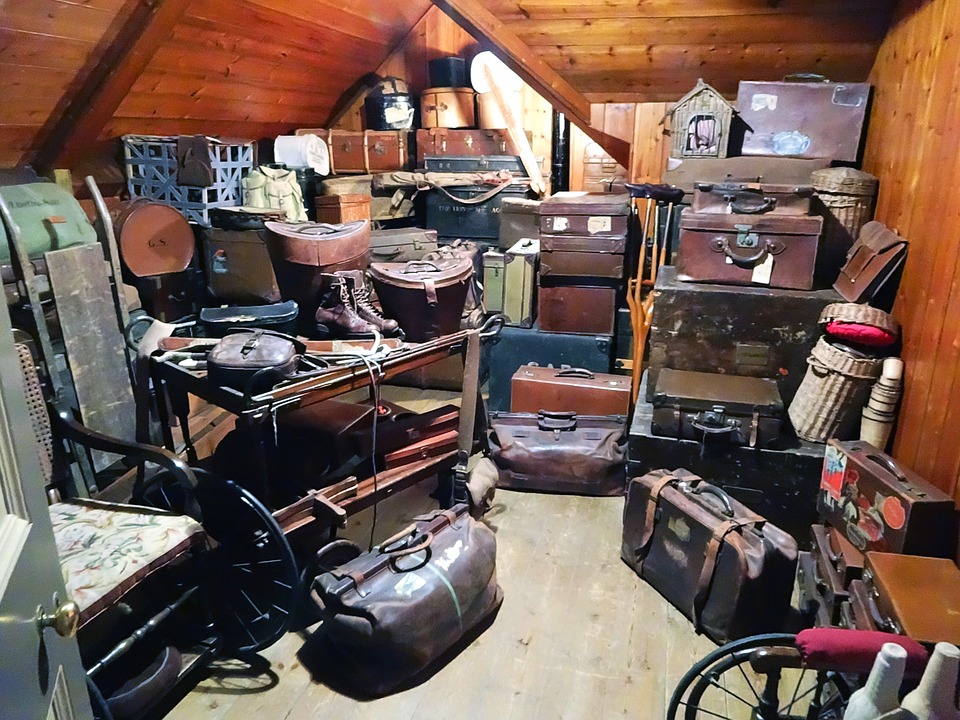
8. Try the “Travelers Method”. Think about how small a suitcase is and how you have to prioritize items when packing for a trip. Use the same mindset when decluttering.

9. Rearrange the room. Every few months rearrange furniture in major rooms (i.e. couches, desks, shelves). This will force you to find the junk that has been collecting throughout your home.

10. Play “Musical Chairs” with your closet. Remove all your clothes and hangers from the closet. Take away 5-10 hangers. Start to put your clothes back one at a time, each time assessing whether to keep the clothing item. STOP once you run out of hangers and donate remaining clothes.

A few other useful tips can include calling a friend to come to help – then reciprocate the offer, or call for a free pick-up of household items and once this is on the calendar make sure you fill a box to donate!  Diabetes and Cerebral Palsy are a few local (Ontario) programs that turn your unneeded items into charity.

Decluttering can seem like a daunting process, but using these strategies, and setting small attainable goals, can help you have a peaceful, clutter-free home and mind!

by

The Exhausted Parent

We’re excited to share with you a great new blog via The Exhausted Parent.  The Exhausted Parent blog provides tips and resources for busy parents and as well they have created great baby milestones kit to help you keep track of your child’s development.  Check it out today!

The Exhausted Parent

by

Have You Got The “Lady Balls” To Stand Up To Cancer?

A fantastic new campaign by Ovarian Cancer Canada asks if you have the “lady balls” to talk about ovarian cancer?  The organization’s research states that ovarian cancer kills 5 Canadian women everyday and is one of the most difficult cancer’s to detect.  Check out the following brochure to become educated about this cancer and show your lady balls by sharing the information with others.  It could save a life.

Ovarian Cancer Canada:  Ovarian Cancer Fact Sheet

by

How’s Your Posture?

Repetitive activity using improper posture and body mechanics can result in excess energy expenditure, fatigue, pain and even injury or damage to muscles and joints over time.  Therefore, it’s important to know the proper body mechanics required when completing everyday tasks and activities, at home, at play or at work or school.

The following episode of our Occupational Therapy Video Series:  OT-V discusses how to ensure you are using proper body mechanics with respect to:

  • workspace design
  • lifting and repetitive muscle use
  • excessive standing
  • excessive sitting
  • hand movements
  • excessive energy output.

Take a look to learn how an OT can help you improve body mechanics and reduce the risk of injury and pain in the long-term.  Remember to subscribe to our YouTube channel for access to this and other great OT-V videos!