Close

Archive for category: Solutions For Living

by

A Space for Young People Living with Terminal Illness

A new website, livingoutloud.life, provides a safe and welcoming space for terminally ill teens and young adults and their families to connect, share stories, support each other, find resources and more.  Learn more about this initiative of the Canadian Virtual Hospice in the following article care of CBC News.

CBC News:  ‘My entire life has flipped’: Canadian website helps connect terminally ill young people

by

Organization O-Tip of the Week: Tupperware Troubles? Try This!

Our O-Tip of the week series we will be providing valuable “OT-Approved Life Hacks” to provide you with simple and helpful solutions for living. 

Did you know that being organized can help you to reduce stress?  Spring is around the corner, and with it comes Spring Cleaning!  Therefore, for the month of April, our O-Tip of the week series will share some of the best tips to help you get organized because an organized space is a healthier space!

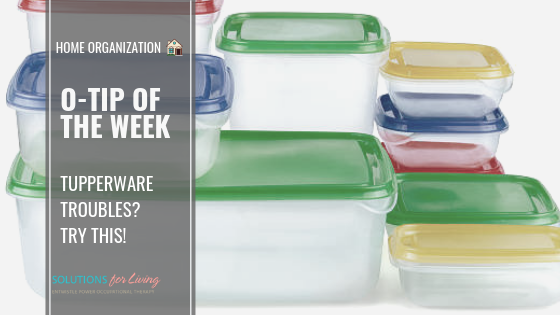
Leftovers are great, but all the food storage containers required can sometimes make a disorganized mess in your kitchen cupboards and drawers.  Without some organization how will you ever be able to find a matching lid?  Tackle your tupperware problems with these smart storage solutions care of Better Homes and Gardens Magazine.

Better Homes and Gardens:  10 Genius Solutions for Food Storage Containers

by

The Cost of Disability

The cost of disability due to injury or illness is significant and stems from lost work time, medications, equipment, costs of personal care, therapy and more.

When struggling to make ends meet, people encounter stress, anxiety, panic, excessive worry, loss of sleep, relationship issues, poor decision making, and can result in addictions as a form of poor coping.  You can imagine how hard it would be to heal from injury or trauma when significant money stressors are created as a result!

Our OT-V episode below provides insight into how an Occupational Therapist can help you or someone you love plan for future costs related to the specific disability, provide treatment to help you manage your finances more efficiently, and deal with any associated symptoms.

by

Organization O-Tip of the Week: Take It One Day at a Time

Our O-Tip of the week series we will be providing valuable “OT-Approved Life Hacks” to provide you with simple and helpful solutions for living. 

Did you know that being organized can help you to reduce stress?  Spring is around the corner, and with it comes Spring Cleaning!  Therefore, for the month of April, our O-Tip of the week series will share some of the best tips to help you get organized because an organized space is a healthier space!

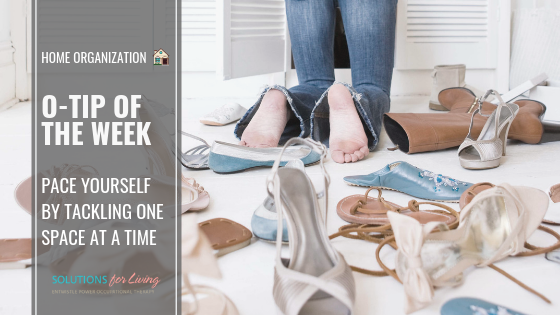
Spring cleaning and organization can be rewarding once finished, but a daunting task before you begin.  Don’t stress and remember that it doesn’t all have to happen in one day.  In fact, we suggest stretching it out by focusing on one area/room/closet/drawer (whatever you can handle) each day.

Need more accountability?  Try creating a daily schedule for the month with one space (drawer/closet/room) per day.  Crossing it off at the end of the day provides a great feeling of accomplishment!

by

The Lifechanging Magic of Tidying Up

Julie Entwistle, MBA, BHSc (OT), BSc (Health / Gerontology)

I was raised in a very tidy family.  My grandfather had polio and thus my father was raised in a home where clutter was not an option, because if my grandfather tripped on something “lying around” he could be seriously hurt.  My grandmother took it to some extremes (like waxing her garage floor), but the net result was a tidy dad that instilled the benefits of being organized on me.

I am very environmentally driven.  I have a hard time being productive or functional if my space is uncomfortable.  I keep my office, home and car reasonably organized.  I know where the bills are that I need to pay, the ones that I have already paid, where my spare car keys are, and what I have in the fridge and freezer that could pass as dinner.  I can usually answer the “mom, where is the ???” question and keep commonly used items in consistent places.  I label things to make search and locate easier, and so that I can blame the kid responsible to avoid the “wasn’t me” response (when they were little they had one color each for bowls, plates and cups and they still have different colored towels). Having four teens and four pets, sure our house is in constant need of tidying, and getting my kids on the tidy train hasn’t always been easy.  I try to give them some freedom over their bedroom, but once a week it needs to be “cleanable” and we have a special needs dog with an affinity for smelly socks (not clean ones), so at the least, they need to keep their dirty clothes safely stored in their “dog-can’t-reach” laundry bin.

I believe though that being organized is more than a skill, it is also a lifestyle.  Like being active, or being a non-smoker, deciding to be organized is a conscious choice, then it requires commitment to get and stay there.

But like all “lifestyle choices”, this too can get derailed.  As an occupational therapist “organization” often is incorporated into our treatment of clients, and this takes many forms.  Sometimes it is organizing items into reachable places from a mobility device, or to conserve energy and reduce the pain caused from lifting the heavy pots from the bottom cupboard. Sometimes it is mail, email, and paperwork to ensure urgent items get addressed and bills continue to get paid.  Maybe it is just putting like items together to make it easier and more efficient to find things (especially with cognitive impairment or depression that can make initiation, motivation, and memory impaired).  If we are gearing up for a home renovation to address accessibility needs, sometimes purging, sorting and storing or discarding items is necessary to make room for the upcoming changes.

Marie Kondo (www.konmari.com) has become a Netflix, YouTube and internet sensation with her “Life Changing Art of Tidying Up” book and series.  She coaches only keeping items that “bring joy” and offers some suggestions on how to sort, fold and emotionally process keeping things we love, and letting go of the things we don’t. While I am not sure filing a utility bill, organizing my doggie poop bags, or emptying the overflowing bathroom garbage are things and items that “bring me joy”, I love her approach to folding and agree that your home should be filled with items that reduce, not increase, your level of stress. In the end, being organized is efficient because when you can find things you are not spending that emotional, cognitive and physical energy “looking around aimlessly” all the while getting frustrated, or worse, tired and angry.  The time you save by being able to navigate and find the things in your own home quickly can be spent on other meaningful, purposeful and joyful activities.  And that is where I agree with Marie that organizing can help us to “choose joy”.

by

Climate Change and the Effects on Your Health

Despite what some people refuse to see, climate change is real.  Air pollution, plastics in our lakes and oceans, more severe weather events and extreme temperatures are becoming the new normal.  How is all of this affecting our health?  Learn more about the effects of increased pollution and climate change on our bodies in the following care of CBC News.

CBC News:  Lack of progress on climate change is putting Canadians’ health at risk, doctors say

by

Self-Care for Caregivers: Put Yourself First

Caregiving is a job.  A job most people don’t apply for, aren’t trained for, do not get paid for, and receive little to no time off from.  When a loved one is injured or ill often the job of full-time caregiver falls on the spouse, adult children, or other family and friends.  Though many are happy to give as much love and support as possible in their loved one’s time of need, the job of caregiver can be isolating, exhausting and can often result in caregiver burnout and additional health-related concerns for the caregiver themselves.

Remember that you cannot take care of someone else if you are not taking care of yourself.  You may risk becoming useless to your loved ones if you do not first take care of yourself.

The following infographic provides more information about the caregiving role and solutions to help reduce the mental and physical health-related issues that often stem from the job of caregiver.


Loading...

Loading…

To learn more about how to care for yourself or a loved one as a caregiver take a look at our previous post, “Put on Your Own Oxygen Mask First.

by

Being a Life-Long Learner Can Help You Age Well

As we’ve mentioned before when discussing how to support optimal aging, the old cliché is true when we talk of cognition – “use it or lose it”.  Just as we need to exercise our bodies for physical health, we must do so for our brain to support cognitive health.  Learning something new is a great way to flex the muscles in your brain, and the great news is you don’t have to sit in a classroom to do so.  Take a look at the following from the McMaster Optimal Aging Portal which discusses how online learning can support you as you age.

McMaster Optimal Aging Portal:  How online learning can support optimal aging

by

Big Changes to Canada’s Food Guide – Will You Change Your Habits?

Last month the long-awaited revision to Canada’s Food Guide arrived and surprised many with some major changes to its design and content.  Personally, I am pleased with the changes which include a move toward plant-based proteins and I love the addition of guidelines around healthier eating habits like cooking meals at home, eating meals with others and more.  Check out Canada’s Food Guide and let us know what you think of the changes.

Canada’s Food Guide

by

O-Tip of the Week: Avoid Tangles with this Handy Trick

Our O-Tip of the week series we will be providing valuable “OT-Approved Life Hacks” to provide you with simple and helpful solutions for living. 

Spring Break is upon us so for the month of March, our O-Tip of the Week series will provide tips for traveling like a pro!

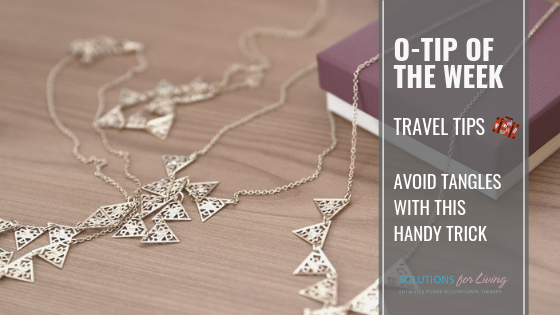
Accessories, especially necklaces, can become a nightmare when you unpack and realize they have become a tangled mess.  Avoid this frustration with the help of a common item – a drinking straw.  When packing simply slip individual necklaces through straws and fasten.  This technique will keep them tangle free!