Close

Archive for category: Solutions For Living

by

My Child is a Picky Eater… Help!

Julie Entwistle, MBA, BHSc (OT), BSc (Health / Gerontology)

Do you have a child that is a picky eater?  You are definitely not alone!  Picky eating is a common issue, and while it is normal for kids to have food preferences and dislikes, it can be quite concerning for parents.  The good news is an Occupational Therapist can help!

Occupational Therapists can work with families to create solutions tailored to the individual child. Some general suggestions may include some of the following tips:

  • Remove the pressure
  • Allow the child to “play with their food”
  • Encourage food exploration on their own terms
  • Maintain a consistent meal-time routine
  • Introduce changes and new foods slowly – overcoming picky eating is a very gradual process

Watch our popular video below to learn more about how an Occupational Therapist can help families overcome the picky eating problem and raise healthy, happy eaters.

by

O-Tip of the Week:

Our O-Tip of the week series we will be providing valuable “OT-Approved Life Hacks” to provide you with simple and helpful solutions for living. 

Spring Break is upon us so for the month of March, our O-Tip of the Week series will provide tips for traveling like a pro!

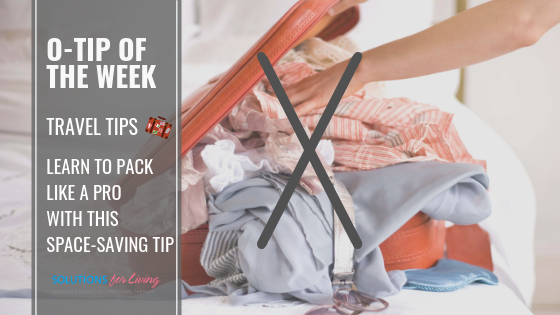
Never enough room in your suitcase?  That could be because you’ve been packing it all wrong!  (or maybe you are packing too many pairs of shoes)  The trick to maximizing space in your suitcase is to roll your clothes.  Not only will this create space for just one more pair of shoes, but it will also keep your clothing wrinkle free!

Check out this great how-to video care of Travel and Leisure.

Travel and Leisure:  You’ve Been Rolling Your Clothes All Wrong. Here’s the Correct Way to Do It

by

Are You Capturing the Moment… or Missing it Altogether?

Julie Entwistle, MBA, BHSc (OT), BSc (Health / Gerontology)

I love the song “Scare Away the Dark” by Passenger. Some of the lyrics have powerful insinuations: “we should stare at the stars and not just at screens”…”we want something real not just hashtag and twitter”…”we are all slowly dying in front of computers. I believe there is significant truth to what he is saying. The technology pendulum has swung so far in the direction of obsession and I am personally looking forward to it bouncing back to some form of neutral.

If addiction is defined as “the state of being enslaved to a habit or practice that is physically or psychologically habit-forming to such an extent that its cessation causes severe trauma…” or “usage of something that is beyond voluntary control” then I would argue that technology applies, and many people have a serious problem.

On a recent holiday, the evidence of this was immense. On one occasion I saw three young women on a horse-drawn carriage ride (a $50 experience I might add) and they were all looking at their phones. Were they texting, tweeting, posting on FB “loving my horse-drawn carriage ride”, or maybe playing candy crush, Instagramming a photo, or taking a selfie? Or the families sitting at dinner looking down, using their devices, essentially ignoring each other. Or the guy at the theme park videotaping his experience – he was even videotaping while a photographer was taking their family photo! I am not sure it matters what these people’s intentions were with their devices, but I felt that in perhaps trying to capture these moments they were missing them completely. Look around, talk to each other, take in the sights, sounds, smells, be mindful of the fragility of life and take a moment to be grateful for the experience. Connect. Engage. Smile at a person, not just a screen.

Now don’t get me wrong, I am all for capturing moments. But some moments need to be captured by our eyes and filed in our brain, not just on a device, memory card, or online. The concept of being present includes enjoying moments while you are in them – without living in the past or obsessing about the future. How can we do this? Enlightened Living suggests that being present involves recognizing that we can only do ONE thing at a time and thus we should engage wholeheartedly. Taking a photo while trying to absorb a moment are two tasks that cannot happen simultaneously. Thus why people feel that “life has passed them by”…they were never there to fully experience it in the first place.

So every once in a while check your addiction. Step away from your phone. Take technology away from your children. Leave it at home. Don’t take it on vacation. Set rules for technology behavior. In our house, we have significant rules for screen use, including a 17 clause contract our daughter signed in getting her first cell phone at age 14.  Some of the important clauses include: 

  • Rule # 1: The phone cannot be used to be mean to anyone – directly or indirectly.
  • Rule # 2: Proper grammar and spelling must be used when communicating.
  • Rule # 4 and 5: The phone is not allowed upstairs and cannot be used during family or meal times.
  • Rule # 9: I will not use my phone to take photos or video of people without their permission. I will not post or share photos or video without the consent of the people in them.
  • Rule # 15: I will follow classroom and teacher rules for phone use when at school.
  • Rule # 16: I understand this is not an appendage and obsessive use will not be tolerated.
  • Rule # 17 is a list of reasons for repossession.

My 14 and 12-year-olds read the contract together. At the end, my 12-year-old said: “so, what CAN she do”?

Do you feel sorry for my kid? Don’t. The real reason for the contract was not because she needs to be rigidly structured, but because I, as a new parent of a kid with a cell phone, was not comfortable with the entire concept in the first place. At 14 (and younger) kids are not developmentally able to understand and grasp the full impact of this new power in their possession. That is why there are recommended ages for Facebook (14), and age-specific laws for driving and drinking. They are young, naïve, immature, and still learning the ways of the world. I have a responsibility to be her guide, as effortful as that is. In the end, the contract worked to set out the expectations, establish boundaries, communicate about safety and proper use and helped us recognize the need to adapt as a family to the transition of now raising teenagers, not just “kids”. But my true intent was to make sure that I don’t teach her, or worse, model for her, that technology trumps experiences, replaces in-person relationships, or is a valuable way to tick away the proverbial time bomb that is life.

So, try if you can to capture moments by being present, and by using your born faculties to photograph, store and file your memories – not just a device. Check in with yourself at times about your behaviors, track these, shock your system with some detox, set some boundaries and try to unplug.


Previously posted July 2014

by

O-Tip of the Week: Make Time for “Me Time” Every Day

Our O-Tip of the week series we will be providing valuable “OT-Approved Life Hacks” to provide you with simple and helpful solutions for living. 

For the month of February, our O-Tip of the week series will talk about Self-Esteem, which is defined as confidence or belief in one’s own worth or abilities.  Self-esteem issues affect more than just teenagers and encompass more than physical insecurities.  Follow along this February to learn more about self-esteem, its importance and some simple ways give yourself a boost! 

Put yourself first by doing something kind for yourself every day.  Practicing self-care is not selfish, it is a necessary activity that needs to happen in order to support both mental and physical health.  Be sure to take time each to do something just for you (take a walk, have a warm bath, enjoy a special delicious treat).  You deserve it!

The following care of Psychology Today discusses the importance of self-care and provides tips to get you started!

Psychology Today:  Self-Care: 12 Ways to Take Better Care of Yourself

by

What is Hygge and How Can it Help You Survive Winter?

Hygge (pronounced hue-guh) defined as, a quality of coziness and comfortable conviviality that engenders a feeling of contentment or well-being (regarded as a defining characteristic of Danish culture), is becoming very popular.  Its basic principles revolve around creating an environment that is comfortable, full of love, warm, and cozy – sounds like a great way to make it through a cold Canadian winter if you ask me!  Learn more about Hygge and its benefits in the following care of HealthLine.

HealthLine:  What the Heck Is Hygge and Why Do You Need Some This Winter?

by

O-Tip of the Week: Give Yourself a Pat on the Back

Our O-Tip of the week series we will be providing valuable “OT-Approved Life Hacks” to provide you with simple and helpful solutions for living. 

For the month of February, our O-Tip of the week series will talk about Self-Esteem, which is defined as confidence or belief in one’s own worth or abilities.  Self-esteem issues affect more than just teenagers and encompass more than physical insecurities.  Follow along this February to learn more about self-esteem, its importance and some simple ways give yourself a boost! 

This week we invite you to reflect on and record your accomplishments.  Big or small, past or present, make a list of all the things you have achieved and refer to this when you are feeling down or need a boost. 

by

What’s Your Love Language… And Why Does it Matter?

Julie Entwistle, MBA, BHSc (OT), BSc (Health / Gerontology)

I have a few online Goddesses I follow.  Women entrepreneurs who have built an empire educating other women on how to be successful.  Much like my own blog, they are comfortable sharing their stories of success and failure and want others to benefit from the knowledge they have.

In watching my online videos I will occasionally stumble upon a gem.  A piece of knowledge, a book to read, a way of thinking, or an exercise that truly moves me forward.  I recently had one of those experiences.

The video, by my career-crush and woman with the best hair in the world Marie Forleo (www.marieforleo.com), was on ways to appreciate and be appreciated.  Be it your spouse, children, parents or colleagues at work, we all strive to be loved and appreciated by those that matter to us, and to demonstrate this in return.  Marie was suggesting that in work and life it is helpful to understand how people experience and interpret love and appreciation so the efforts you make towards them can truly have an impact.  While a bit unorthodox, her suggestion was to engage people in the test of their Love Language.  She mentioned that this really helped her and her team know how to work together and ultimately appreciate each other best.  So, I took the test.  And my husband took the test.  And my children.  And my team.  The results were fascinating and helpful.

In my own family, our languages are different.  Personally, I appreciate it most when people take things off my plate.  My mind is a web of things to do so one less thing to think about is hugely valuable and appreciated by me.  Be it “I grabbed the kitty litter, put that envelope in the mail, or will send that email” – it resonates and helps me feel loved.  And call me cold, but I don’t resonate with physical touch (recall MC Hammer “Can’t Touch This”).

My girls are all different.  While most of them ranked “quality time” as their # 1, some prefer “words of affirmation” and one “physical touch”.  Not surprising, my physical touch kid is the one that is always asking for hugs and snuggling up to me on the couch.  Of great interest to me was that the one whose highest score was “words of affirmation” is also the kid that has a really hard time with conversations about things she did wrong or ways she let us down.  That makes sense now as people with this love language “thrive on hearing kind and encouraging words” and can be “shattered by insults”.  While we would never intentionally insult her, indicating that her school work is sloppy will make her feel unloved.  Good to know.  After we took the test and talked about it as a family, I took all of our ratings and put these in a chart by the door where we come and go.  I wanted these to be in plain sight and a regular reminder that our Love Languages are different and this matters when we want or need to be loved and appreciated by one another.  In a chaotic family of 6, this understanding is essential.

So I then took this experience a step further.  I asked the very important women I work with to also take this test.  The results again were interesting.  While my business partner and I tend to use small gifts as a way to show them appreciation, none of them ranked this as important.  Most would rather have unsolicited compliments (“words of affirmation”) then a surprise Edible Arrangement.  Some also prefer “acts of service” or being given “quality time” to feel valued.  At work, we can easily implement appreciation actions by offering to help them complete a burdensome task, providing unsolicited compliments, or making sure they have our undivided attention when they need it.

I consider the masterpiece that is myself to be always “under construction” and as such, I am repeatedly interested in ways to be better, do better, and spread love.  Love does not need to be considered romantic and according to 5 Love Languages, can be cast over all we meet with through simple gestures, kind words, a pat on the back, a small token of appreciation, or by sparing some time from a packed schedule.  Take the test here and see how you interpret love and appreciation and share that knowledge with those around you.


Originally posted July 2015