Close

Our Blog

by

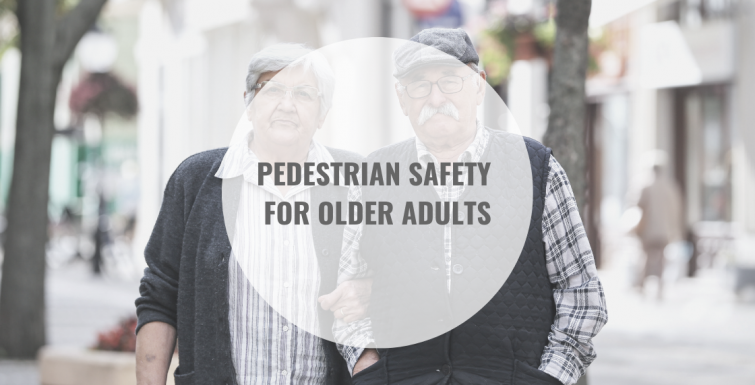
Pedestrian Safety for Older Adults

Julie Entwistle, MBA, BHSc (OT), BSc (Health / Gerontology)

The other day I was driving through a busy parking lot.  I noticed an elderly man who parked his car, got out, and proceeded to walk through the parking lot without ever surveying his surroundings.  He did not see my vehicle approaching him, and did not appear to notice the other cars that had to stop to let him pass.  The other drivers looked both annoyed and perplexed that he could be so clueless.

According to the CDC Increasing frailty may leave the elderly more vulnerable to being hit by traffic. Age-linked declines in mental function, vision and physical disabilities might place older adult pedestrians at greater risk for being struck by a vehicle.

With this man, what I noticed was quite telling.  He was looking at his feet.  Many seniors do this when walking.  Why?  Because they are afraid to fall.  With a decline in physical ability comes problems negotiating uneven terrain.  Parking lots and sidewalks are full of holes, stones, and cracks that could be problematic for someone with declining mobility.  So, they stare at the ground to avoid falling, the entire time being unable to also look around at other risks in the environment.  And when you combine this with reduced peripheral vision, they may not notice vehicles approaching. 

Society expects seniors to “know better” in that they have been trained, over a lifetime, about the perils of traffic.  With children, we don’t expect them to know better because they are carefree and often move before thinking.  As driver’s, we watch for children and take extra care when we see them around roads or in parking lots.  We also tend to take the same precautions when we notice someone who is more visibly disabled using a wheelchair, or white cane.  But disabilities are not always visible and we have to be careful to not make assumptions – especially with seniors who may have an unnoticeable visual, cognitive, physical or auditory problem.  

My message here is that drivers should be cautious with all pedestrians, but need to be especially mindful of seniors – much like they are with children or other people with visible disabilities.  Seniors deserve our patience and the extra time it might take to help them safely go about their day and negotiate the sometimes challenging outdoor environment.

Previously posted July 2013
by

Recognizing Sensory Sensitivity in Children

In a previous post, Recognizing Sensory Seeking in Children, we discussed the “sensory seeking” child. On the other end of the spectrum is the sensory defensive child. Unlike sensory seekers who have high thresholds for sensory input, sensory sensitive children have very low sensory thresholds. Due to these low thresholds, they experience sensory input much more intensely or notice sensory input much more often than their peers. This means that sensory input that may not bother you and I may be very aversive, distracting, threatening, or even painful for that child.

Our OT-V episode (below), will help you to understand this sensitivity and provide you with the solutions an Occupational Therapist can recommend.

Summer Programming Note:

Summer vacation is here and we will be taking a break from our regular schedule.  We will be posting some of our popular seasonal blogs just once a week throughout the summer but will resume our regular three weekly posts in September, filled with new and exciting content including our popular O-Tip of Week series.

by

Weekly Mind Bender

A man is asked what his children look like. He states: “They are all blondes, but two; all brunettes, but two; and all redheads, but two.”

How many children does he have?

Three: one blonde, one brunette and one red head.

by

How Kids Can Continue to Learn Over the Summer

How do we, as parents and caregivers, make sure our kids don’t suffer summer “brain drain,” while ensuring they get the break and vacation they need?  Check out the following infographic for ideas to keep kids brains sharp while having fun this summer vacation:

Summer Programming Note:

Summer vacation is here and we will be taking a break from our regular schedule.  We will be posting some of our popular seasonal blogs just once a week throughout the summer but will resume our regular three weekly posts in September, filled with new and exciting content including our popular O-Tip of Week series.

by

Recognizing Sensory Seeking in Children

Issues with sensory processing are one of the most common reasons parents seek the services of an Occupational Therapist.  One of the most troubling sensory related concerns for parents is when their child is a “sensory seeker.” Sensory seekers are constantly “on the go” as they are attempting to obtain the sensory input that their bodies crave.

In our OT-V episode (below), we discuss how an Occupational Therapist can help if you are concerned that sensory seeking may be a problem for your child. 

Summer Programming Note:

Summer vacation is here and we will be taking a break from our regular schedule.  We will be posting some of our popular seasonal blogs just once a week throughout the summer but will resume our regular three weekly posts in September, filled with new and exciting content including our popular O-Tip of Week series.

by

So I Guess Your Kid Doesn’t Wear a Seat Belt Either?

Julie Entwistle, MBA, BHSc (OT), BSc (Health / Gerontology)

I get very confused when I see children riding bikes without helmets.  Over the last many years the safety benefits of a helmet for biking, skiing, skateboarding, ice skating (and many other sports) has been well studied.  Research shows that helmets can be extremely effective in preventing head injuries and ¾ of all cycling fatalities are the result of head trauma.  You don’t even have to hit a car or tree to sustain a head injury – the ground or even your handlebars are often enough.

The laws in Ontario are clear:  since October 1, 1995 anyone under the age of 18 is required to ride a helmet on a road or sidewalk (http://www.toronto.ca/cycling/safety/helmet/helmet_law.htm).  Based on an increasing number of adult cycling deaths by head injury, it is likely that this law will soon be extended to adults as it is in other provinces.

So, considering the laws and the well-publicized risks, why are children (including young children) still seen riding bikes without helmets?

As adults, I recognize that we were not raised to wear helmets.  Adopting this practice has been difficult as we find it unnatural, maybe uncomfortable, and probably uncool.  However, most of us likely wear seat belts when in a vehicle.  Why?  BECAUSE WE WERE RAISED THAT WAY.  Seat belt laws in Ontario were passed in 1976 and so many of us were raised in the era of this as mandatory.  Many of us probably don’t even have to think about our seat belt anymore as it is part of our regular “get-in-the-car” routine and we feel naked and exposed without it.  We need to apply the same concept of “normal” to our children regarding helmets. 

There are two main reasons why children need to wear helmets. 

1. They are safe and have been shown to save lives and reduce disability.

2.  IT IS THE LAW.

As a parent, by not requiring that your child wear a helmet on their bike you are not only putting them at risk, but are also teaching them that laws don’t matter.  And I am not talking about the diligent parents whose children leave the house with a helmet on, to later have this on their handlebars or undone on their head.   I am mostly talking about the young kids in my neighbourhood who are out on their bikes without helmets, often under the supervision of their parents, and are thus not being taught that helmets are law, mandatory, and safe.

I am going to hazard a guess that no parent would put their child in a car without a seat belt.  Heck, child seats are also law and until a certain age, these are five-point and offer more protection than the adult restraint.  So, for the same reasons you put your child in a seat belt (protection and law) you need to ensure they are wearing a helmet for biking (skating, skiing, skateboarding).  And lead by example – get a helmet for yourself and model the appropriate behavior.  And be firm: no helmet should equal no bike.  No discussion.


Previously posted June 2016


Summer Programming Note:

Summer vacation is here and we will be taking a break from our regular schedule.  We will be posting some of our popular seasonal blogs just once a week throughout the summer but will resume our regular three weekly posts in September, filled with new and exciting content including our popular O-Tip of Week series.