We hope you enjoy today’s Halloween themed riddle! Have a safe and happy Halloween!
Why couldn’t the skeleton cross the road?
Because he didn’t have the guts.

We hope you enjoy today’s Halloween themed riddle! Have a safe and happy Halloween!
Why couldn’t the skeleton cross the road?
Because he didn’t have the guts.
In celebration of Halloween tomorrow, we wanted to share with you this amazingly creative costume designed for an inspiring little boy!

Julie Entwistle, MBA, BHSc (OT), BSc (Health / Gerontology)
Don’t worry, this post is rated G.
Remember: Occupational Therapists define the word “occupation” as the way people “occupy” their time. So, for us, this term actually includes all roles involved in living (again, therapy for living, who knew?). In keeping with my theme for October, in celebration of OT month, I will continue to explore the journey of “occupation” from morning to night, highlighting how OT’s help when things breakdown along the continuum that is living.
So far this month we have slept, gotten out of bed, completed our morning routine, had something to eat, been productive, managed our finances and our home. That’s it, right? Well, not exactly. There is one final piece of “living” that I feel compelled to include.
Sexuality is an incredibly important part of being human. Yet, when we are injured, ill, or suffering from physical, cognitive, emotional or behavioral difficulties, this too can suffer. Many of my clients report a reduced libido, erectile dysfunction, have significant physical barriers to intimacy, or issues with body image post-surgery, amputation, or after gaining weight from inactivity. With lack of sleep, medication side-effects, low mood, and hormonal changes post-trauma, being able to achieve or enjoy intimacy is not always easy.
Believe it or not, but part of Occupational Therapy training includes the occupation of sexual activity. I remember it clearly: I was in my last year of OT school and one of the owners of “Come as You Are” in Toronto was invited to run a lecture on adapted sexuality. When the topic and scope were announced that day, to my surprise, half of the students left before the lecture even started. I suppose not every student was willing to be as open about, and versed in, this sensitive topic. However, I personally found the session extremely helpful. The class openly discussed why sexuality is so important as an occupation, how as future therapists we could be open with clients about this topic without breaking professional boundaries, we reviewed adaptive sexual aids, and also talked about how certain diagnoses impact sexual abilities and how creative positioning can facilitate participation.
Recently, I had a client with a spinal cord injury attend a session at Lyndhurst on sexuality and intimacy. She found the session extremely helpful. The session was hosted by two OT’s and some spinal cord injury survivors. During the session, the OT’s demonstrated how they have been able to creatively adapt different sexual tools so they could be used by people with physical limitations to participation. Other topics around the psychology of intimacy and positioning were also covered, and my client found the session extremely helpful. I also am aware of the information on both sexuality and fertility for people with spinal cord injury at SCI-U. Of course, this topic stretches far beyond just spinal cord injury, and every diagnosis and problem to sexual participation needs to be treated uniquely. Also, while OT’s can address barriers to sexual activity from a functional perspective, often medical and psychological intervention is also needed to help people return to their previous “normal”.
So, if you have issues with sexuality after an injury or illness, know that OT’s can help with this too. After all, we consider sexuality to be an important occupation.
Check out more posts from our “Occupation Is” series.
“Be as a page that aches for a word, which speaks on a them that is timeless.”
Neil Diamond, Be
It is well known that there are both physical and mental health benefits to regular fitness and exercise. But is your employer recognizing this as a way to improve on-the-job performance? Studies show that regular exercise can boost brain power and make you more productive. There are easy ways to integrate this into a regular day without the need for an onsite gym or class, including:
While many workplaces have integrated wellness and fitness programs into their workplace culture, there is always room to improve. Check out the following article from the Harvard Business Review on how exercise should be a regular part of every job!
The Harvard Business Review: Regular Exercise Is Part of Your Job
Halloween is this Friday and pumpkins are a plenty. But pumpkins are for more than just carving—they also have many delicious and nutritious benefits. The following from Chatelaine discusses the many health benefits of pumpkins, including recipes. So when you’re carving your jack-o-lantern creations, remember to save the insides and create some healthy treats!
Chatelaine: Six health reasons to eat more pumpkin and pumpkin seeds
“Success is the sum of small efforts, repeated day-in and day-out.”
Robert Collier
Julie Entwistle, MBA, BHSc (OT), BSc (Health / Gerontology)
Remember: Occupational Therapists define the word “occupation” as the way people “occupy” their time. So, for us, this term actually includes all roles involved in living (again, therapy for living, who knew?). In keeping with my theme for October, in celebration of OT month, I will continue to explore the journey of “occupation” from morning to night, highlighting how OT’s help when things breakdown along the continuum that is living.
Let’s just assume that we have done all the important stuff. We have slept, are out of bed, groomed, dressed, fed, are done being productive, and did some fun stuff in between. Eventually, like it or not, we need to tackle the not-fun stuff.
The interesting thing about “not-fun stuff” is that everyone defines this so differently. Each of us has our own unique interests, abilities, and standards when it comes to groceries, laundry, cleaning and managing our yard and property. Personally, I loathe grocery shopping (and anything that is meal preparation) and would rather cut the lawn then use a vacuum. My kids do their own laundry as of age 10 because it has a wonderful built in consequence. No laundry = no clothes to wear and I don’t need to say a thing. Besides, I don’t think asking them to start doing this at 16 will go as well. With six of us in our house, and two animals, the meal responsibilities, cleaning, and shopping tasks are time consuming. However, all off these things are another layer in my lasagna of “occupations”.
Imagine you are in a car accident and spend a few weeks in hospital. Your spouse, friend, mother, brother, someone, has to swoop in and help with your children, pets or house. Eventually you come home and find that things have not been done to your standards, if done at all, and it will be months before you will have the ability to get back to these tasks independently. The look of your home and property is stressful for you, the meals are different, and you are home all day to notice. Or maybe you weren’t in a car accident, but have a progressive illness or medical condition that renders you to be no longer able to complete heavier tasks, but you try diligently to manage the smaller tasks within your abilities but this too is now declining. Perhaps you have sustained a brain injury and your memory is lacking for when things were last accomplished, or when you try to go to the store you end up missing half of the items on your list, if you even take one. Or worse, the store is an overwhelming place for you considering the visual and auditory stressors from any busy shopping environment. Maybe mood is the problem: depression and anxiety can be significant barriers to getting things done, but yet the more things are not done, the more depressed and anxious you become. The cycle continues.
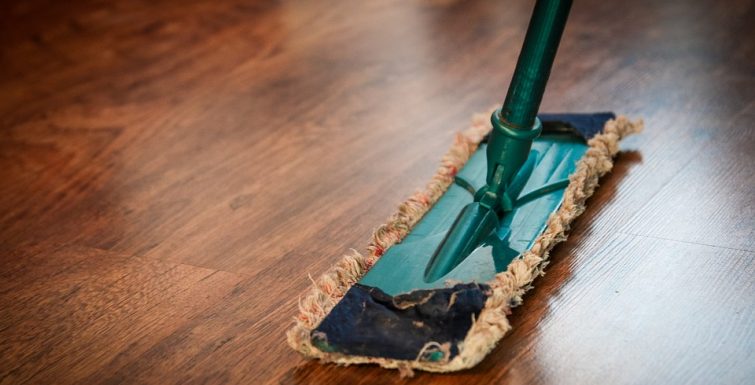
Managing a household and all the tasks included in this, is very much an occupation. It is a separate set of demands from personal care, earning an income, or managing our productive time. Occupational therapists routinely help clients to return to the occupation that is managing a home. There are multiple strategies that can be used for people with brain injuries, chronic pain, or social phobias to return successfully to grocery shopping. There are also multiple aids available that makes light and heavy cleaning easier. We often need to help people break down tasks into smaller chunks, or educate people on pacing as a means to get things accomplished. Education on proper body mechanics is also very useful at reducing strain on recovering shoulders, necks and backs for things like lifting, carrying, reaching, and bending. Outdoor tasks are more difficult to resume, simply because they are heavier, but many of the same principles apply. If behavior, mood or avoidance are the problem, we have strategies and tools to help with that also. We believe that most functional problems have a solution.
Occupations are therefore all the things included in managing your home. These tasks can be heavy, time consuming, and “not-fun”, but they are a necessary part of living. If you are struggling to get these things done, or know someone else who is, occupational therapy can help.
Check out more posts from our “Occupation Is” series.
