Close

Archive for category: Original Posts

by

My Child is a Picky Eater… Help!

Julie Entwistle, MBA, BHSc (OT), BSc (Health / Gerontology)

Do you have a child that is a picky eater?  You are definitely not alone!  Picky eating is a common issue, and while it is normal for kids to have food preferences and dislikes, it can be quite concerning for parents.  The good news is an Occupational Therapist can help!

Occupational Therapists can work with families to create solutions tailored to the individual child. Some general suggestions may include some of the following tips:

  • Remove the pressure
  • Allow the child to “play with their food”
  • Encourage food exploration on their own terms
  • Maintain a consistent meal-time routine
  • Introduce changes and new foods slowly – overcoming picky eating is a very gradual process

Watch our popular video below to learn more about how an Occupational Therapist can help families overcome the picky eating problem and raise healthy, happy eaters.

by

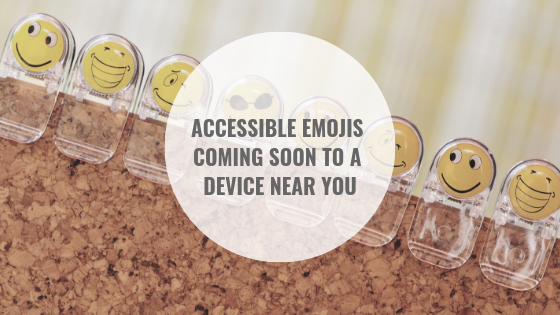
Accessible Emojis Coming Soon to a Device Near You 👍

Cheers to Apple 👍 for working with multiple organizations to create new emojis that “better represent individuals with disabilities.”  Though it will take some time for these emojis to be available on your device, it is a great step forward for inclusivity in our daily lives.

photo care of Emojipedia Photo

Learn more about the new emojis in the following care of Time Magazine.

Time:  Prosthetics, Guide Dogs and Wheelchairs: Here Come Apple’s Proposed Accessibility Emoji

by

O-Tip of the Week:

Our O-Tip of the week series we will be providing valuable “OT-Approved Life Hacks” to provide you with simple and helpful solutions for living. 

Spring Break is upon us so for the month of March, our O-Tip of the Week series will provide tips for traveling like a pro!

Never enough room in your suitcase?  That could be because you’ve been packing it all wrong!  (or maybe you are packing too many pairs of shoes)  The trick to maximizing space in your suitcase is to roll your clothes.  Not only will this create space for just one more pair of shoes, but it will also keep your clothing wrinkle free!

Check out this great how-to video care of Travel and Leisure.

Travel and Leisure:  You’ve Been Rolling Your Clothes All Wrong. Here’s the Correct Way to Do It

by

Are You Capturing the Moment… or Missing it Altogether?

Julie Entwistle, MBA, BHSc (OT), BSc (Health / Gerontology)

I love the song “Scare Away the Dark” by Passenger. Some of the lyrics have powerful insinuations: “we should stare at the stars and not just at screens”…”we want something real not just hashtag and twitter”…”we are all slowly dying in front of computers. I believe there is significant truth to what he is saying. The technology pendulum has swung so far in the direction of obsession and I am personally looking forward to it bouncing back to some form of neutral.

If addiction is defined as “the state of being enslaved to a habit or practice that is physically or psychologically habit-forming to such an extent that its cessation causes severe trauma…” or “usage of something that is beyond voluntary control” then I would argue that technology applies, and many people have a serious problem.

On a recent holiday, the evidence of this was immense. On one occasion I saw three young women on a horse-drawn carriage ride (a $50 experience I might add) and they were all looking at their phones. Were they texting, tweeting, posting on FB “loving my horse-drawn carriage ride”, or maybe playing candy crush, Instagramming a photo, or taking a selfie? Or the families sitting at dinner looking down, using their devices, essentially ignoring each other. Or the guy at the theme park videotaping his experience – he was even videotaping while a photographer was taking their family photo! I am not sure it matters what these people’s intentions were with their devices, but I felt that in perhaps trying to capture these moments they were missing them completely. Look around, talk to each other, take in the sights, sounds, smells, be mindful of the fragility of life and take a moment to be grateful for the experience. Connect. Engage. Smile at a person, not just a screen.

Now don’t get me wrong, I am all for capturing moments. But some moments need to be captured by our eyes and filed in our brain, not just on a device, memory card, or online. The concept of being present includes enjoying moments while you are in them – without living in the past or obsessing about the future. How can we do this? Enlightened Living suggests that being present involves recognizing that we can only do ONE thing at a time and thus we should engage wholeheartedly. Taking a photo while trying to absorb a moment are two tasks that cannot happen simultaneously. Thus why people feel that “life has passed them by”…they were never there to fully experience it in the first place.

So every once in a while check your addiction. Step away from your phone. Take technology away from your children. Leave it at home. Don’t take it on vacation. Set rules for technology behavior. In our house, we have significant rules for screen use, including a 17 clause contract our daughter signed in getting her first cell phone at age 14.  Some of the important clauses include: 

  • Rule # 1: The phone cannot be used to be mean to anyone – directly or indirectly.
  • Rule # 2: Proper grammar and spelling must be used when communicating.
  • Rule # 4 and 5: The phone is not allowed upstairs and cannot be used during family or meal times.
  • Rule # 9: I will not use my phone to take photos or video of people without their permission. I will not post or share photos or video without the consent of the people in them.
  • Rule # 15: I will follow classroom and teacher rules for phone use when at school.
  • Rule # 16: I understand this is not an appendage and obsessive use will not be tolerated.
  • Rule # 17 is a list of reasons for repossession.

My 14 and 12-year-olds read the contract together. At the end, my 12-year-old said: “so, what CAN she do”?

Do you feel sorry for my kid? Don’t. The real reason for the contract was not because she needs to be rigidly structured, but because I, as a new parent of a kid with a cell phone, was not comfortable with the entire concept in the first place. At 14 (and younger) kids are not developmentally able to understand and grasp the full impact of this new power in their possession. That is why there are recommended ages for Facebook (14), and age-specific laws for driving and drinking. They are young, naïve, immature, and still learning the ways of the world. I have a responsibility to be her guide, as effortful as that is. In the end, the contract worked to set out the expectations, establish boundaries, communicate about safety and proper use and helped us recognize the need to adapt as a family to the transition of now raising teenagers, not just “kids”. But my true intent was to make sure that I don’t teach her, or worse, model for her, that technology trumps experiences, replaces in-person relationships, or is a valuable way to tick away the proverbial time bomb that is life.

So, try if you can to capture moments by being present, and by using your born faculties to photograph, store and file your memories – not just a device. Check in with yourself at times about your behaviors, track these, shock your system with some detox, set some boundaries and try to unplug.


Previously posted July 2014

by

O-Tip of the Week: Make Time for “Me Time” Every Day

Our O-Tip of the week series we will be providing valuable “OT-Approved Life Hacks” to provide you with simple and helpful solutions for living. 

For the month of February, our O-Tip of the week series will talk about Self-Esteem, which is defined as confidence or belief in one’s own worth or abilities.  Self-esteem issues affect more than just teenagers and encompass more than physical insecurities.  Follow along this February to learn more about self-esteem, its importance and some simple ways give yourself a boost! 

Put yourself first by doing something kind for yourself every day.  Practicing self-care is not selfish, it is a necessary activity that needs to happen in order to support both mental and physical health.  Be sure to take time each to do something just for you (take a walk, have a warm bath, enjoy a special delicious treat).  You deserve it!

The following care of Psychology Today discusses the importance of self-care and provides tips to get you started!

Psychology Today:  Self-Care: 12 Ways to Take Better Care of Yourself

by

Occupational Therapy Approaches for Substance Use in Clients with Brain Injuries

Julie Entwistle, MBA, BHSc (OT), BSc (Health / Gerontology)
Co-written by Ashley Best, Student Occupational Therapist

In our previous blog post titled “Brain Injury and Substance Use”, we discussed how the cognitive and emotional changes associated with brain injury can overlap with substance use.  But what wasn’t covered was the role of the Occupational Therapist when working with clients who have these challenges.  While our role is complex in cases like these, we have tried to simplify how we use function and meaningful activity in combination with direct treatment to address some common themes as outlined below.

1. Harm Reduction

Arguably the most important strategy of any professional working with someone who uses substances is Harm Reduction. An Occupational Therapist can work with a client to better understand the process of using a substance with the same skill used for analyzing other daily activities. By breaking down what a client’s substance use looks like, from the trigger to being under the influence, the OT can identify areas of potential harm or danger. Some common concerns with substance use, and some OT intervention examples are:


It is important to recognize that the above strategies are not meant to encourage substance use but ensure the safety of the client when they are not willing or able to stop.  Sometimes just reducing the harm is all we can offer until the harm can be eliminated.

Clinical Example: A man with previous regular alcohol use prior to an accident, now has seizures when he does not have alcohol in his system. Thus, it is actually more harmful to ask this client to not use alcohol. Instead, monitoring the amount he drinks and ensuring he has regular supports at home are two strategies that can reduce the harm that alcohol may cause.

2. Recognizing Substance Use as a Barrier to Goals

The financial, behavioural, and health effects of substance use often negatively impact a client’s ability to reach their goals. An occupational therapist can help a client to understand and hopefully address the gap between substance use and being able/unable to move forward in other areas of life. An OT may also strategize ways to achieve goals despite substance use by planning use around occupations and this, in turn, may help decrease use over time.

Clinical Example: An individual with a brain injury has a goal to return to work but does not have the insight to recognize how using narcotics would impact their success on the job. Thus, helping the client break down the requirements of a job, recognize poor fits, and then implementing strategies to change substance use behaviour so that it doesn’t impact work (in the case that abstaining from use is not an option) could be an intervention focus.

3. Using Activity to Avoid Triggers

Often, substance use is time-consuming between acquiring, using, and coming down from the influence. This becomes a major challenge when people stop using because there is a lot of free time that may lead to boredom and relapse. This is an important place for occupational therapists to intervene by helping the client identify meaningful activities to engage in when they are feeling an urge to use. This could involve interests and values, or just discussing past activities that the client would like to resume.

In the case of someone with a brain injury, more guidance may be required to identify triggers (if the client has low insight what is triggering). In addition, activities that the client can perform may be different following a brain injury, and thus they may need support in finding new meaningful activities to fill the time that was previously taken up with substance use.

What is the take-home message?

As the above indicates, implementing any of these strategies will require the client to exercise a high level of control over their addiction. Thus, an OT can help support and accommodate each client’s unique situation by providing remedial and compensatory strategies to help clients transition from the occupation of substance use, to other, ideally more meaningful and healthy alternatives.

by

O-Tip of the Week: Self-Improve by Showing Gratitude

Our O-Tip of the week series we will be providing valuable “OT-Approved Life Hacks” to provide you with simple and helpful solutions for living. 

For the month of February, our O-Tip of the week series will talk about Self-Esteem, which is defined as confidence or belief in one’s own worth or abilities.  Self-esteem issues affect more than just teenagers and encompass more than physical insecurities.  Follow along this February to learn more about self-esteem, its importance and some simple ways give yourself a boost! 

Another proven way to boost your self-esteem is by practicing gratefulness.  Keep a daily (or weekly) gratitude journal where you take a few moments to reflect on 3 things you are thankful for.  Learn more about how the practice of gratitude can boost self-esteem and more in the following care of Forbes.

Forbes:  7 Scientifically Proven Benefits Of Gratitude That Will Motivate You To Give Thanks Year-Round

by

Brain Injury and Substance Use

Julie Entwistle, MBA, BHSc (OT), BSc (Health / Gerontology)
Co-written with Ashley Best, Student Occupational Therapist

As clinicians working in the community with clients who have a brain injury, we all too often see the challenges of recovery impacted by the use of illicit drugs and alcohol.  And while we treat both the brain injury and substance use as they impact function and the ability to participate in life roles, we often wonder, which came first? 

Statistics show that individuals with brain injuries have higher rates of substance use than the general population. However, statistics also show that individuals with brain injuries have higher pre-injury rates of substance use.  While this does not explain a “causal relationship” or answer the “which came first” question, we know the interplay is complicated and that acquiring a brain injury can change the way the brain processes information which may influence substance use behaviours and patterns.

Here are some examples of how this can happen:

  1. Cognitive Changes: Having a brain injury can result in cognitive changes from mild to severe difficulties with memory and concentration, communication, processing speed, problem-solving, and more.
  2. Emotional and Personality Changes: A brain injury can also result in emotional and personality changes such as impulsivity, irritability, and lack of insight.

The changes and symptoms mentioned above occur as a result of injury to the brain’s frontal lobe. The frontal lobe is responsible for more complicated cognitive processes. It helps us to problem solve everyday challenges and consider the positive and negative impacts of our decisions. When a person hits their head or is jolted quickly, the frontal lobe will often impact against the skull – bruising, damaging, and disrupting the connections between the brain cells in this region.

So how does this relate to substance use?

Well, there are reward pathways in the brain which react and process substance use triggers and the associated emotional response. These pathways respond to the positive feelings associated with substance use and strengthen the more the substance is used, telling the brain to seek more. These pathways recognize triggers of substance use and respond by sending the “craving” to the frontal lobe. The frontal lobe determines whether or not the substance will be sought after, and if so, how the substance will be obtained and used.

When we think about individuals with brain injuries and associated cognitive and emotional challenges, we can see how if a person has difficulty with impulsivity, for example, then ignoring a craving may be more difficult than it would be pre-accident. In addition, when a person with a brain injury decides to engage in substance use, challenges such as poor planning and problem-solving may make the use even more unsafe.

Though we may not have evidence to connect brain injury to substance use directly, the cognitive changes in the brain are likely to make managing, using and even recovering from substance use much more difficult.

So now that we have talked about how substance use behaviours and patterns may change after acquiring a brain injury, the question remains, What can be done to help an individual who has both a brain injury and problems with substance use?  This question will be answered in part 2 of our blog post: The Comorbidity of Substances and ABI – the Role of the OT…stay tuned!


References:

Bjork, J. M. & Grant, S. J. (2009). Does traumatic brain injury increase risk for substance abuse. Journal of Neurotrauma, 26, 1077 – 1082.

Ilie, G., Adlaf, E. M., Mann, R. E., Ialomiteanu, A., Hamilton, H., Rehm, J.,… Cusimano, M. D. (2015). Associations between a history of traumatic brain injuries and current cigarette smoking, substance use, and elevated psychological distress in a population sample of Canadian adults. Journal of Neurotrauma, 32, 1130 – 1134.

West, S. L. (2011). Substance use among persons with traumatic brain injury: A review. Neurorehabilitation, 29, 1 – 8.

WETA. (2017). Facts about concussion and brain injury. Retrieved from https://www.brainline.org/article/facts-about-concussion-and-brain-injury