Why can’t you iron a four-leaf clover?
Because you shouldn’t press your luck!

Why can’t you iron a four-leaf clover?
Because you shouldn’t press your luck!

The following from CBC News discusses the incredible journey of a young Toronto man who, after a live-altering experience, has created an app to help others manage upon release from hospital — Dash MD.
CBC News: After almost losing his own leg, he built an app to give patients more info

Making decisions can be difficult. Whether big or small, the decisions we make often affect not only our own lives, but the lives of others. For those who struggle with anxiety and other mental health issues, or who have suffered a brain injury decision making can become increasingly problematic.
If you are struggling with decision making, we recommend using our free printable decision maker to help you thoroughly weigh the options and help you reach the best conclusion.
For each decision you need to make, simply list the pros and cons of deciding YES vs deciding NO.

For more helpful tools visit our Printable Resources Page.
March is Nutrition Month and to celebrate our Food for Thought series will focus on some of the main factors that influence what we eat. Stress is an often overlooked piece of our health, yet it can be very damaging as it effects our bodies both physically and mentally. Specifically related to food, many often “stress eat” as they turn to food as a coping mechanism. The following from The Dietitians of Canada discusses how to overcome emotional eating and suggests some healthy alternatives.
The Dietitians of Canada Fact Sheet: Eating and Stress– Help! I eat when I’m stressed!
If you’re struggling with stress take a look at our article, How Stress is Affecting Your Health, for additional assistance.

Guest Blogger: Carolyn Rocca, Student Occupational Therapist, 2017
According to Statistics Canada, in 2012 over 130,000 Canadians over the age of 15 years old reported that they have been diagnosed by a health professional as having an eating disorder. Considering these high rates, and the likely underestimation of reported diagnoses, eating disorders remain a form of mental illness that are not openly talked about.
Eating disorder is an umbrella term for several categories of diagnoses, with anorexia nervosa, bulimia nervosa, binge eating disorder, and eating disorders not otherwise specified being the most common. Although symptoms vary based on the diagnosis, some overall symptoms experienced with eating disorders include a pre-occupation with body weight, body dissatisfaction, behaviours to prevent weight gain, perfectionism, emotional dysregulation, depressed mood (including suicidality), anxiety, and low self-esteem. Naturally, these symptoms can lead to secondary impacts such as physical adverse effects, social isolation, and a compromise of occupation in the areas of self-care, daily living, leisure, and productivity (NCCMH, 2004).
The treatment and recovery of adolescents with eating disorders involves the collective work of many healthcare professionals including physicians, dietitians, nurses, psychiatrists, psychologists, social workers, teachers, child and youth counselors, and, yes, occupational therapists (Norris et al., 2013). Each of these team members works collaboratively to deliver the best practice approaches of pharmacotherapy, nutritional rehabilitation, and psychosocial interventions, including cognitive behavioural, dialectical behavioural, interpersonal, and family based therapies, among others (APA, 2006; NCCMH, 2004). Several of the healthcare professionals working with adolescents with eating disorders can deliver these therapies, including occupational therapists.
This means that occupational therapists work effectively with several disciplines to deliver best practice approaches, while also integrating their unique focus on occupational functioning to the team. Occupational therapists’ unique contribution is their ability to holistically address the physical, cognitive, behavioural, and psychosocial aspects of adolescent eating disorders through occupation-based approaches to improve adolescents’ self-worth and self-esteem (Kloczko & Ikiugu, 2006). As mentioned previously, eating disorders commonly have a substantial impact on adolescents’ function in the areas of leisure, self-care, daily living, and productivity (NCCMH, 2004), meaning many youth have difficulty balancing their family and social lives, education, employment, extra-curricular participation, ability to regulate their own activities, and thus overall health.
Occupational therapists have the expertise to work closely with adolescents and their family to help them with their goals around succeeding in school, work, leisure, and overall re-engagement in meaningful activities. In fact, Occupational Therapists are skilled at using meaningful activities as a vessel to get to the underlying problem of the eating disorder. Sessions don’t focus on eating, food or binging behavior, but on being productive, enjoying life, and accomplishing things that matter. The indirect influence is better choices in other areas (including diet) and recognizing the link between mental and physical health, quality of life and wellness.
If you know a teen (or adult for that matter) that may be dealing with an eating disorder, encourage them get help. There is a team of professionals, including occupational therapy, that are skilled at assisting teens to recover from these, and other mental health issues.
References & Resources:
American Psychiatric Association (APA). (2006). Practice guideline for the treatment of patients with eating disorders (3rd ed). Retrieved from https://www.guideline.gov/summaries/summary/9318/practice-guideline-for-the-treatment-of-patients-with-eating-disorders
Kloczko, E., & Ikiugu, M. N. (2006). The role of occupational therapy in the treatment of adolescents with eating disorders as perceived by mental health therapists. Occupational Therapy in Mental Health, 22(1), 63-83. doi:10.1300/J004v22n01_05
National Collaborating Centre for Mental Health (NCCMH). (2004). Eating disorders: Core interventions in the treatment and management of anorexia nervosa, bulimia nervosa and related eating disorders. Retrieved from https://www.nice.org.uk/guidance/cg9/evidence
Norris, M., Strike, M., Pinhas, L., Gomez, R., Elliott, A., Ferguson, P., & Gusella, J. (2013). The Canadian eating disorder program survey–exploring intensive treatment programs for youth with eating disorders. Journal of the Canadian Academy of Child and Adolescent Psychiatry, 22(4), 310.
Statistics Canada: http://www.statcan.gc.ca/pub/82-619-m/2012004/sections/sectiond-eng.htm
What is tall when it’s young and short when it’s old?
A candle.

Though we live in a digital age we should not simply dismiss the things that generations before us used to communicate: such as face to face conversation, pen and paper, and handwriting. Handwriting, though taught less frequently across the globe, has many benefits beyond the simple development of motor skills. Take a look at the following from The New York Times that discusses why handwriting is still an essential part of learning, growth and development.
The New York Times: Why Handwriting Is Still Essential in the Keyboard Age
Additionally learn how Occupational Therapists provide solutions for printing and handwriting success in the following OT-V episode.
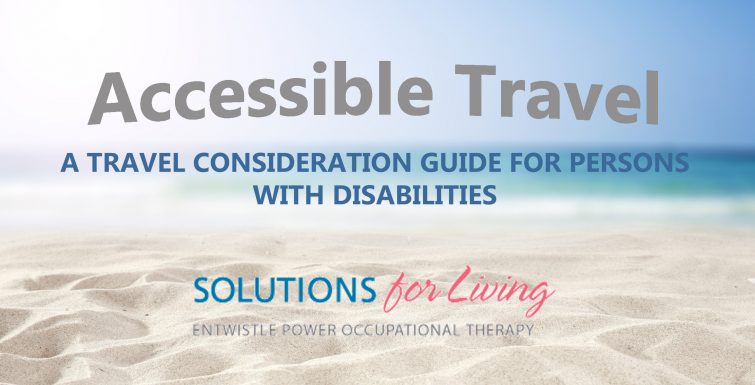
Many travel companies, packages, hotels and airlines claim to be “accessible” which is often a blanket term for “we try”. After all, nothing can be fully “accessible” as each disability is different, requiring varying levels of accommodation.
Travelling with a disability can be difficult, but with thorough planning it can be a wonderful experience. Our free E-Book on Accessible Travel is full of helpful information, tips and checklists to help you plan, pack and prepare for a fantastic getaway.

For those who travel often you know that airport and airplane foods can often lack nutritional substance (and flavour). March Break is next week and for the lucky ones who are heading away for a Spring Break check out these tips from The Food Network to stay healthy while travelling.
The Food Network: A Nutritionist’s Tips for Eating Healthy While Traveling

Julie Entwistle, MBA, BHSc (OT), BSc (Health / Gerontology)
For those working in the personal injury and medical-legal fields, you will be familiar with the new License Appeal Tribunal (LAT). This LAT, effective April 1, 2016 was FSCO’s solution to long wait lists in the previous SABS mediation process whereby insurers and claimants essentially try to resolve disputes about claimant’s benefits, rehabilitation, or other denials and discrepancies.
Recently, we received one of those “feel good” emails from a lawyer that was able to successfully argue for a client at the LAT – because of the information they received from the treating occupational therapist.
The email read like this:
…[the OT] prepared an attendant care comparison report for us, which we fully relied on at a LAT case conference today. The client was also put under surveillance and [the OT] was able to extensively rebut all their findings, which we also relied on today at the case conference. I truly believe we were successful today because of her hard work.”
I am biased, but occupational therapists are generally pretty awesome. Where lawyers speak “legalese”, insurers speak “SABS ease”, doctors speak “medical ease”, occupational therapists speak “functional ease”. We work hard to make sense of things – for our clients and our customers. We want to help the client be understood and for others to know the true impact that an accident or illness has had on their day to day ability to manage important activities. Chronic Pain, Depression, or even a broken leg does not really equate to much unless it is in the context of what that means for that person: for Mr. X, chronic pain means they can’t walk their kids to school, or assist them with homework, for Ms. Y her depression has resulted in her dropping out of her post-secondary program, losing her scholarship, for Mr. Z his broken leg is preventing him from working at both of his jobs and as a result he is unable to afford his housing and food for his family….
Sure, lawyers and insurers can put things into context without an occupational therapist, but I would argue that we are trained to ask different questions – questions that get to the heart of disability and dysfunction, while at the same time helping people to tell their story from a place of vulnerability and honesty. We strip things down to be simple, but yet impactful in explaining what disability means to that one person.
We still find that some lawyers don’t involve an occupational therapist early enough. They wait until the client is several years post injury to see if it is “needed”. But guess what? It was often needed the entire time, and waiting so long only served to leave the impression that the client was “functioning fine” because there would be little practical or functional data or evidence to indicate otherwise. Have you seen doctor’s notes? “Back pain, off work X 3 months”….not enough to explain the context of disability.
Occupational therapy is greatly important in the recovery, rehabilitation, medical-legal and personal injury domain. And if we can’t help your client to live, manage or function better, at the least we can provide the information and evidence to help you to be successful in other areas of the claim, including at the LAT.