What starts with “e”, ends with “e” and has only one letter in it?
An envelope.

What starts with “e”, ends with “e” and has only one letter in it?
An envelope.

A recent survey conducted by the Centre for Addiction and Mental Health (CAMH) has identified that 19% of adults in Ontario suffer from moderate to severe problematic use of electronic devices. What makes the use problematic? Take a look at the following from the CAMH to learn more and to see if you have trouble disconnecting.
Trouble getting the kids to power down? Try our free printable Technology Pass.


While studies show that walking in nature can boost mental health, researchers are delving deeper to study the actual effects on the brain. Learn more about the ongoing studies in the following from the New York Times and be sure to take advantage of all the natural world has to offer this Spring.

There’s no better way to get your daily fruit and vegetable requirements than with a delicious and healthy salad. Pack it up for a healthy lunch or add some protein and make it meal sized for dinner. We encourage you to try some of the following tasty salad recipes from Best Health Magazine.
Best Health Magazine: 25 Winter Salad Recipes You’ll Make Again and Again

Let’s be honest, as fun as vacations are, travelling is stressful. The planning, packing, confirming all the details, getting from A to B, preparing to be away from work or home, keeping paperwork organized…it takes a significant amount of time and effort to put a trip together. Yet, if you have a disability, travelling becomes even more complicated.
March break is approaching and for months my clients have been asking me about travelling with a disability. I enjoy these discussions because I do believe that anything is possible – take a look at our latest OT-V episode all about accessible travel including tips for travelling with a disability.
Bonus—download our free Accessible Travel booklet which includes helpful checklists and tips for your travel!
What goes up but never comes down?
Your age.

Are you unsure how to interact with someone who has a disability? This blog from The Rick Hansen Foundation offers some handy do’s and don’ts that can help.
The Rick Hansen Foundation: The dos and don’ts of disability sensitivity
In Ontario, under the Accessibility for Ontarians with Disabilities Act (AODA), organizations are required to train employees and volunteers on how to provide customer service to persons with disabilities. If your organization requires this training and is looking to enhance its customer service try our AODA Customer Service Training Program which delves deeper into how to interact and effectively service persons with disabilities.

Pain is a common occurrence following an injury, illness, or traumatic event like a motor vehicle accident. While pain does play an important role in alerting us to potential dangers, injury, or an impending problem, it can also become a significant barrier to function as it can often continue long after the dangerous situation resolves.
Chronic pain is difficult to treat and manage because of all the different factors that contribute to its intensity, frequency, and the many variables that can make it better or worse. Stress, depression, feelings of loss of control, pressures at work or home, and other mental or emotional factors affect pain perception.
Occupational Therapists often recommend keeping track of the intensity of your pain and the activities and/or variables which may have contributed. Use this printable pain diary to help you and your healthcare provider monitor and manage your chronic pain.
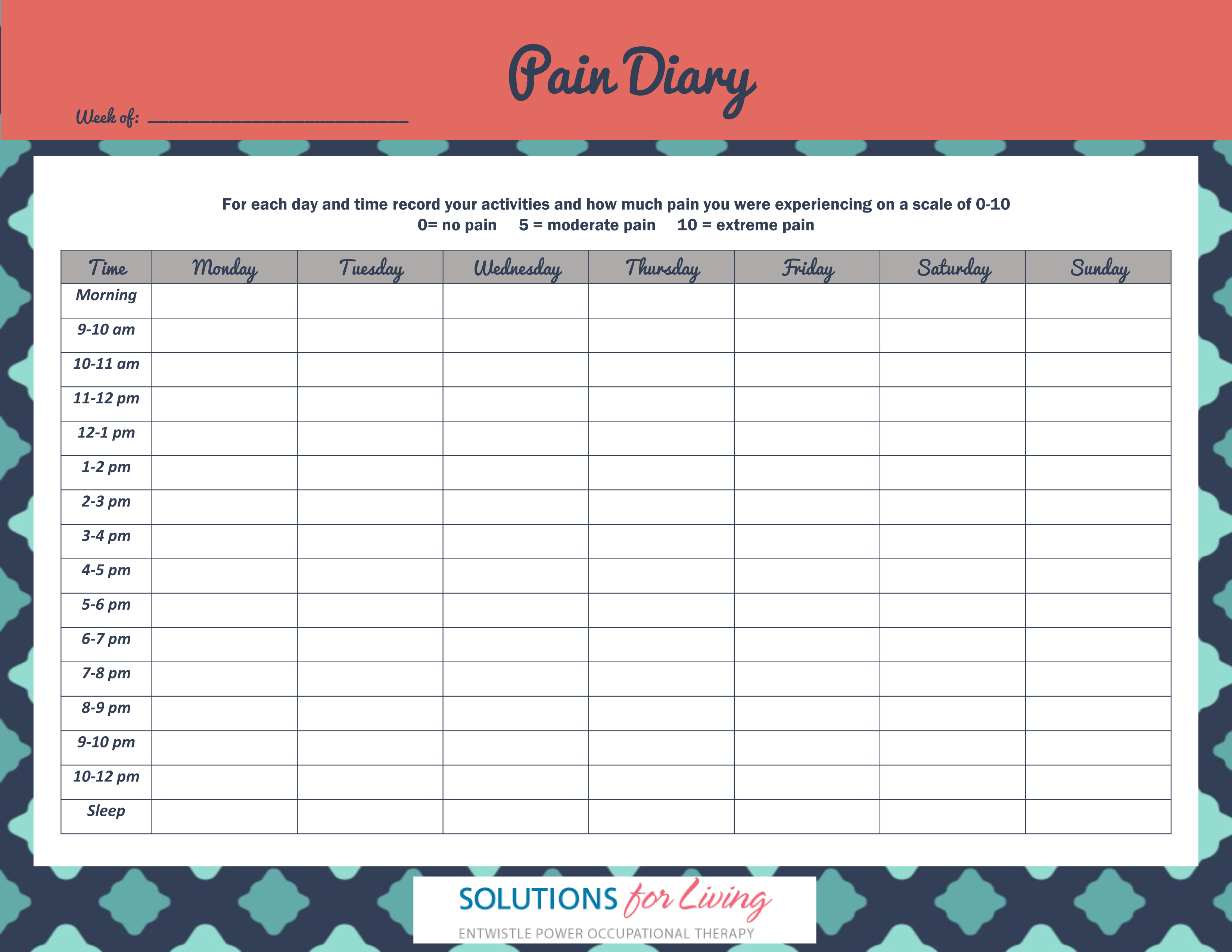
Learn more about how Occupational Therapists help provide solutions for people living with Chronic Pain in our post: Chronic Pain a Problem? Try OT.
For more helpful tools visit our Printable Resources page.

February is Heart Month and while many of our blog posts will focus on prevention through good health habits, we want to also provide you with some tips for recovery.
Heart disease has a major impact on an individual’s quality of life. It can lead to discomfort or chronic pain, activity limitations, disability and unemployment. “An estimated 345,000 Canadians aged 35 to 64 reported living with heart disease. More than a third (36%) of these reported needing help with household tasks or personal care” (Heart and Stroke Foundation of Canada, 1999). Heart disease requires lifestyle changes to prevent progression of the disease, further cardiac events and activity restrictions.
An occupational therapist, in conjunction with other team members, will help you determine what activities you can safely perform and how to modify activities to decrease the amount of energy required. Learn more about the solutions an Occupational Therapist can provide in the following infographic.

Looking for some inspiration on how to spend the day together?
Here are our Top 10 Suggestions For Fun Family Day Activities: