I am only one color, but not one size, stuck at the bottom, yet I easily fly. I am present in sun, but not in rain, doing no harm, and feeling no pain. What am I?
A shadow.

I am only one color, but not one size, stuck at the bottom, yet I easily fly. I am present in sun, but not in rain, doing no harm, and feeling no pain. What am I?
A shadow.

As the population ages the issue of elder abuse is becoming much more prominent. The World Health Organization defines elder abuse as: “a single, or repeated act, or lack of appropriate action, occurring within any relationship where there is an expectation of trust which causes harm or distress to an older person.”
The following from the McMaster Optimal Aging Portal discusses how to recognize signs of elder abuse. Take a look further into their four-part series to learn more about the issue of elder abuse and how to help someone in need.
McMaster Optimal Aging Portal: Elder abuse just next door! Part 1: What is elder abuse?

Studies show that kids across the globe are becoming less active “couch potatoes” as early as age 7. In the following from CBC News learn more about this growing problem and the recommended guidelines for daily activity.
CBC News: Children’s physical activity starts declining at age 7, U.K. study indicates
How can we put a stop to this growing problem?
We challenge you to spend active time together as a family! Now that Spring Has Sprung, try some of these fun family activities to boost the health of your children and yourself.


March is Nutrition Month and to celebrate our Food for Thought series will focus on some of the main factors that influence what and how we eat.
Picky eating is something quite common in children and youth and can cause great worry and disruption for many parents. Take a look at the following from the Dietitians of Canada to learn how to manage mealtime meltdowns and overcome the picky eating problem.
The Dietitians of Canada: Take the Fight out of Food
For more information on picky eating and solutions to help, check out the following video from our OT-V series: Solutions for Picky Eaters.

Julie Entwistle, MBA, BHSc (OT), BSc (Health / Gerontology)
I can say with certainty that 100% of my clients suffer from financial difficulty when faced with disability, trauma or injury. It is just not common for people to plan for the “rainy day” that could be ill health. Yet, the impact of financial strain is significant. Stress, anxiety, panic, excessive worry, loss of sleep, relationship issues, poor decision making, and maladaptive coping are all common reactions to feeling that you are unable to survive a change in income or increased expenses from medication, devices or therapy.
In the following video from our OT-V series, we discuss how an Occupational Therapist uses strategies to help you through financial difficulties and to help manage the negative effects to your health.
I have four legs, one foot and one head… what am I?
A bed.

Breaking down barriers across Canada is the goal of the Rick Hansen Foundation who, with help from the Canadian Government, is providing grants to Barrier Buster projects across the country. Take a look at the guidelines and eligibility requirements, and get inspired by some sample projects on the foundation’s website.

Our brains are made of billions of neurons, which interact with each other to complete specific tasks. Signals are sent from one neuron to another along neural pathways, and these determine our thoughts, emotions, insights, and so much more. Each task relies on a different neural pathway, so the pathway for reading a book is different than the pathway for putting on our shirt. The more we use a pathway, the stronger the connection becomes.
These neurons have the ability to physically change themselves when faced with new and difficult experiences. This ability is called neuroplasticity. As we are exposed to new areas, tasks, information or experiences, neural pathways are formed and existing ones are reshaped. This will continue throughout our entire lives as we learn. As we have experienced through practicing a musical instrument, memorizing our shopping list or recalling a friend’s phone number, if we consciously focus and train our brains in a certain area, they will become faster and more efficient at performing those tasks.
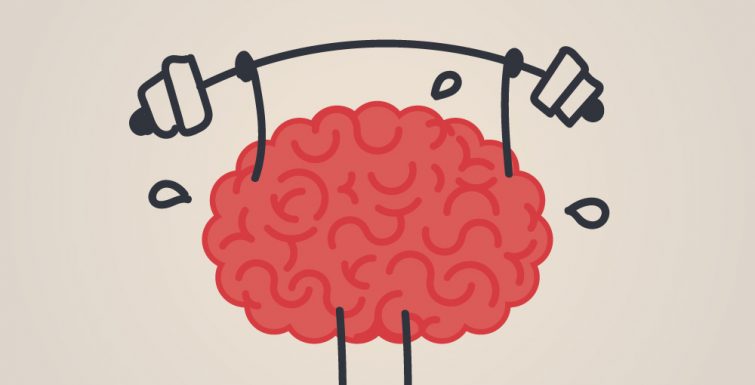
Just as we need to exercise the muscles in our body, we also need to exercise our brain. But what exercises are best?
Take a look at the following from The New York Times that discusses studies on the aging brain and some advice to help you age well.

March is Nutrition Month and to celebrate our Food for Thought series will focus on some of the main factors that influence what we eat.
The world is becoming increasingly obsessed with weight and body image and as such the internet is full of websites, blogs and products that may or may not be providing you with reliable information.
While it’s extremely important to be informed so you can eat well for weight management and overall health, how do you know what information to trust? The following fact sheet from The Dietitians of Canada discusses how to know identify health and nutrition information you can depend on.
The Dietitians of Canada: Food Fads– Ugh! How do I know which information to trust?

Julie Entwistle, MBA, BHSc (OT), BSc (Health / Gerontology)
Here is some rocket science: being obese is a well-known contributor to poor health. The secret to not being or becoming obese? If you are obese, it is “move more and eat less”. If you aren’t, it is “keep moving and eat well”. I was at the gym today and heard someone make a great comment “just show up and do something”. Is it that simple?
In the interest of public health, Ontario has a new law effective January 1, 2017: the Healthy Menu Choices Act. In this, all food-service chains with 20 or more locations in must now post calorie information on menus for the food and drink items they sell. Further, as of January 1, 2018, all menus must post the following statement:
Adults and youth (ages 13 and older) need an average of 2,000 calories a day, and children (ages 4 to 12) need an average of 1,500 calories a day. However, individual needs vary (1).
So, will this help continue to the better health of Ontarians? People are complicated and behaviors ingrained, so do we know if having more information about calories will contribute to different choices?
First, let’s define a calorie – it is actually “the energy needed to raise the temperature of 1 gram of water through 1 °C (now usually defined as 4.1868 joules).” Huh? So why does that matter? Because in nutrition calories refer to energy consumption through eating and drinking, and energy usage through physical activity. For example, an apple may have 80 calories, while a 1 mile walk might use up about 100 calories. Our body uses calories as our energy source to breath, digest, circulate our blood, etc. So, these are important and we get them from foods and beverages (2). But knowing how many calories one person needs to maintain their weight and be at optimal health will depend on several factors including metabolism, level of activity during the day, age, and even genetics. I need way less calories as a middle-aged active woman than the 12,000 calories per day consumed by Michael Phelps when he is training for the Olympics.
So, to the common consumer that knows little about nutrition, but is interested in trying to eat well, will the calorie information on menus help? Well, the math will be simple. If the sign says I need an average of 2000 calories per day, and my Big Mac, Biggie Coke and fries is 1200 calories, I will consciously know that I have 800 left (for weight maintenance). But when I go home, will I check labels, pull out a scale, and put together my remaining meals to not exceed 800? Probably not because the common consumer does not tend to behave that way because if they did, we would not have an obesity problem in the first place. However, for the educated consumer things might be different. Personally, having fitness, health and body composition goals, I have already changed my food choices at fast food places because the calories in what I really wanted was starring me in the face, making me feel guilty already. And I was still able to enjoy what I did order, recognizing that another element of health is “consistently making good choices” when most of the options out there (for convenience food anyway) are poor. So I felt good (emotionally) making a better choice. But when dealing with people and behavior, it is much more complicated than simple math.
It is also important to look at the stages of change when considering whether having transparent information about calories will actually lead to people making better decisions. There are five stages of change – precontemplation, contemplation, preparation for action, action and maintenance (3). Described briefly, in the first stage people don’t know they have a problem and the behaviors are risky and potentially life-threatening (like stress-eating, overeating and becoming obese). In the second stage the person identifies they have a problem, or there are signs of the problem worsening (the number on the scale, bloodwork results, Diabetes starting etc). In Preparation for Action, the person is ready to make a change and is seeking information and guidance. This is when someone might start to understand what a calorie is, and how that relates to them. In Action, the person starts actively changing. This is where I see the Healthy Menu Choices Act being helpful. It will provide people the information they need to make choices that are better than others, as part of their “action” towards improved health. The Healthy Menu Choices Act will also be helpful in the last stage of Maintenance as people can use the calorie information to make choices that align with their desire to maintain the gains they have made, or to be healthily mindful in selecting foods.
From a health perspective, I think that the more information people can have about the choices they are making, the better. Even if they don’t yet understand it, or choose not to use it, or it does not result in behavior change, it is there when they are ready for “Action”. From a business perspective, restaurants and establishments might want to review their menus and look at the balance between their healthy and not-healthy choices. Further, they will also want to look at how orders change with this new act. If people stop ordering the White Chocolate Crème Frappuccino (at 510 calories) and instead sales of Iced Skinny Flavored Lattes (at 80 calories) soar, your consumers are telling you something.
Honestly, I am all for a nice bucket of poutine once a year, but beyond that I will pick the healthy options on a menu, if these exist. If they don’t, I will go elsewhere. It is that simple. So I appreciate the added information the Healthy Menu Choices Act provides, and will use the calorie information in my meal decision making.
Resources:
(1) https://www.ontario.ca/page/calories-menus
(2) http://www.medicalnewstoday.com/articles/263028.php
(3) http://www.activebeat.com/your-health/women/the-5-stages-of-behavioral-change/5/