Close

Our Blog

by

Keeping Up Appearances: Social Media and Self-Esteem

Guest Blogger:  Susan Wang, Occupational Therapist

In the current age of media, the internet and social media sites (especially Instagram) contribute heavily towards bombarding young girls with images and videos of models. Approx. 90% of adolescents use social media daily, frequently for more than 2 hours a day.  Girls are more exposed in higher rates to media than boys which make females much more vulnerable to the negative impacts of media than boys. With the rise of social media use for marketing and advertising, content creators and models can interact heavily with their viewers through comments and live videos. They create heavily curated profiles and document intimate moments of their lives that thousands (sometimes millions) of individuals follow and keep up with. This, in addition to the popularity of Instagram use by celebrities, can create the illusion of forming authentic relationships with their audience. The interactive nature of social networking also provides opportunities for girls to compare their appearance with their peers. For example, taking selfies may cause women to scrutinize their own image from an observer’s perspective, which is then further reinforced by instant feedback on their appearance through the form of comments and ‘likes.’

Social media presents unique pressures on body dissatisfaction and disordered eating. It is a highly visual environment in which appearance ideals and the pursuit of thinness are promoted. Indeed, the interactive nature of social media appears to contribute to increases in disordered eating. As social media marketing and advertising continues to grow, competition amongst content creators and “influencers” also rises. There is a need to create a persona and create images/videos that stand out amongst the thousands of other marketers competing for the same sponsorships. This results in models utilizing photo editing apps to alter their images. With the rise of “FaceTune” and other photo editing apps, it is increasingly easier for individuals to alter their images, without needing to consult professionals or develop skills in photo editing. This has resulted in girls comparing themselves to unrealistic beauty standards.

In addition, celebrities such as Kim Kardashian have normalized the usage of surgical enhancements. Lip injections, breast augmentations, “fillers”, and other cosmetic surgery has been on the rise in recent years.  Cosmetic doctors have reported an increase in teens seeking lip injections, citing photos of Kylie Jenner as an inspiration. Studies have shown that women who rated their self-esteem, life-satisfaction, and attractiveness as low, were more likely to undergo cosmetic surgery.  This study also indicated that women with high social media exposure were more likely to undergo plastic surgery.  There is also an increase in the number of teenagers seeking plastic surgery. In 2017, approximately 220,000 cosmetic procedures were performed on patients aged 13-19 and social media plays a large part in this trend.  The average Millenial takes over 25,000 selfies in their lifetime, which is one of the major reasons for the self-esteem issues in this age group. In a recent American Academy of Facial Plastic and Reconstructive Surgery survey, more than 40% of surgeons said looking better in selfies on Instagram, Snapchat, and Facebook was an incentive for patients of all ages getting surgery. This is magnified for teens, who use social media more often.

Instagram vs. Reality

There are existing efforts to combat the rise in unrealistic beauty standards by raising awareness about the increasing use of photo editing apps. One such example is a community on the forum “Reddit” that posts side-by-side comparisons of edited images posted by models and celebrities and non-edited photos or videos depicting what they actually look like. While some of the posts contain borderline offensive/body-shaming comments, the concept can be helpful, especially for young girls, in highlighting the efforts and altering (posing, editing) that goes into celebrities’ images.

Some additional helpful resources we came across include:

References:

Brown, A., Furnham, A., Glanville, L., & Swami, V. (2007). Factors that affect the likelihood of undergoing cosmetic surgery. Aesthet Surg J, 27 (5). 501-508.

Paul, K. (2018, October 10). Do Instagram and Snapchat distort how teenagers see themselves? MarketWatch. Retrieved from
https://www.marketwatch.com/story/the-unsettling-relationship-between-selfie-filters-and-plasticsurgery-2018-08-02

Paul, K. (2018, September 30). More than 200,000 teens had plastic surgery last year, and social media had a lot to do with it. MarketWatch. Retrieved from https://www.marketwatch.com/story/should-you-let-your-teenager-get-plastic-surgery-2018-08-29

Fardouly, J., Diedrichs, P. C., Vartanian, L. R., & Halliwell, E. (2015). The mediating role of appearance comparisons in the relationship between media usage and self-objectification in young women. Psychology of Women Quarterly, 39, 447–457.

Oberst, U., Wegmann, E., Stoft, B., Brand, M., & Chamarro, A. (2017). Negative consequences from heavy social networking in adolescents: The mediating role of fear of missing out. Journal of Adolescence, 55, 51-60.

Costa, L. D. C. F., de Vasconcelos, F. D. A. G., & Peres, K. G. (2010). Influence of biological, social and psychological factors on abnormal eating attitudes among female university students in Brazil.

Journal of Facial Plastic Surgery (2014). Selfie trend increases demand for facial plastic surgery. Retrieved from https://www.aafprs.org/media/press_release/20140311.html

Salmela-Aro, K,, Upadyaya, K., Hakkarainen, K,, & Lonka, K. (2016). The Dark Side of Internet Use: Two Longitudinal Studies of Excessive Internet Use, Depressive Symptoms, School Burnout and Engagement Among Finnish Early and Late Adolescents. Journal of Youth and
Adolescence, 46 (2). DO – 10.1007/s10964-016-0494-2

de Vries, D. A., & Peter, J. (2013). Women on display: The effect of portraying the self online on women’s self-objectification. Computers in Human Behavior, 29, 1483e1489. https://doi.org/10.1016/j.chb.2013.01.015 .

Spettigue, W., & Henderson, K.A. (2004). Eating disorders and the role of the media. The Canadian Child and Adolescent Psychiatry Review, 13 (1), 16-19.
 

by

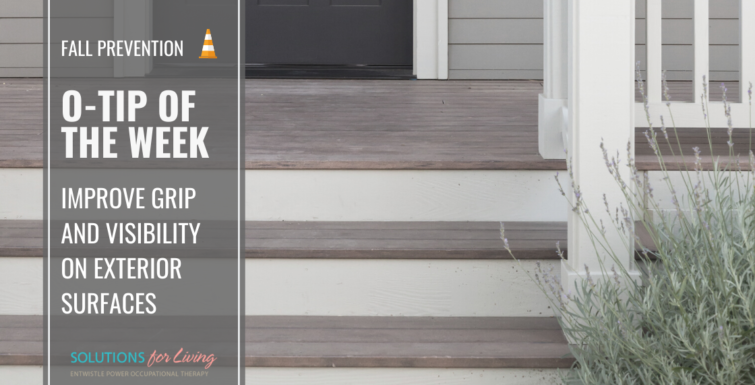
Fall Prevention O-Tip of the Week: Improve Grip and Visibility on Exterior Surfaces

Our O-Tip of the week series we will be providing valuable “OT-Approved Life Hacks” to provide you with simple and helpful solutions for living. 

For the month of November, Fall Prevention Month, our O-Tip series will provide helpful ways to prevent falls at home and in the community.

Exterior steps can become extremely slippery in wet, snowy or icy weather.  Painting over your outside stairs with a mix of paint and sand will help to increase grip and improve visibility.  Be sure to always keep your steps clear and use salt in the winter months to ensure steps aren’t a fall hazard.

by

The Rights of a Child

Written by Justine Huszczynski, Occupational Therapist

November 20th marks the date when Canada adopted the United Nations Convention on the Rights of the Child (UNCRC). Simply put, the UNCRC is a treaty that outlines the basic human rights for children and youth.

Among other rights, the UNCRC outlines “survival and development rights” which are explained as “the basic rights to life, survival and development of one’s full potential”. Looking into this a little deeper, Article 23 under the “survival and development rights” states:

“Children who have any kind of disability have the right to special care and support, as well as all the rights in the Convention, so that they can live full and independent lives.”

So, how is Canada ensuring that the rights of children with disabilities are being fulfilled? Of course, we have public healthcare which provides children prompt access to medical attention. But Article 23 goes beyond this. It also includes the right to services – therapy services perhaps – that children with “any kind of disability” should be able to access such that they can become independent adults and experience a fulfilling life.

While Ontario offers plenty of publicly funded early intervention services for children with disabilities (based on the availability of government-funded children’s treatment centres across the province), how are the outrageous waitlists for some of the most valuable services offered in these centres acceptable? For example, in 2013 the Toronto Star surveyed nine of the government-funded treatment centres and found average waitlist times ranging from one to four years for a child to receive intensive behavioural intervention (IBI) therapy.

So how does this follow the guidelines of the UNCRC? Honestly, it doesn’t. Simply having a service available to a child with a disability is not enough. The service needs to be provided. Long waitlists do not allow children to “live full and independent lives” but in fact can stifle a child’s development by denying access to programs that are most effective as “early intervention”.

Therefore, while we celebrate how far we have come to secure the rights of children, we need to look ahead and aim for a brighter future for those children that may need some extra support – sooner rather than later. An example of striving for a brighter future comes from the parents of one of my clients who devoted their time to being their child’s advocate when “he didn’t have a voice”. After this young client was denied services by one of the government-funded children’s treatment centres in Ontario, his parents scheduled a meeting with their local Member of Provincial Parliament (MPP) to advocate for their son’s dire need for early intervention services. As a result of the advocacy skills of my client’s parents, the MPP ordered the treatment centre to complete a reassessment and the child was granted the early intervention services that he absolutely deserved and required. During a conversation with the mother of this client, she stated, “It is my job to be make my child’s life better”. This statement is heartwarming, and perhaps we should view it as a challenge. A challenge for all of us – therapists, health professionals, teachers, citizens, governments– to truly make it our “job” to ensure children are given the best life possible. So take the challenge and advocate for our children – ask more questions, get second opinions, research the available charitable funding, schedule meetings with your MPP, school board trustee, and don’t take no for an answer.

by

Fall Prevention O-Tip of the Week: Let’s Get Physical

Our O-Tip of the week series we will be providing valuable “OT-Approved Life Hacks” to provide you with simple and helpful solutions for living.

For the month of November, Fall Prevention Month, our O-Tip series will provide helpful ways to prevent falls at home and in the community.

Did you know that taking part in regular physical activity including cardiovascular, strength-building and balance activities can help to prevent falls as you age?  Speak with your physician or Occupation Therapist about which activities are safe for you and maintain a regular routine to help reduce your risk.

by

Senior Safety and the Vital Role of Occupational Therapy

Canada’s population is aging. In 2015, there were almost 6 million people over the age of 65 – that is nearly 1 in 6 Canadians. As we grow older, we face an increasing risk of falls, accidents, disabilities, and illnesses.  As a senior how can you stay safe and healthy?

Why is Older Adult Safety Important?

Older adult health and safety is important for maintaining our ability to age in place of choice.  Statistics Canada has highlighted the following safety risks for older Canadians:

  • 89% of Canadian seniors had at least one chronic health condition. Arthritis and rheumatism were the most common.
  • 25% of Canadian seniors reported having 2 or more chronic conditions such as high blood pressure, arthritis, back problems and diabetes.
  • 63.7% of Canadian seniors reported to have been injured in a fall.
  • There are 3.25 million people aged 65 and over in Canada who have a driver’s license.
  • 92.1% of seniors live in private households.

These statistics demonstrate the increased risk to seniors for health and other safety concerns.

Occupational Therapists Can Help!

Occupational Therapists are trained professionals who address all aspects of getting people back to doing things they want to do, need to do, or have to do, but may be experiencing challenges when doing so.  Occupational Therapists can support older adult’s health and well being through providing supports for seniors to maintain active social connects, manage changes in health conditions, and to continue engaging in activities that provide them with meaning and joy.

These are the following areas that an OT can help keep seniors safe and healthy!

Fall Prevention 

Falls are the leading cause of injury among older Canadians with 20-30% of seniors experiencing one or more falls each year.

Occupational Therapy can help seniors prevent falls by assessing their functional status and reviewing the hazards in their environment that may put them at risk for falling. Strategies to prevent falls can be discussed, such as:

  • General Education on how to do activities differently to stay safe.
  • Equipment and devices to assist.
  • Home modifications such as lighting, flooring, organization, and layout.
Aging in Place

In 2011, 92 % of all seniors ages 65 + lived in private homes, and over 10 million seniors are living with a chronic condition.  Older adults also have disproportionately higher rates of unmet care at home. Thus, ensuring these individuals function safely and independently at home is a high priority.

Occupational Therapy can help by assessing the home and the homeowner to ensure a proper fit between the person and environment to promote overall health and safety.  Additionally, an OT can prescribe the proper assistive devices, education and help people plan ahead so they can “ age in place” without being at risk.

Keeping Senior’s Active

Remaining physically active as you age can help reduce, prevent or delay diseases and can help to manage stress, improve mood and boost cognition.  Statistics show that 57% of Canadian seniors consider themselves physically inactive.

Occupational Therapy can help seniors remain physically active by:

  • Creating custom activity plans based on health and abilities.
  • Helping seniors create a daily schedule that includes physical activation.
  • Helping seniors to find appropriate facilities and groups to join or other productive and meaningful activities.
Sleep

Sleep is important for recovering from illness and injury, staying healthy, and ensuring people have sufficient energy during the day to accomplish life roles. Difficulty sleeping is a common and detrimental issue for people in various life stages.

Occupational Therapy can help seniors reduce sleep problems by:

  • Reviewing sleeping positions and patterns to suggest improvements for both comfort and quality of sleep.
  • Assessing the bed, mattress, and pillows to ensure the body is sleeping in the optimal position for comfort.
  • Prescribing assistive devices to improve sleep positioning, bed transfers, and bed mobility.
  • Helping people to implement a new sleep routine that will improve your sleep quality and duration.
Cognitive Impairments

According to the Alzheimer’s Society of Canada as of 2016, there are an estimated 564,000 Canadians living with dementia – plus about 25,000 new cases diagnosed every year.

Occupational Therapy can help people with dementia or who have altered/declining cognition by:

  • Educating people and loved ones on how to maximize function while still promoting independence and safety in the completion of activities of daily living.
  • Assessing cognition, abilities, and environment to make suggestions on ways to compensate for declining cognitive skills through direct therapy or environmental modification.
  • Developing routines and schedules that promote independence and eases the role and need for a caregiver.
  • Prescribing safety equipment and devices to optimize function.
Transition Stages
  • Occupational Therapy can play a crucial role in helping seniors through live transitions this by:
  • Identifying, planning and helping people engage in finding new meaningful occupations outside of work.
  • Providing education on role changes, spending time with family and friends, healthy lifestyles and choices.
  • Helping discover new ways to occupy their time, participate in leisure activities and find new interests.
  • Improving quality of life through promotion of independence and pain management strategies.


For more information on how Occupational Therapists help improve the lives of older adults check out our infographic:  Occupational Therapy Works for Seniors.


Resources

http://www.statcan.gc.ca/pub/11-402-x/2012000/chap/pop/pop-eng.htm?fpv=3867

https://www.tc.gc.ca/media/documents/roadsafety/cmvtcs2013_eng.pdf

Turcotte, M (2014). Canadians with unmet home care needs.

http://www.statcan.gc.ca/pub/75-006-x/2014001/article/14042-eng.pdf

http://www.caot.ca/default.asp?pageid=1454

http://www.caot.ca/default.asp?ChangeID=1&pageID=621

http://www.caot.ca/default.asp?pageid=1501

by

Weekly Mind Bender

Solve the following:


puzzle care of thinkablepuzzles.com

1. Think Twice About It
2. Walk on Water
3. Space Invaders
4. You Are Always on my Mind
5. Keep on Smiling
6. It Doesn’t Add Up