What fastens two people yet touches only one?
A wedding ring.

What fastens two people yet touches only one?
A wedding ring.
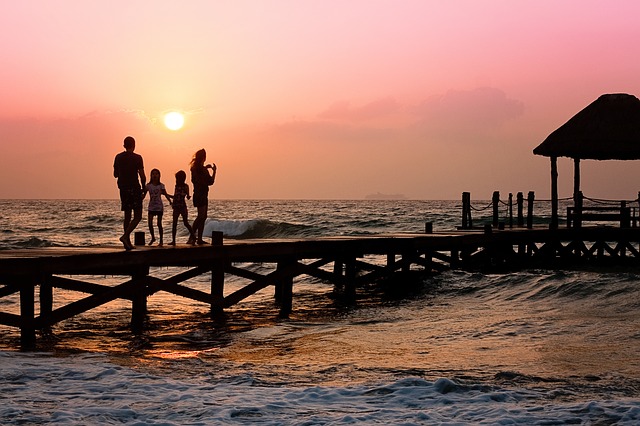
After returning from a vacation do you ever feel you need another vacation to recover? Travelling with your family can be stressful, let’s face it, it IS stressful. Whether travelling by car, airplane or boat there are always stressors from getting from point A to your vacation destination. March break is just ahead and, if you’re one of the lucky ones heading away, we invite you to check out these helpful tips and strategies from Parents Magazine to help reduce your travel stress. Bon voyage!

Guest blogger: Susan Culp, Certified Health Coach of Fresh Focus
www.fresh-focus.ca
Do you have an abundance of energy and vitality at work? If the answer is no, then you are among the vast majority! Imagine how much more productive and motivated you would be and how this would make you feel. Unfortunately, most of us have fallen prey to a few very common culprits that drain our energy and leave us wandering through our work week in a tired fog.
One of the main factors contributing to decreased energy is poor food/lifestyle choices — caffeine, sugar, soft drinks, alcohol, processed foods, tobacco, artificial sweeteners, refined starches, etc. Some of these ingredients (such as caffeine and sugar) give us an initial energy boost; however, they ultimately run us down by depleting us of minerals and nutrients and disrupting our natural rhythms and metabolic processes. We end up experiencing cravings for these foods — not only for the initial “boost” they give us, but also because they are HIGHLY ADDICTIVE.
Ask yourself: what do you depend on to get through your work day? As March is National Nutrition Month, we challenge you to identify one of your own “energy suckers” and then make the commitment to cut it out of your life, or reduce it, for at least 2 to 3 weeks. You’ll be amazed at not only your increased energy, but also the empowering experience of accomplishing a goal and kicking dependency to the curb!
Try these 7 Tips & Tricks to help boost your energy during that mid-afternoon slump:
1. Take a 5- or 10-minute walk down the hall (or up and down the stairs) — scheduling “walking meetings” (ideally outside in the fresh air) whenever possible is also a great way to get both your energy and creativity flowing.
2. Chew mint-flavoured, sugar-free gum
3. “Belt out” the lyrics to your favourite songs — this one may be more appropriate for your commute in the car, but singing really does work
4. Snack on unsalted, roasted nuts & seeds to stabilize your blood sugar levels
5. Massage the outer rim of your ear — sounds crazy, but it works!
6. Drink plenty of water during the day — many people feel tired or lethargic when they’re even slightly dehydrated
7. Having a plant on your desk can decrease stress and increase productivity
The best way to increase your energy over the long-term is to eat whole foods such as vegetables, whole grains, fresh fruit, and beans. When foods have not been processed, they keep their natural fibre, vitamins, and minerals. Try to also work in a couple of superfoods each day for an extra punch of nutrients — start with simple options like berries, greens, and seeds and work your way up!
Many of us already know what we need to eat (and/or what we need to stop doing), but still just can’t seem to break out of our current patterns. Therefore, we encourage you to find a group of co-workers and do it together — the key is having enough support, not more willpower. Create a challenge between groups (or across departments) to make it fun and motivating — the bonus is that you’ll also be creating a healthier and happier workplace environment.
Make this month the start of a healthier, more energetic you!
Are you heading away this March Break? Leaving from Toronto Airport? Do you have a disability or need special assistance? Consider the following helpful tips and contact information to make sure your adventure goes smoothly:
Planning Ahead
Plan your trip in advance with these helpful travel links:
Parking
From the Car to the Plane
Airport Customer Assistance Program (ACAP) @ Toronto Pearson:
Services:
Storage of Mobility Device While Boarding:
Need More Information?
Or call:
For more travel tips and information please refer to our Travelling with a Disability post for more on accessible travel.
Have a wonderful vacation!

Julie Entwistle, MBA, BHSc (OT), BSc (Health / Gerontology)
Growing up as a kid in the era of “go outside and find something to do”, I always tobogganed in the winter. We lived on the top of the escarpment with some great hills behind us. I would venture out with my GT Snow Racer, and usually my dogs, and would find some great runs. The combination of speed, fresh air and exercise made for a fun afternoon.
While we didn’t have social media at the time, the news would tell stories of people hurt tobogganing. I remember one story in particular of a young Reverend who died tobogganing at the Burlington Golf and Country Club when he hit a tree. I believe he was tobogganing at night with some kids in his congregation. Other stories of broken bones, head injury and the like would circulate, but with all things slightly dangerous, these stories didn’t seem to change the fact that kids would still venture out to toboggan as a favorite Canadian past-time.
This winter has brought considerable debate regarding the tobogganing ban in Hamilton and other cities across Canada. Many are outraged that enjoying this fun winter activity could come with a hefty fine. As my own kids approach the age where the little “bunny hills” near our house are no long “fun enough”, and I consider the work I do in Brain Injury, I do find myself re-evaluating this pastime.
So let’s review the dangers: experts state that tobogganing is considered the 4th riskiest sport for catastrophic brain and spine injuries, behind diving, snowmobiling and parachuting. A 2008 Ontario study showed that the instance of long term disability or permanent injury was 38 of 100 000 people with a death rate of 2.4. (http://news.nationalpost.com/2015/01/05/national-post-editorial-board-the-freedom-to-toboggan/). There are different types of toboggans that need different positions – from head first to feet first, lying to sitting, some take more than one person, and all go at varying speeds. The risks are real and will depend on many factors including the hill and its surroundings, the number of people also sharing the space, the type of sled, the position, age, experience, and size of the rider.
So how can we balance these risks with the acknowledged fact that tobogganing is a fun, enjoyable, and a great form of winter exercise? Here are some tips:
1. Supervision. The risks of injury with tobogganing will increase, not decrease, as kids get older. The older they are, the more likely they are to make poor decisions, to go fast, to try and be “cool” around friends, or to forgo the use of safety equipment. Supervising your child (at any age) while they partake in this activity is recommended so you can act as their “second brain” and can provide them with cuing and guidance away from poor decisions.
2. Wear a Helmet. Like skating and skiing, choose a CSA approved helmet that fits properly. You don’t have to hit a tree to sustain a head injury – even just banging heads with another person, impacting the ground, or coming to a very sudden stop can cause the brain to be rattled. A helmet adds protection and reduces the risks.
3. Choose a “safe” location. Consider that some locations are now illegal for tobogganing and so do your research before you arrive. Find a hill that is not too crowded, that has lots of open space and plenty of room to stop at the bottom that is away from trees, roads or other hazards. Ramps and obstacles, while fun, increase the dangers so teach your kid to avoid these.
4. Use a proper sled. Find a toboggan that allows for steering and stopping and requires your child to sit upright, feet forward, where they have a clear line of sight and can easily bail if things are going amiss.
5. Feet first. Teach your child to toboggan with their feet, never their head, leading their body down the hill. A broken leg, while still a serious injury, is less life threatening than massive head or neck trauma. Much like going down a slide, teach them the safest technique.
6. When in doubt… bail out. Tell your kids to forgo the sled and bail to the side if they are going too fast, are approaching a person or obstacles, or if they are losing control. Just like all the training we give our kids – we need to teach them that if they are going to fail or fall, do it properly and safely.
My family has a secret spot for tobogganing. It is a private golf course that we have permission to use. The slopes are wide open with varying runs to choose from. The trees surrounding the hills provide shelter from the wind without creating unsafe obstacles. No one else is ever there. We bring our dogs who enjoying running the hills with our girls. Everyone comes home exhausted. We were there last weekend and noticed that some other kids have also been using the hills. But these kids seemed to have snowboards and had made a trail up into the forest with jumps and turns. I walked those trails with my kids and we talked about how unsafe they were. Too steep, too narrow, too many trees and a massive jump at the end. It was refreshing for me to realize that my girls understood the safety risks involved and that I was there to help them make better decisions about what hills to descend. While they were sledding I baked in some winter sun, threw snowballs to my dogs, helped my girls bring their sleds up the hills, and even took in a few runs. We had a great time and followed it up with some hot chocolate. That is how we enjoy our winter and I hope that in lieu of a ban or fines that cities can find a way to facilitate safe participation in this winter pastime, recognizing the value this brings to our culture as a country that spends a few months of the year in the cold and snow.
How do you feel about the tobogganing ban? Will you and your family continue to hit the slopes for the remainder of the winter and moving forward? If you do, please be safe!
I am found in the sea and on land, but I do not walk or swim. I travel by foot, but I have no toes. No matter where I go I am never far from home. Who am I?
A snail.
It’s National Sleep Awareness Week across the US and, with the disrupting time change ahead, what better time to discuss the importance of sleep. “The Power of Sleep” from Time Magazine discusses the value of sleep for your body and mind, and most importantly your brain.
According to a 2002 survey by Statistics Canada approximately 3.5 million Canadians struggle with sleep. If you or someone you love has trouble falling or staying asleep check out the latest in our OT-V series: Improving Sleep and get a good night’s rest.

Guest Blogger Samantha Langan, Occupational Therapist
In the world of return to work, there are a variety of different assessments that exist. With the many different types and crossover amongst them, it can be very confusing for employees and employers to know which sort of assessments they could benefit from in regards to return to work. This blog can shed some light on one such assessment, known as the Functional Capacity Evaluation or FCE.
Functional Capacity Evaluations have been used since the early 1970s as an objective assessment of an individual’s ability to perform work related activities. In the past, these were frequently performed by Occupational Therapists, Physical Therapists and Ergonomists. Today, Occupational Therapists remain optimally suited to conduct FCEs due to their strong task analysis skills. This is helpful considering the different purposes FCEs can have. FCEs can be used to set goals for rehabilitation and readiness for return to work, examine residual work capacity, screen for physical compatibility before hiring a new employee, determine disability status and assist in case closure or settlement. As such, FCEs can vary from all inclusive, such as when looking at case closure, job specific, such as when making a match between an employee’s abilities and the job description, or injury specific, such as evaluation for upper extremity demands after surgery for carpel tunnel.
When completing an FCE, the examiner will often begin by reviewing the client’s medical records and conducting an interview with them. Next, musculoskeletal screening is often completed, and if there are no contraindications, evaluation of the client’s physical performance in relation to static and dynamic tasks will be conducted. A comprehensive report is then compiled, which contains information regarding the client’s overall level of work, tolerance for work over the course of the day, individual task scores, job match information and level of participation (such as self-limited or cooperative). This report often also contains recommendations and interventions for consideration moving forward. It is important to be aware that thorough FCEs include all of the physical demands of work as defined by the National Occupational Classification 2011 proposed by Human Resources and Skills Development Canada. Furthermore, a well-designed Functional Capacity Evaluation should not only be comprehensive, but it should also be standardized, practical, objective, reliable and valid.
For more resources on workplace wellness check out our Healthy Workplace page.
Resources
Haruko Ha, D., Page, J.J., Wietlisbach, C.M. (2013). Work evaluations and work programs. In H. McHugh Pendleton and W. Schultz-Krohn (Eds.)
Pedretti’s Occupational Therapy Practice Skills for Physical Dysfunction (337-380), St. Louis, Missouri: Elsevier Mosby.
March is Nutrition Month in Canada and this year’s theme is “Eating 9 to 5.” The food choices you make during the day can affect your productivity and the quality of your work. The following from Eat Right Ontario provides helpful tips for eating well at work.
Eat Right Ontario: Packing Healthy Lunches and Snacks for Work

Julie Entwistle, MBA, BHSc (OT), BSc (Health / Gerontology)
I am fortunate in my life to have vacationed to some pretty great spots. But my favorite remains our trip to Alaska in 1999. We travelled in August when the Ontario summers were hot and humid, and the air in Alaska was 16-18 degrees (Celsius) – clean, crisp, and fresh. Alaska is beautiful. It has mountains, oceans, wildlife, great people, and you can’t help but feel small when watching a glacier, three miles high, calving off chunks larger than your cruise ship. We hiked, biked, toured the local shops, and took the White Pass and Yukon Railroad along the gold rush trail back into Northern Canada. We walked a glacier and flew in a seaplane along the fiords. Incredible.
But my favorite part of all? We travelled with my grandparents, both disabled and in need of our help to fully enjoy the experience.
My grandfather was diagnosed with polio in 1946. He spent three years in hospital and rehabilitation, and was discharged with “Canadian crutches” having no muscle in his legs or buttocks. His bones were essentially stilts, with some active tendons that would let him swing his legs through and lock his knees so he could mobilize. He had lots of falls walking this way, most resulting in a broken something. My grandmother was physically healthy, minus some arthritis, but suffered from hearing loss. My grandparents had always talked about going to Alaska and thanks to my parents, who included us in the experience, we were able to make that happen.
Travelling with a disability is not easy. It requires planning, a supportive attendant, and an open mind. Our cruise ship was “accessible” which turned out to be a blanket term for “we try”. After all, nothing can be fully “accessible” as each disability is different, requiring varying levels of accommodation. Because my grandfather could transfer to standing, and was tall, he needed things higher – toilets, chairs, beds. Well, when they make things “accessible” they often lower them – to accommodate a wheelchair user who does not stand to transfer. Walking around a cruise ship deck (slippery from damp sea air) was not safe for my grandfather, so he would use his scooter most of the time. But the best was the gangways. We would dock in the morning, and the gangway was nothing more than a simple bridge. Easy for a scooter to manage. Well, six hours later, the tide comes in and the gangway becomes a steep incline, completely unmanageable by scooter. We didn’t realize that until we were at the bottom looking up. We had packed a manual wheelchair as well, so we were able to move my grandfather into that, some burly men essentially carried him up the steep incline (not safe, but the boat was leaving regardless), and another group of men carried the scooter. We managed, but we had help and a cruise line that was interested in providing some customer service.
March break is approaching and for months my clients have been asking me about travelling with a disability. I enjoy these discussions because I do believe that anything is possible – but here are some pointers:
1. Book the trip with a travel agent who specializes in disability, either by interest or circumstance (some have disabilities themselves), if you can. These agents understand that “accessibility” is not an inclusive term, and with personal experience, or feedback from other patrons, they can customize the trip to meet the needs of your unique situation. Check out www.accessholidays.ca as an example.
2. Planning goes a long way. Send pictures of your equipment, measurements, and get pictures and measurements in return. Disclose the nature of your disability if you are comfortable with that, and be clear about what you can and cannot do.
3. Travel with an attendant. On our Alaskan trip there was a man from our town also on the boat who had a mobility impairment. He did not have an attendant with him and was constantly asking other patrons to help him. They were willing to comply, but at times his needs were not met, and it would have been best for him and the other travellers if he had someone with him who understood these and was trained to assist him with the same.
4. Look at all your equipment options. Can you rent something smaller or lighter that might be easier to lift, will fit into narrower places, or can you rent devices when you arrive? I just provided a client with photos of devices, different from the ones he uses daily, that he could consider renting to facilitate his upcoming overnight to a waterpark with his children.
5. Become informed. Check out the government resources. Did you know that in Canada, if you have a disability and are flying domestically, you may be eligible for extra seating, support, or your attendant can fly for free? Learn more from Westjet. Or that Easter Seals offers a Disability Travel Card for buses and trains? Also, if you have a disability and require someone to assist you through an airport to the gate, or at the gate through security and customs, there are special passes that can be obtained for this. In Florida there is a rehabilitation program for people with spinal cord injuries that includes “project airport” and this takes wheelchair uses through an airport, onto a plane, and helps them understand how they can successfully manage this despite a physical impairment. Many magazines (Abilities www.abilities.ca for one) often has articles on accessible travel and these highlight many different places that are great to visit, and some of the things to think about before you leave or when you arrive.
6. Talk to an Occupational Therapist. Occupational therapists have a wealth of knowledge about how people with different conditions can adapt their environment or equipment to manage. Consider seeking our expertise if you are embarking on a journey outside of your typical space. Together we can discuss strategies and solutions that can help ensure your vacation is successful.
I miss my grandfather dearly but am blessed to still have my grandmother in my life. Our trip to Alaska served many purposes – we were able to see a beautiful part of the world, my grandparents got to fulfill a travel dream, and I made memories with them that span far deeper than any photograph.
Safe travels!