We grow on places where things wouldn’t grow, with a variety of hats to wear each day; we can be colourful or be colourless. Some of us are good for you, but some of us may harm you. What are we?
Mushrooms.

We grow on places where things wouldn’t grow, with a variety of hats to wear each day; we can be colourful or be colourless. Some of us are good for you, but some of us may harm you. What are we?
Mushrooms.

During the winter months kids, and adults, tend to be less active as we are often kept inside sheltered from the cold and harsh weather. Keeping active is necessary for your body and mind and can help to ward off Seasonal Affective Disorder (SAD) and the winter blues. Though many activities do exist, it can often be difficult to find suitable activities for children with disabilities. The Canadian Paralympic Committee has launched a site to help families, educators and medical professionals locate activity plans and providers in their area for children with disabilities. Check it out today!
In my work as an Occupational Therapist I am often asked to help people learn to manage or improve their behavior. Things they want to stop or start doing, and how to get there, become the topic of our treatment sessions. But my response in these situations is often the same and my approach is to encourage people make “lifestyle” and not just “behavior” changes when it comes to improving function or health. After all, if behavior (be·hav·ior) is: “the way in which one acts or conducts oneself, especially toward others” and a lifestyle (life·style) is: “the way in which a person or group lives”, then there is a difference between acting and living. My job is to coach the latter.
Modifying behavior helps, but how do we turn this into a lifestyle? By forming healthy habits. In the words of Jim Rohn: “motivation is what gets you started… Habit is what keeps you going!”
Use our Daily Habit Tracker to help you work turn your new healthy habits into a lifestyle.
Simply print, fill in your goals or “habits” and record each day if these goals were or were not met.
Learn more about turning your healthy goals into lifestyle changes in our post: Healthy is a Lifestyle, Not Just a Behaviour.
 Access more helpful tools for children and adults on our printable resources page.

Occupational therapists often help to address the common issue of picky eating. An important strategy used to help expand a child’s food repertoire and make mealtime more enjoyable is to remove the pressure! All meal time experiences should be kept positive to allow for the development of a positive association with food. Keep meal time playful and fun with no coercion or pressure to consume anything and this positive meal time environment will create the necessary foundation for food exploration.
The following article written by Casey Seidenberg, a Mother and Nutrition Counsellor, discusses how lifting the pressure worked for her family. Check it out here and learn more of her secrets to success!
Independent: Why you shouldn’t lecture your children about healthy eating
Learn more about resolving the picky eating problem in our informative OT-V Video: Solutions For Picky Eaters.

Julie Entwistle, MBA, BHSc (OT), BSc (Health / Gerontology)
I made a comment after the Holidays that I was slowly recovering from Christmas Affective Disorder. For me, Christmas is stressful, hectic and challenging. I struggle with it every year. After the seasonal rush, it takes me days, or even weeks, to get back to my normal equilibrium. However, really, winter despair is not a joke and for some, can be debilitating.
In fact, some research suggests that up to 15% of people in Ontario experience the “winter blues”. These leave you feeling tired, groggy, and maybe even sad or irritable. While this causes discomfort, it is not incapacitating. However, a more serious form of the winter blues, known as Seasonal Affective Disorder (SAD), can be. While occurring less frequently at 2-3% of the population, the symptoms can prevent individuals from leading a normal life. Symptoms of SAD include decreased energy, changes in appetite, especially leading to cravings for starchy or sweet foods, oversleeping and weight gain, among other things. If you feel this is you, talk to your doctor and have your symptoms investigated.
The problem is not always the blues, but how these create a negative behavior cycle. When you feel down, you revert, avoid, or change habits. This leads to feeling worse and the cycle continues. Occupational therapists (OTs) recognize the importance of being engaged in activities that are meaningful, active and productive, and understand how these contribute to health and well-being. In fact, one of the best treatments for beating the winter blues involves just “keep on keeping on” by doing what you normally do every day. Some tips include:
1. Use behavioral activation to keep your normal routine. Make the bed, have a shower, prepare a decent breakfast, walk to the mail box. Don’t change habits that are ingrained just because it is winter. Never underestimate how damaging it can be if you avoid even small things that ultimately add up to a productive day. Gradually try to get back to those important tasks if you have found that your daily behaviors have become unproductive.
2. Stay active. Those that love the winter do so because they get outdoors. Walk, ski, skate, toboggan – something to help you appreciate how wonderful a change of seasons can be. This is best facilitated by proper clothing that will keep you warm. If exercise is tough for you, build it into your day by default – park farther from the door, use the stairs, make a few trips from the car with the groceries to get the blood flowing.
3. Consider light therapy. Sit by the window at lunch, get some fresh air when the sun is out, or consider purchasing an artificial light for your use at home.
4. Up the nutrients. When some bad eating habits creep into your winter these can be hard to break come spring, and only contribute to further mood declines. Shop in the fruit and veggie isles, and avoid the isles that house the bad foods you seem to be eating too much of.
Finding ways to help you do the things you want to, need to, or enjoy, is at the heart of occupational therapy. While the winter months can be long, dark, and cold, ultimately how we adapt to the seasonal change is up to us. If moving or going south is not an option, consider some of the above tips to make the winter bearable, or dare I say, even enjoyable?
Seasonal Affective Disorder. (Canadian Mental Health Association, 2013) http://www.cmha.ca/mental_health/seasonal-affective-disorder-sad/
Beat The Winter Blues (Readers Digest, no date) http://www.readersdigest.ca/health/healthy-living/beat-winter-blues
Kurlansik, SL & Ibay, AD. (2012).
Seasonal Affective Disorder. Am Fam Physician. 2012 Dec 1;86(11):1037-1041.
10 Winter Depression Busters for Seasonal Affective Disorder (Borchard, no date) http://psychcentral.com/blog/archives/2012/12/30/10-winter-depression-busters-for-seasonal-affective-disorder/
Solve the following:

1. Somewhere Over the Rainbow
2. X Marks the Spot
3. Put two and two Together
4. Just Right
5. I Before E Except After C
6. High Seas

Winter is here and, if the meteorologists are right, we’re in for a brutal one! Whether you commute long distances each day or simply drive locally, it’s time for a refresher on winter road safety. The following from CBC News provides you with great tips for safe travels this winter.
CBC News: 11 winter driving tips to keep you safe on Ontario roads

Now that you’ve set goals for the year ahead using our SMART Goal Planning worksheet, let’s delve deeper into how to achieve these goals by looking at barriers and facilitators towards success. While a barrier is something that may stand in the way of you achieving your goal, such as time or budget constraints, a facilitator is something that can help you, such as a helpful friend or professional.
Considering the goals you’ve set take time to look at the barriers and how you will overcome these and the facilitators you can utilized to help you reach your goal using our printable worksheets.


If you’re looking for more helpful tools, be sure to visit our Printable Resources page.
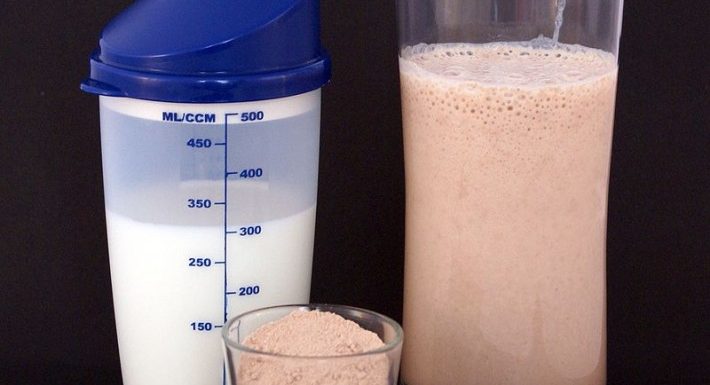
The following from the New York Times discusses the very popular protein bar and shake industry that has been booming in recent years. While protein is an important part of your diet, experts are warning that people who consume multiple shakes and bars each day might be consuming too much protein. Take a look at the article to learn more about the concerns and to ensure you are getting the amount of protein you need.

Julie Entwistle, MBA, BHSc (OT), BSc (Health / Gerontology)
From when I was a teen I have been highly sensitive to movies, news stories, songs or videos that involve violence (particularly against women). In fact, I avoid movies and shows in general (beyond thoughtless sitcoms or socially interesting reality TV), fearing that I will see (or hear) a bothersome scene. If my screening process fails and I catch something disturbing, I have problems sleeping for days as the images or sounds replay in my mind. In talking to my friend about this, she asked me a pointed question: Do you think you have PTSD?
Her question was referring to her knowledge of my experience as a teenager in 1991: My former elementary classmate Leslie Mahaffy and later Kristen French were both abducted, tortured, sexually assaulted and murdered by the notorious Paul Bernardo and his wife Carla Homolka. Kristen’s body was found near my community. Not long after, Nina de Villier was abducted and murdered after leaving for a run from the tennis club where I played and her brother was my double’s partner. I was part of the search party for Nina in the days of her disappearance and following these tragedies my mother became involved in an organization developed by Nina’s mother Prescilla called “Canadians Against Violence” (CAVEAT). Over the next few years I assisted with the organization at times, meeting many people whose lives were horribly impacted by the tragic loss of a daughter or sister, or who were victimized, stalked and threatened (some ongoing) by men. Now, as a mother of four girls, I recognize that these experiences still foundationally impact how I parent and I try to not let my fears about the safety of my girls restrict them from experiencing the important milestones of growing up.
Whether I have friend-diagnosed PTSD or not, according to the Canadian Mental Health Association, PTSD is a mental illness. It involves exposure to trauma involving death or the threat of death, serious injury, or sexual violence. In general, the traumatic event involves real or threatened physical harm to the self or to others, and causes intense fear, hopelessness, and/or horror. Emotional impairment results due to anxiety, depression, recurrent flashbacks, difficulty sleeping and concentrating, and feelings of guilt of having survived when others may not have (Stats Canada). In the military, one in six are reported to experience PTSD as a result of their service (Learn more from the Globe and Mail).
Occupational therapy, a profession vested in helping people to function safely and independently in their life-roles, is often one of the many health care providers that can assist people to overcome the symptoms associated with PTSD. Problems like anxiety, depression, flashbacks, difficultly sleeping and concentrating, and overcoming feelings of guilt can be tackled through: cognitive and / or behavioral strategies aimed at increasing activity participation slowly over time; by identifying, recording and sharing thoughts and feelings; and through engagement in healing-focused activities. Occupational therapists break down life tasks into smaller and manageable chunks to grade the successful return to meaningful roles. Over time, previously challenging tasks become easier as we help people master the roadblocks that are preventing their successful engagement in function.
However, with something as significant as PTSD, it will be the collaboration of multiple professionals helping the client to overcome their challenges that will have the most impact. Medical doctors, social work, psychology, psychotherapy, even massage, art or yoga therapy can help to provide a holistic approach to helping people move beyond these often crippling experiences. If you have PTSD and this is impacting your ability to do the things you need or want to do, please seek the help of professionals.
As for me, I don’t currently have the goal of wanting to return to watching movies and shows riddled with violence, rape and murder. I personally don’t find that entertaining and actually wonder why other people do. I am not sure I will ever understand, PTSD or not, why people derive pleasure watching (even if simulated) images of people’s horrible mistreatment. So, I will stay in my bubble for now enjoying Modern Family, Survivor and The Amazing Race. However, if my past does start to impact my ability to parent my girls, participate in activities I would otherwise enjoy, or snags my engagement in any other necessary or important area of my life, I will surely reach out for help.